
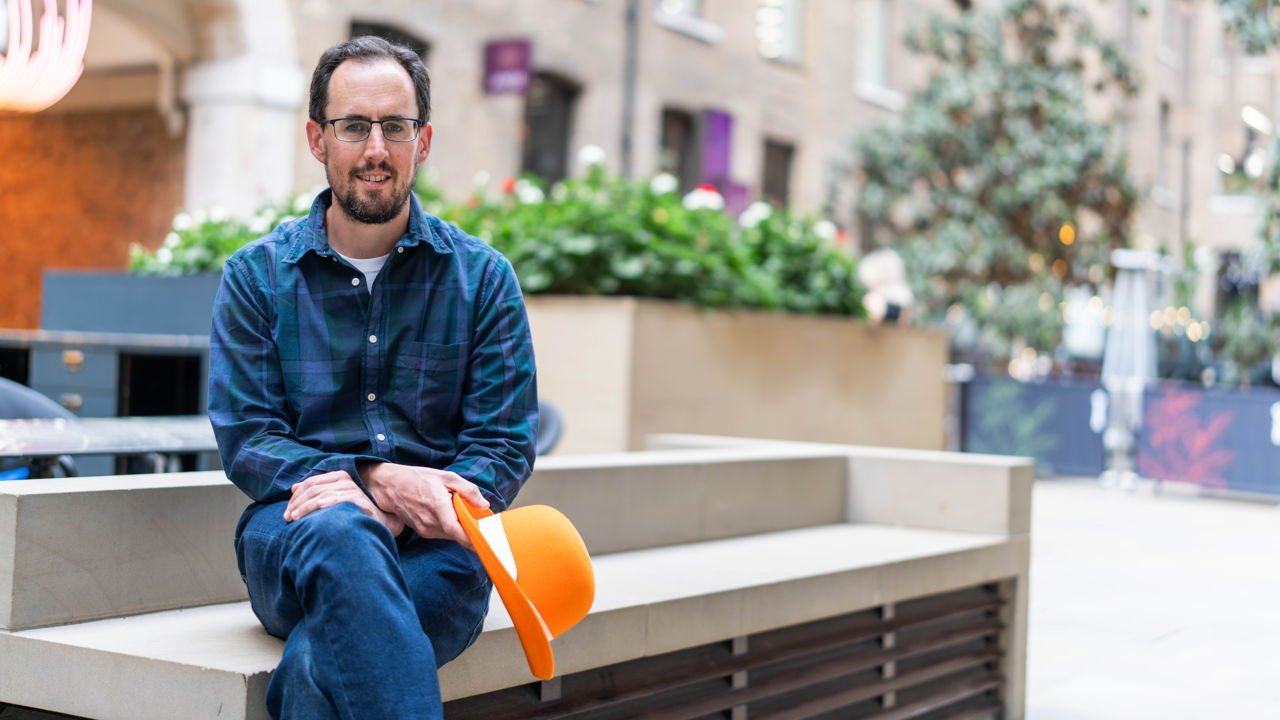
At a recent live episode of a well-known fintech podcast in London, a tall, lean banking executive told a packed audience about a “complete geek” thing he likes to do when visiting a new city on a business trip.
Richard Davies, the CEO of UK fintech Allica Bank, said he likes to hunt out the increasingly rare sight of physical bank branches.
A three-day trip to Stockholm proved largely fruitless, spotting only one, said Davies, which he contrasted with US cities, where branches were left, right and centre whenever he stepped out of a hotel.
While the host of the podcast gently mocked Davies over his bank branch hunting, it turns out that the 46-year-old CEO might have the last laugh.
In an act of serendipity, Allica is now considering buying a bank in northern Europe. Davies' encyclopaedic knowledge of the European banking landscape could prove crucial.
“It is quite a big decision for us," says Davies, sitting in Allica’s new two-floor London office, about the prospect of buying a bank. “It’s occupying a chunk of my time.”
Allica is looking to go international, as it wants to mimic its UK success, which has seen it collect several “fastest growing" awards, be championed by chancellor Rachel Reeves, and become one of the few profitable global challenger banks.
What is Allica Bank?
While some people might mispronounce its name (some call it “Allishia”, Davies laughs), there is little ambiguity about Allica’s proposition: it is a business banking specialist.
Allica targets the established SME sector (between five and 250 employees), offering them lending, such as commercial mortgages and equipment loans, and current and savings accounts.
Although the SME sector is the backbone of the UK economy (making up over 99 per cent of businesses), the sector in recent times has been overlooked by the big banks, which have preferred to lend to big corporates amid risk concerns about lending to SMEs. In the slipstream, Allica has been making hay.
Financial figures
Top line figures show that Allica has lent over £3bn to businesses, boasts over £4bn deposits, and has amassed over 25,000 business customers.
Its latest financials show pre-tax profits increased 86 per cent year-on-year to £29.9m, after hitting its first full year of profit in 2023, with revenue up 68 per cent on the year to £292.1m.
Like other challenger banks, it makes money (over 90 per cent) by net interest income- the interest gains it makes between lending and deposits.
Allica doesn’t position itself as a high-risk, high-margin lender and Davies says just one per cent of its loans have defaulted in the past 12 months, below the industry average of between two and two and a half per cent.
Along with its spic and span new London offices, Allica also has offices in Manchester and Milton Keynes, employing over 800 people.
Davies rings the changes
Davies, a banking veteran, joined Allica in 2020, when it had a banking licence but little else. “It had made a couple of loans, but that was basically it," Davies told The Banker.
Davies made changes, inculcating the organisation with a fintech-like ethos, bringing its third-party tech in-house, better remunerating engineers, while introducing Amazon-style cross-functional engineering/product “squads”.
Another move to wrest more control was to do more direct lending and be less reliant on brokers.
Fundraising
Allica has raised over £390m to date, latterly a 2022 £100m Series C led by Netflix and Spotify backer TCV, with existing investors Warwick Capital Partners and Atalya Capital Management participating.
New funding would “probably” only be undertaken should it go ahead with overseas expansion, but otherwise it will continue to run off its balance sheet, says Davies.
He said: “I think it’s fair to say if we were to raise now, we would be in the unicorn territory.”
European expansion
In another nod to Amazon, Davies channels Jeff Bezos' “one-way door” mantra when discussing its plans to acquire a bank in northern Europe. Bezos famously simplified risky decisions into two camps: one-way door (irreversible) and two-way doors (reversible).
An easier route for Allica to go international by passporting its UK banking licence was kiboshed by Brexit, while getting an international banking licence from scratch could take up to three years, Davies says.
Allica is now deciding whether to green-light its international plans.
He says: “Clearly buying a bank in Europe is kind of a one-way door thing. The small bank would give us the entry point. We would very much deploy our platform on top organically.”
Allica has notched up three acquisitions to date, most recently embedded finance provider Kriya (now ensconced on the second floor of Allica’s offices), following that of Allied Irish Bank’s SME portfolio and bridging finance specialist Tuscan Capital.
AI
On AI, Davies does not have a Pollyannaish view but thinks it can be “very transformational” for parts of the business.
He says: “If you go and blindly apply it to all use cases, you’ll cause a lot of damage.” On the customer service side, Davies says Allica has started “to play with agentic AI”.
But the big productivity gains, he says, are likely on the engineering side, where AI coding will lead to cross-functional engineering roles replacing specialist roles.
“We will keep growing our business a lot. We will probably grow the number of staff a lot less,” he says.
CV
Before arriving at Allica, Davies earned his banking stripes with stints at OakNorth, Lloyds, HSBC, Lloyds, and TSB. But arguably his biggest gig was at Revolut, where he was drafted in as chief operating officer in 2019, capturing national news headlines, amid concerns about its internal culture and governance.
“A key role was professionalising and starting to enhance the governance controls,” he says of his time at Revolut.
He only lasted one year at Revolut, saying the opportunity to run his own ship at Allica was too good to turn down (Davies can be seen chatting away in a recent video of a party celebrating Revolut’s 10-year anniversary).
Working week
Unlike Revolut’s Nik Storonsky, who reportedly has 42 direct reports, Davies has just 13, which, that said, is above the industry average of seven. The rhythm of his working week is partly dictated by weekly meetings with Allica’s “squads”, while fatherhood has meant he now prefers early morning to evening work.
Davies also does his bit for the UK fintech industry, being a member of the UK unicorn council and a stalwart at fintech conferences. His strengths, he says, are “ high bandwidth”, while his weaknesses are “talking too fast” (a behaviour which media trainers repeatedly tick him off over).
The budget
As UK economic growth slows, Allica has been campaigning for reforms so that the regulatory environment does not inhibit debt provision. Allica says the UK economy is stalling, potentially because there is a £90bn lending gap in financing SMEs.
Wearing his SME hat, Davies wasn’t impressed with the UK Autumn Budget, wanting an extension to the Growth Guarantee Scheme and highlighting an absence of further business rate discounts for SMEs.
With his startup hat on, things were much rosier, with the chancellor's plans to increase access to the Enterprise Investment Scheme (EIS) and Enterprise Management Incentives (EMI) getting a thumbs up. The government, he says, “likes tech” but “I don’t think the government is particularly SME focused”.
UK "not good jurisdiction" to IPO
There has been much chatter this year about whether London has lost its lustre as Europe’s fintech capital. Davies thinks London is still the place to be, but is facing the same conundrum as other markets.
He says: “I think the ultimate challenge for every country apart from the US is the public market, where the US is clearly the draw with Nasdaq.”
There are “no firm plans” for Allica to IPO, he says, but he has a swipe at the UK as a listing destination.
“Currently, the UK is not a good jurisdiction to list in, it's just a fact”, he says, pointing to the lack of growth investors and the shortage of liquidity in the market.
The future
The SME lending sector has seen a big shift in recent years, with startups now making up 60 per cent of the market, compared to 2019 when the four biggest banks made up 90 per cent of lending.
But recent data show big banks are boomeranging back, a return welcomed by Davies.
Davies says: "I think that is a good thing. The market needs a variety of players and SME lending is still flat. We alone are not going to change this industry.”
Allica is targeting 10 per cent of the market by 2028.
He adds: "That is not a small task, given we are just over five per cent now. We want to keep scaling across current accounts, across direct lending, across broker lending. Kriya is a very exciting business on the embedded lending side."


Would you like to write the first comment?
Login to post comments