
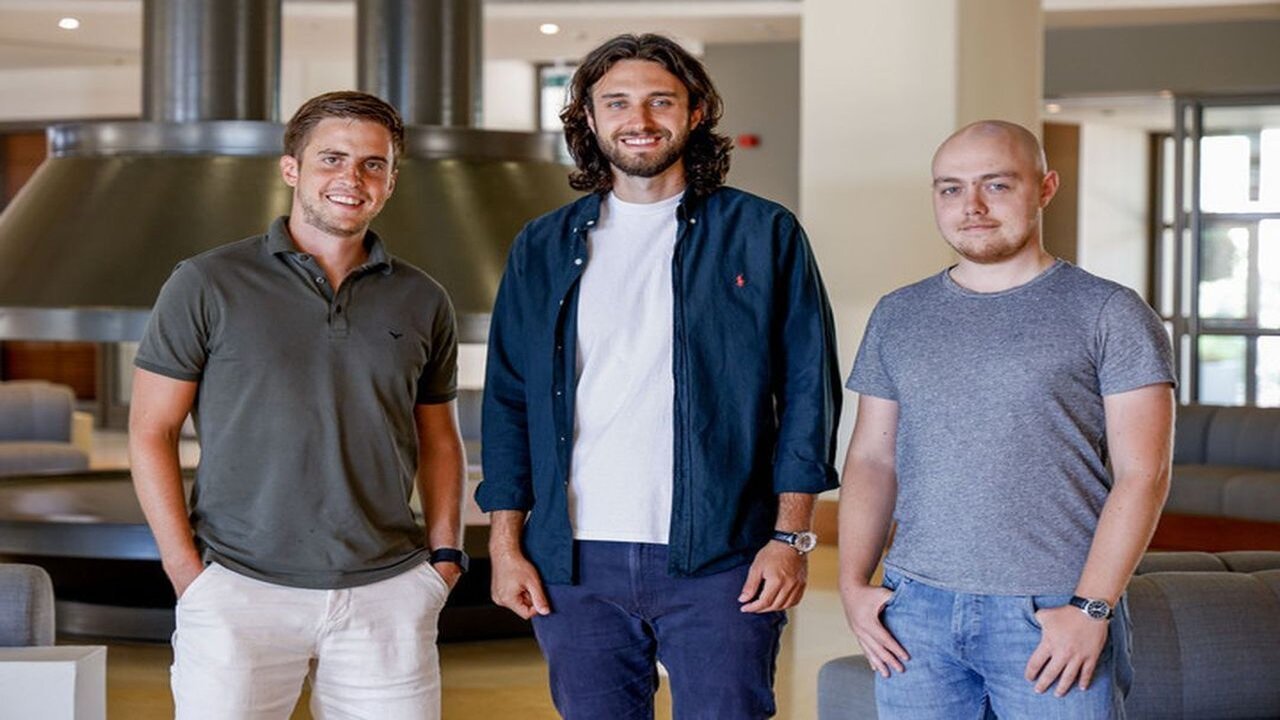
Eilla AI has completed Europe’s first M&A deal executed by an AI-native advisory firm, advising on the acquisition of two Central and Eastern European digital marketing agencies, CreateX and Native Digital, by Swedish listed company White Pearl Technology Group.
Its proprietary technology, built in-house over three years, combines AI infrastructure with experienced M&A advisors who oversee AI-generated work, manage transaction processes, and coordinate communication between both sides.
I spoke to Petar Petrov, Chief Commercial Officer and co-founder of Eilla AI, to learn more.
A shift driven by a lagging industry and an underserved market
Eilla AI was founded in 2022. Initially, it was selling AI tools to the M&A industry. Over the past year its spoken to more than a thousand M&A firms and private equity funds.
According to Petrov, two things became clear. First, the M&A industry is quite behind in terms of AI adoption — “even large boutiques were only just integrating tools like ChatGPT internally,” he shared. Second, the SMB segment is underserved. The team decided to combine the AI it has built with the expertise of experienced advisors. According to Petrov:
“We partnered with our Head of M&A, Dmitry, a senior investment banker with over 13 years of experience at firms like Jefferies and Citibank.”
Eilla AI’s customer is typically the founder or owner of an SMB business looking to sell.
What “AI-native advisory” means in practice
Eilla AI’s technology enables it to reach hundreds of high-fit buyers across multiple countries within days, each with messaging built on in-depth research into what makes the acquisition compelling for that specific buyer.
Eilla AI runs a structured process similar to what top-tier investment banks use, but applied to the SMB market. The AI handles large parts of the workflow, but humans step in where full automation isn’t yet reliable — especially for customisation and judgement.
First is preparation. It identifies a broad universe of potential buyers — often larger in SMB deals, where smaller companies attract a wider range of acquirers.
“We use AI to identify these buyers. Eilla has built a large proprietary database with detailed information on companies, and uses AI to identify the right buyers from that database based on similar deals and synergies,” explained Petrov.
Eilla uses its AI automations to build key materials, including the confidential information memorandum (CIM), the core document used to present the business to potential buyers.
“Traditionally, this process can take one to two months. We can do it in a few days.”
Next is outreach. While the company utilises its existing relationships, it also deploys highly personalised outreach to new buyers. It built a database of around nine million companies, tracking their products, tech, and other signals. This enables it to send highly tailored messages at scale, resulting in higher response rates.
“The goal is to create competitive tension — ideally by arranging five to ten meetings,” explained Petrov.
Buyers then submit non-binding offers, which are reviewed with the client before moving into due diligence. Due diligence is usually the longest stage — one to two months — and depends on multiple parties.
Where AI stops, and judgment begins
Petrov emphasised that humans remain in the loop, particularly in judgment-heavy tasks such as responding to buyers. While AI drafts outputs based on available data, all materials are reviewed by humans and given final approval.
“These are judgment calls — what to include, what to emphasise. AI can assist, but humans make the final decision.”
Eilla AI is already seeing early traction in both deal speed and buyer reach. One recent transaction moved from outreach to non-binding offers in around 15 days, with the full process completing within a few months — despite involving multiple companies, shareholders, and a non-obvious buyer. According to Petrov:
“It was a complex deal — multiple companies, multiple shareholders, and a buyer that wouldn’t normally be identified through traditional relationships.”
Rather than relying on existing networks, the firm identified the buyer through pattern matching at speed against previous acquisitions, surfacing a publicly listed Swedish company that would likely have been missed in a traditional process.
Nikola Lazarov, CEO and co-founder, contends that this pace and depth would be impossible to replicate without the infrastructure it has built.
“Our work with CreateX and Native Digital is not just proof of concept. It is a completed deal.”
The founders of both acquired companies credited Eilla AI with making the transactions possible.
“Honestly, without Eilla, this deal would not have happened,” said Aleksandar, founder and CEO of CreateX.
The reaction from Native Digital was similar.
Early traction across deal speed and buyer reach
Adoption of AI in M&A is still in its early stages, particularly in a sector long defined by relationships and traditional processes. For Eilla AI, client response tends to fall into two distinct categories, according to Petrov.
The majority of its clients come through its automated sourcing using AI rather than referral.
“They typically need to see the technology — once they do, the reaction is generally very positive.”
Some clients come through referrals and already understand the process.
“For them, we demonstrate how we’re different.“
While M&A remains relationship-driven, Petrov argues that this model has clear limitations, particularly in the lower and mid-market segments.
“Relationships only take you so far. A typical advisor might know 10–20 relevant buyers. In SMB deals, the real buyer universe is much larger.”
Instead of relying on a narrow pool of known acquirers, Eilla AI’s approach is designed to expand buyer discovery and increase competitive pressure within deals.
“We focus on creating competitive tension, rather than running bilateral processes with just one buyer. That’s a key advantage.”
Eilla AI’s models are probabilistic, and the system does not rely on generic model outputs or training data alone. Instead, it works with structured context provided by the client, combined with data extracted from proprietary databases and licensed external sources — including a dataset built from tens of millions of scraped pages covering around nine million companies. Petrov explained:
“Importantly, everything is reviewed by humans, and critical information is validated with the client. The goal is not to replace people, but to make one person as effective as a much larger team.”
When software becomes the service
Eilla AI’s model reflects a broader shift already underway in the US.
Firms including General Catalyst, Founders Fund, Sequoia, a16z, YC, Blackstone and others have converged on a shared thesis: the next generation of category-defining companies won’t sell software to professional services firms — they will become them.
Across legal, accounting, insurance and consulting, over a billion dollars has been deployed into companies that own the outcome rather than sell the tool.
General Catalyst committed $1.5 billion to acquiring traditional service businesses and rebuilding them with AI. Sequoia and a16z co-led $108 million into Rillet, an AI-native accounting firm. Emergence Capital led a $47 million round into Harper, an AI-native insurance brokerage. Lawhive, an AI-native law firm, raised $60 million on the back of 7x year-on-year revenue growth.
Sequoia partner Julien Bek crystallised the thesis in a widely circulated essay earlier this month titled “Services: The New Software.” His core argument: for every dollar spent on software, six dollars are spent on services. He contends that the next trillion-dollar company, he wrote, will be a software company masquerading as a services firm.
Scaling M&A for the long tail of businesses
The deal executed by Eilla AI arrives at a moment of acute structural pressure on the European M&A market. The European Commission estimates that a third of EU entrepreneurs will exit their businesses over the coming decade, putting roughly seven million businesses and 30 million jobs at risk.
In Germany alone, 626,000 businesses plan to transfer ownership by 2027. Traditional boutique advisory firms cannot economically serve the vast majority of these transactions. A proper sell-side process requires hundreds of hours of work, and for deals below a certain size, the fees do not cover the cost of running that process properly. The result is a market where most business owners either cannot access quality advisory or receive a diminished version of it.
Eilla AI’s cost structure is fundamentally different. Because AI handles the volume-intensive work, buyer sourcing, outreach and document creation, the firm operates on a success-fee-only basis with no retainers.
A model already proving out globally
The pattern has a precedent. In Japan, Shunsaku Sagami built M&A Research Institute to address a similar succession crisis, using AI to compress deal timelines from over 12 months to an average of 6.2 months. The company is now publicly listed, and Sagami, at 33, became Japan’s youngest billionaire. In the United States, OffDeal raised $17 million to build an AI-native investment bank.
Eilla AI launched its advisory practice at the end of last year and now has around 20 active mandates, with a fee pipeline of approximately €20 million — up more than 15-fold from roughly €1.6 million at the start of the year. M&A advisory is inherently transactional, raising questions about how firms build sustainable businesses without recurring revenue.
For Petrov, the answer lies in deal size, volume, and execution. Rather than relying on repeat subscriptions, the model is driven by the economics of individual transactions.
“In our segment, average deal sizes are around €10–20 million, and we charge about a 5 per cent success fee. So a single deal might generate around €500,000.”
Petrov argues that long-term strength comes not from recurring revenue, but from consistently generating and closing deals.
“You don’t need recurring revenue to build a strong business — you need deal flow and execution.”
AI plays a role not only in deal execution, but also in sourcing opportunities, while brand becomes increasingly important over time. Across its processes so far, Eilla AI reports that around 80 per cent of companies reach the stage of presenting to buyers, suggesting a higher level of early-stage engagement.
“In one case, a company that previously secured one NDA with a traditional advisor reached nine NDAs using our process.”
Although the M&A practice only launched at the end of last year, the company says momentum is building quickly as more deals move through the pipeline.
"We’re still early, but we’re already seeing strong momentum.”


Would you like to write the first comment?
Login to post comments