

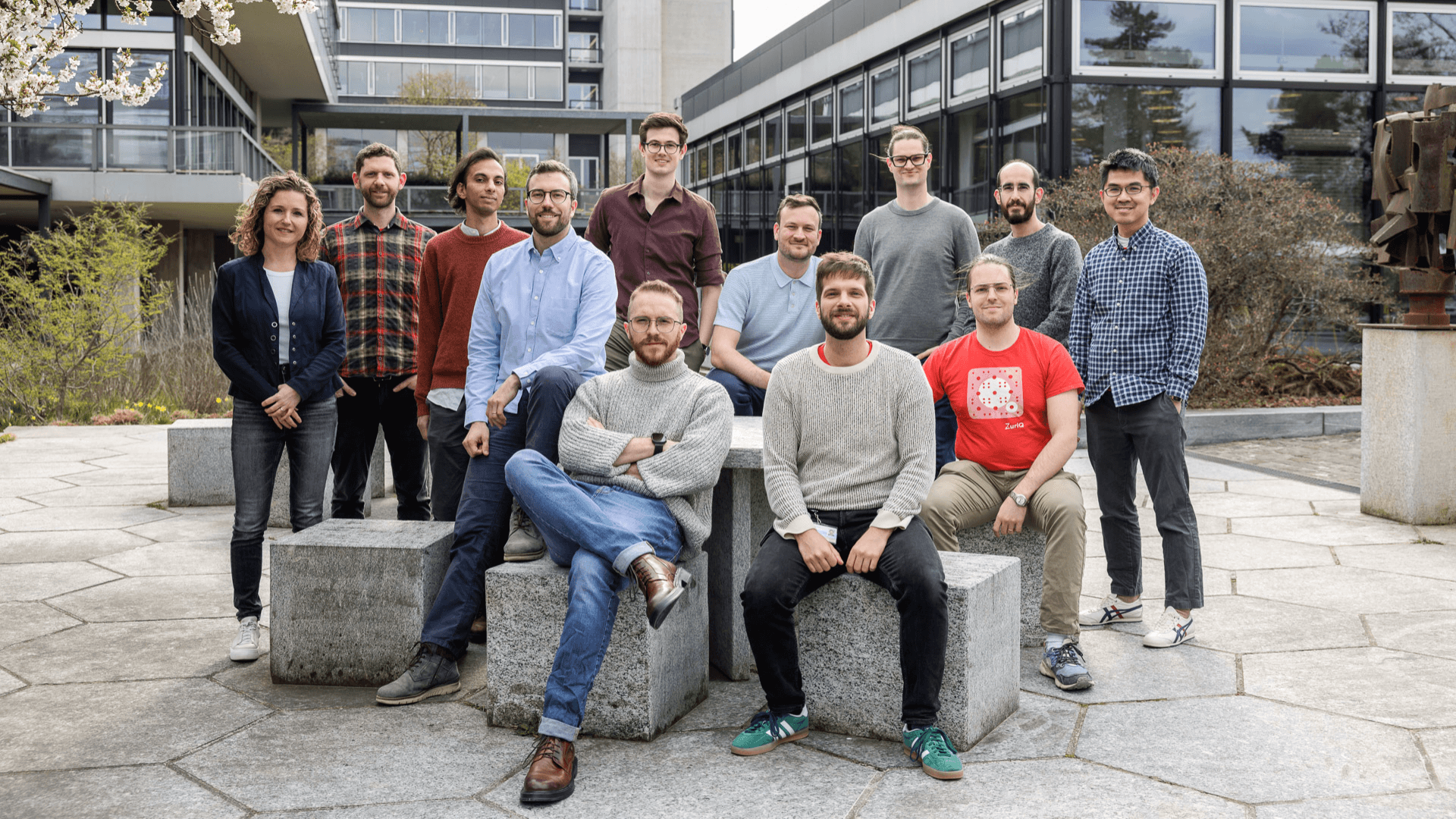
Swiss quantum computing startup ZuriQ has raised $25.5 million in seed funding to accelerate the development of its trapped-ion quantum processors. The round was led by Quantonation, with participation from Forward.one, Extantia, Firgun Ventures, and existing investors. The investment follows the company's $4.2 million pre-seed round in 2025.
Founded as a spin-out from ETH Zürich, ZuriQ is developing a new generation of trapped-ion quantum processors designed to overcome the scalability limitations of conventional architectures. While most trapped-ion quantum computers rely on one-dimensional ion chains connected through complex junctions, ZuriQ has developed a native two-dimensional architecture based on Penning micro-traps.
By replacing the oscillating electric fields used in conventional systems with a static magnetic field, the company's architecture enables ions to move freely across the chip, increasing connectivity while simplifying scaling.
ZuriQ has already demonstrated its approach with a working prototype developed in collaboration with researchers at ETH Zürich. The demonstrator features a three-by-three array of nine individually controlled ions, representing the largest two-dimensional trapped-ion array of its kind to date. The underlying chips were fabricated with manufacturing partner Infineon using established semiconductor production processes, supporting the company's strategy of scaling the technology through existing manufacturing infrastructure.
The company is now focused on increasing the number of qubits its processors can support to enable commercially viable quantum systems.
Dr Pavel Hrmo, co-founder and CEO of ZuriQ, said the company deliberately pursued a two-dimensional architecture from the outset, believing it offers a more scalable alternative to conventional trapped-ion designs and a faster path towards industrial applications.
ZuriQ will use the new funding to expand its team, accelerate research and development, scale chip fabrication, and increase the number of qubits supported by its quantum processor architecture.


Would you like to write the first comment?
Login to post comments