

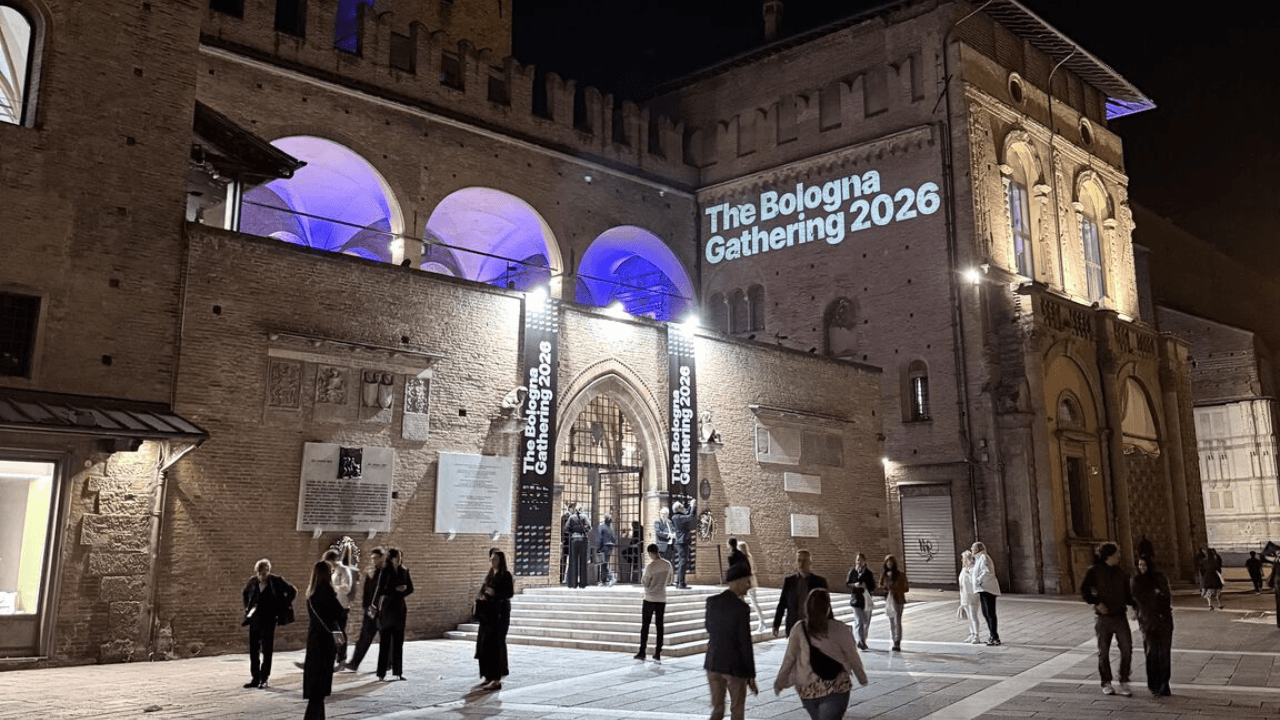
Alessandro Cillario and Stefano Onofri, co-founders and co-CEOs of Italian startup Cubbit, could easily spend all their time scaling internationally. Instead, alongside building one of Europe's leading sovereign cloud companies, they've invested heavily in something less tangible but equally important: Bologna's startup ecosystem.
Central to that effort is The Bologna Gathering (TBG), an invitation-only event they co-founded that earlier this year brought together more than 500 founders, investors, corporates and innovation leaders from Europe, the Americas and Asia.
Their belief is simple: successful startup ecosystems aren't built by governments or investors alone—they're built by founders who create opportunities for others while building their own companies.
Cillario genuinely believes that the world belongs to people who give, asserting:
“I've never really believed in the idea of "giving back" only after you've already become successful.
Waiting twenty or thirty years, building a fortune and then deciding to help the ecosystem doesn't make much sense to me.
During those decades you could have been supporting Europe, your city or your local startup community.”
Bologna is one of Italy's most diversified industrial cities. While it's famous for food and its university, its economy is driven by advanced manufacturing, engineering, and increasingly deep tech.
The city is one of the world's leading hubs for designing and manufacturing industrial machinery, particularly for packaging, automation, robotics, and precision engineering. Machinery accounts for roughly one-third of Bologna's exports. Bologna is also a key part of Italy's Motor Valley, with Ducati headquartered in Bologna and Lamborghini in nearby Sant'Agata Bolognese.
The region is also home to extensive automotive suppliers and motorsport engineering.
Building an ecosystem, not just infrastructure
According to Cillario, the idea for the event started after his company attended Web Summit and realised something was missing in the European tech ecosystem.
“Large conferences are hugely valuable, but you can't have the level of meaningful interaction that many people are looking for. At the same time, we were talking with institutions in Bologna and the Emilia-Romagna region, which is investing heavily in AI infrastructure.
But building infrastructure alone isn't enough. You also need to build an ecosystem.”
They decided it was better to bring people to Bologna rather than simply sending Italian companies abroad so that visitors could see the local ecosystem as it grew.
And, as an invite-only event, The Bologna Gathering intentionally offers a different kind of gathering to Italy’s excellent flagship events like Italian Tech Week.
At many conferences, the industry presence is largely limited to sponsors. Cillario agrees, noting that if you look at many of Europe's biggest success stories — Spotify, Klarna and others — they're consumer businesses. Selling to consumers is much easier than convincing large enterprises, which are naturally more risk-averse and slower to adopt innovation.
“That's why bringing corporates into the event is so important. In the first year we had fewer than ten corporate participants.
Today we have more than sixteen major companies involved because they've realised there's real value here. They can meet founders, provide feedback, discover new technologies and build partnerships.”
One of the things I noticed attending was the number of people from local industry attending, including Ferrari, Unipol, Ducati, Generali, Intesa Sanpaolo Private, JP Morgan, Chiesi Farmaceutici, CNH Industrial, Dallara Automobili, and Menarini Silicon Biosystems. This meant that early-stage startups can actually speak directly with potential customers and ask, "Would this solve your problem?"
Cillario asserts:
“Here, almost every conversation is meaningful. We've deliberately brought together innovators, startups, corporates and investors who are actively building companies rather than simply attending another conference.”
Cillario admits that planning, coordinating, and running the event takes time and energy, but that some of the things the team is most proud of are meeting founders who attended the Gathering a couple of years ago when they were starting out and seeing that today they've launched companies and raised millions.
“Some of them will probably become even more successful than we are — and that's exactly what we want. If you really want an ecosystem to thrive, you have to contribute while you're building your own company, not only once you've already made it.”
That ecosystem is now being reinforced by one of Europe's biggest investments in AI and supercomputing infrastructure.
Founders are returning to Italy
"Brain circulation" is becoming a defining feature of the Italian ecosystem. Rather than simply lamenting brain drain, Italy is increasingly benefiting from founders who gained experience in London, Silicon Valley, Australia and elsewhere before returning with capital, international networks and scale-up expertise.
Simone Mancini came back from Australia to co-found fintech unicorn Scalapay. Luca Ferrari returned to Milan to build Bending Spoons into one of Europe's largest software companies. More recent examples include Unobravo founder Danila De Stefano, who developed the idea while living in London, and Simone Di Somma, who returned after selling his Y Combinator-backed startup Innaas to SAP to launch cybersecurity company Cyberwave.
Italian founder Iris Skrami opted to move back to Italy from the Netherlands, where she founded digital product passports (DPP) startup Renoon.
She contends that “as we looked at where the market opportunity was, it became clear that fashion would be one of the first industries affected by DPP requirements. Italy has one of the world's strongest fashion industries, so it made sense to build the company here.”
Further, she notes that because many of the startup’s early customers are traditional, family-owned Italian brands, “they still retain operational control, and decision-making is often faster. Many are already asking us to sign multi-year contracts because they're concerned prices will increase once regulation comes fully into force."
Bologna's €1 billion AI infrastructure play
Those returning founders are also benefiting from a rapidly expanding research infrastructure. Bologna is one of Europe's leading centres for AI, supercomputing and data-intensive research. At the heart of its transformation is the Bologna Technopole, a science and innovation campus developed by the Emilia-Romagna Region and Italy's Ministry of University and Research.
The scale of the investment is impossible to miss. During my visit to the DAMA Tecnopole, I could occasionally hear the sounds of engineers installing supercomputers just a few hundred metres away — part of a €1 billion infrastructure programme. The Technopole brings together multiple players, including supercomputing research centre CINECA, the weather forecasting institute ECMWF, and the National Institute for Nuclear Physics NFN. At its centre is IT4LIA AI Factory, Italy's national AI factory, which combines world-class high-performance computing with technical support and free access to computing resources for eligible startups, SMEs, researchers and public organisations.
That capability expanded significantly in June when the National Research Centre for High Performance Computing, Big Data and Quantum Computing (ICSC) launched five new high-performance computing systems at the DAMA data centre. The additions — including the AI-optimised LISA system and cloud-native GAIA platform — add to the Leonardo and MEGARIDE, giving the AI Factory access to more than 20,000 GPUs and creating one of Europe's most powerful AI computing platforms while strengthening the continent's technological sovereignty.
Turning research into startups
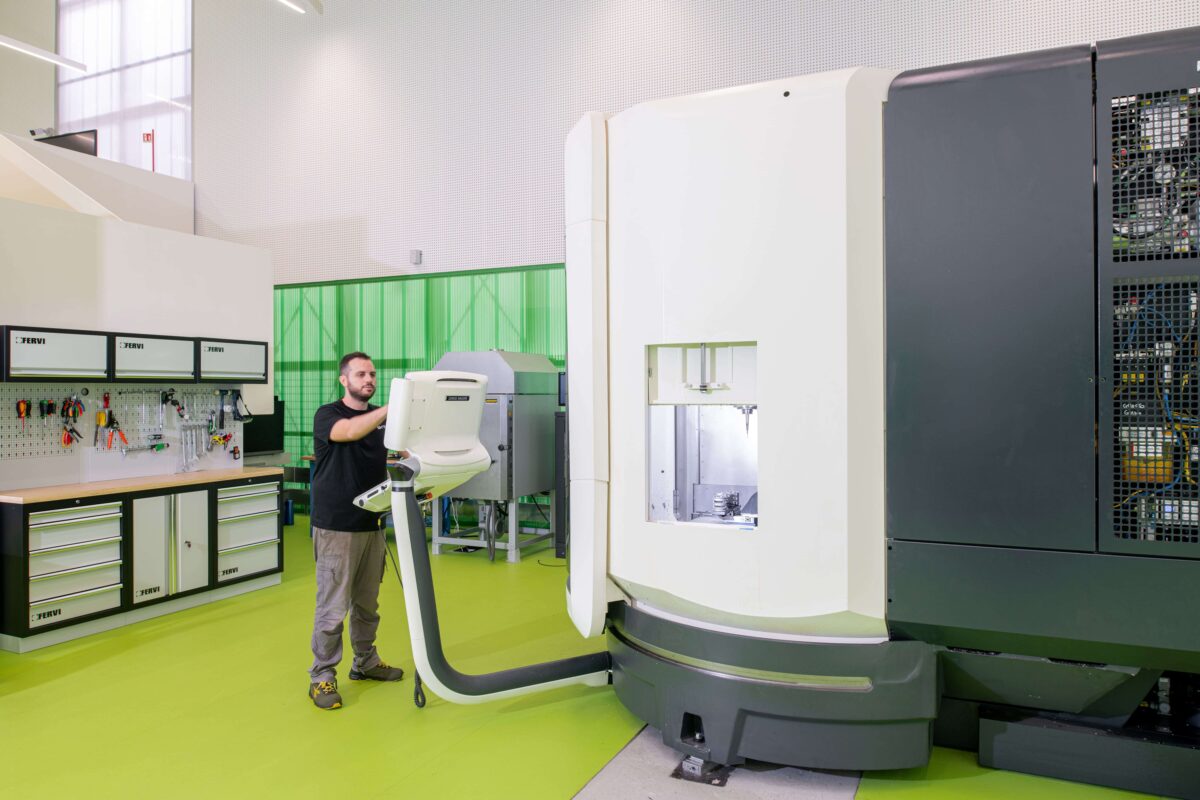
BI-REX (Big Data Innovation & Research Excellence) helps startups and scaleups turn advanced technologies into commercial products. Its flagship "Test Before Invest" programme lets startups validate technologies before committing significant capital.
Companies can build proofs-of-concept, test products on BI-REX's smart factory pilot line, and access robotics, AI platforms, additive manufacturing, digital twins, IoT infrastructure, 5G and HPC without buying the equipment themselves. BI-REX also supports startups with technology assessments, collaborative R&D projects, access to finance, market validation and acceleration programmes, as well as specialised training in AI, digital manufacturing and Industry 4.0 technologies to build the skills needed to scale.
Bologna has built a broad support network for founders. These include COBO Accelerator, which backs startups developing digital and industrial technologies; G-Factor focusing on life sciences, digital health, AI and emerging technologies; and the University of Bologna's innovation hub Almacube.
A maturing startup ecosystem
Italy's startup ecosystem is also showing growing momentum. The country is now home to 17 unicorns worth a combined $44.6 billion, including Prima and Namirial, which reached unicorn status in 2025. Activity in early 2026 reflected the breadth of the market, with funding rounds ranging from D-Orbit's $62 million Series D in space logistics and Subbyx's $35 million Series A to Dronus' $17 million raise in drone technology. Niulinx, a spinout from the Polytechnic University of Milan, also secured Europe's largest-ever autonomous driving seed round at $38 million.
According to PitchBook, Italy recorded 225 VC funding rounds in the first quarter of 2026 — up 80 per cent year on year and the highest quarterly total in the past decade.
Cillario contends that Italian startups have also become much more mature.
“Startups are increasingly focused on attracting international capital, and international investors now recognise that Italy offers outstanding opportunities. Much of the technology comes from universities and research centres, so the quality is extremely high.”
He describes Bologna and the Emilia-Romagna region as “an incredibly wealthy region with a strong industrial base and significant private capital.”
Even unlocking a tiny fraction of that capital would dramatically increase venture investment in Italy.
“It's also exceptionally well connected. Milan is about an hour away, Turin around two hours, and Rome isn't far either. More and more companies are choosing to start or relocate here, and I think that's a very positive sign.”
For all its ecosystem investment and momentum, one of the strongest views I hear when talking to people in the Italian startup ecosystem is the need for cultural change.
Skrami admits that Italy can sometimes feel quite closed compared with other startup ecosystems. She shared a view I’ve heard before — Italians often prefer to build quietly rather than talk publicly about what they're doing. Once, I even attended an event in Italy where a startup exhibiting told me they didn’t want any international press.
She explained that “In many ways, people feel that talking too much about their success somehow diminishes it.”
For Cillario and Onofri, changing that mindset has always been part of the mission. Building Cubbit and helping build Bologna's startup ecosystem were never separate projects—they were two parts of the same ambition.
Companies to watch
Daidalos
Daidalos is a semiconductor IP company that designs and licenses accelerator cores for industries including high-performance computing, automotive, IoT, defence, and space.
Rather than manufacturing complete chips, it provides integration-ready IP that customers can incorporate into their own processors, helping reduce development time, costs, and technical risk while retaining control over product design.
GeneSys Bio
GeneSys Bio is a medtech company developing portable molecular diagnostics for the rapid detection of infectious diseases.
Its PCR-based platform delivers laboratory-quality results in under an hour, enabling clinicians to identify pathogens and antibiotic resistance at the point of care without the need for a fully equipped laboratory. Initially focused on urinary tract infections, the company's technology aims to make fast, accurate, and affordable genetic testing more accessible across human, veterinary, and environmental diagnostics.
Magnetic Future
Spun out of the University of Bologna and Mercatorum University, Magnetic Future develops compact, contactless power supplies — known as flux pumps — for superconducting magnets.
These magnets are essential to technologies including nuclear fusion, MRI systems, wind energy, scientific equipment and space propulsion.
Existing power systems for large superconducting magnets can be expensive, energy-intensive and physically enormous. Magnetic Future’s technology is intended to keep electrical current circulating inside a superconducting magnet without the conventional high-current electrical connections. In one example involving an Italian fusion experiment,
Magnetic Future estimates its flux pump technology could reduce annual energy costs from more than €1 million to less than €5,000, illustrating the potential efficiency gains of its approach to powering superconducting magnets.
Trailslight
Trailslight is a smart infrastructure company using AI and sound analysis to make public street lighting more efficient. Instead of relying on cameras or additional roadside sensors, its devices are installed directly on existing streetlights, where they analyse ambient sounds in real time to detect traffic levels, classify different types of vehicles, monitor weather conditions, and measure environmental noise.
Based on this information, the system automatically adjusts streetlight brightness to match actual road conditions, improving safety while reducing unnecessary energy consumption.
Trailslight says its adaptive lighting can reduce public lighting energy consumption by 40 to 60 per cent, helping cities lower both electricity costs and carbon emissions.
O-Damp
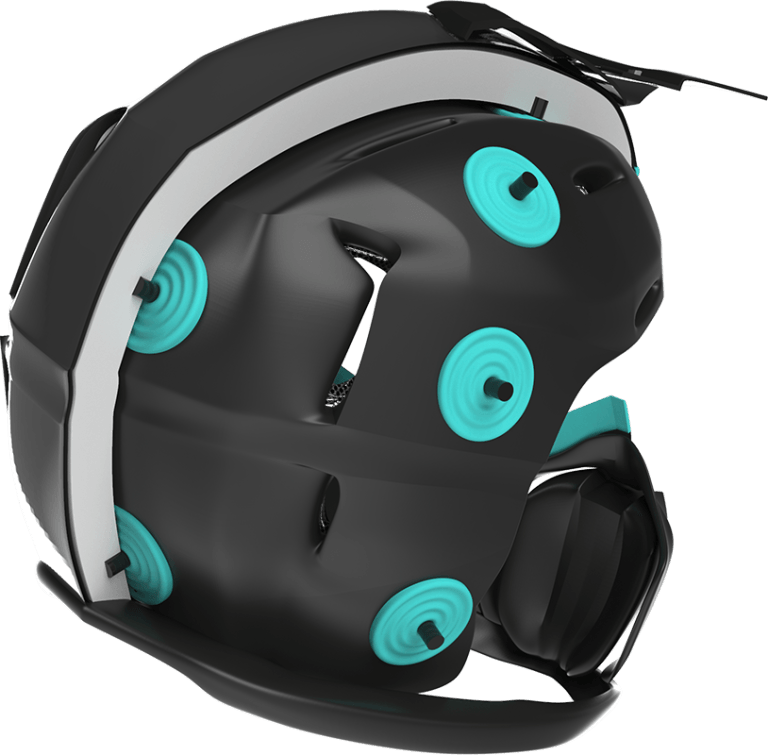
O-Damp is spun out from the University of Bologna and is developing advanced impact-protection technology for safety helmets. It created a patented insert that can be integrated into existing helmet designs to protect riders from traumatic brain injuries better better.
The company's technology addresses one of the biggest causes of serious head injuries: rotational forces created when a helmet strikes the ground or another object at an angle.
Unlike conventional helmets that primarily absorb direct impacts, O-DAMP uses a dual-layer structure combining expanded polystyrene (EPS) foam with pads filled with a non-Newtonian material.
During an oblique impact, these inner pads allow controlled movement between the helmet layers, dissipating rotational energy before it reaches the wearer's head and helping reduce the risk of concussion and traumatic brain injury. Its initial focus is motorcycle helmets, but the technology is designed to be adapted for cycling, skiing, equestrian sports and workplace safety equipment.


Would you like to write the first comment?
Login to post comments