
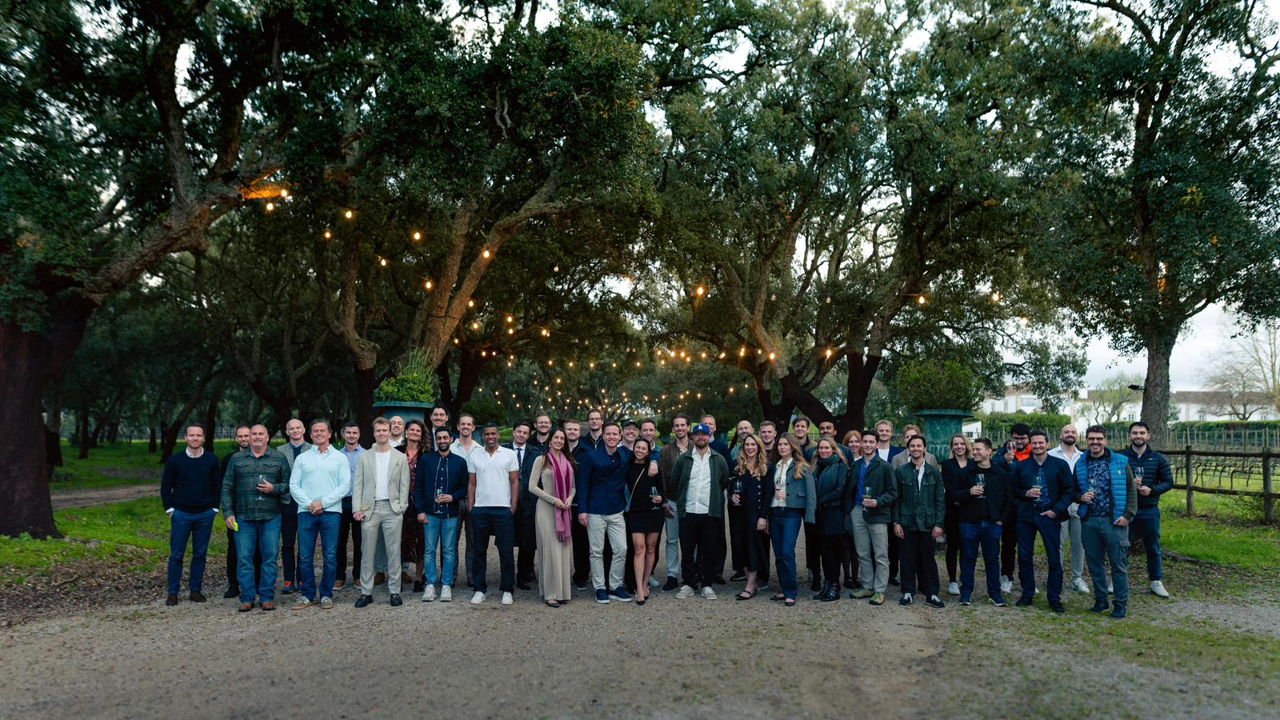
“All of us live in the dark most of the year, and we don’t have anything better to do than build,” says an organiser of one of a new wave of hacker houses which have cropped up in recent months across Scandinavia and the Baltics.
This resurgence in hacker houses can be seen all across Europe. But across Scandinavia and the Baltics, the hacker house mentality, the esprit de corps, is particularly acute, given the relative smallness of the markets.
Amid waning deal flow, particularly across the Baltics, investors see them as a quick-fire win to turbo-charge investment, while builders view them as a chance to showcase their talents.
Latvia-based Shipyard, Estonia’s ruum, Lithuania’s Basedspace and Denmark-based Bifrost House are examples of the new breed to emerge.
Hacker houses became popular in the early 2000s, particularly in Silicon Valley and the San Francisco Bay Area startup ecosystem- in response to rising housing costs and the need for collaborative startup environments. They are now enjoying a resurgence, with a more explicit hacker house/ builder lab format.
ruum
Tallinn-based ruum is one of the new crop of hacker houses which launched last year.
Helery Pops, ruum founder who is also a VC and angel investor, says ruum took inspiration from Basedspace, a neighbouring hacker space in Lithuania.
Pops said: “When we started looking into it, it was like an avenue of green flags everywhere. There was really no reason not to do it.”
The idea was to give free working space to builders just starting out in their careers, she says. Central to ruum's hacker house programme was a full-day hackathon, with 12 teams selected from 110 applicants, with the resulting progamme running for two and a half months.
Pops said: “There have been many hackathons, there have been many accelerators, there are some that are still on-going in Estonia. But at this point, it seemed that the deal flow was not coming on as it had been maybe in the last five years. There was space for something new. People are seeing there is a problem with the early-stage companies. This just seems like a possibility to solve a little bit of it.”
The programme was supported by €20,000 in funding, which came from Skaala, the family office of Skype alumni and Wise cofounder Taavet Hinrikus and his Skype colleague Sten Tamkiv, Startup Estonia, and a few angel investors.
The broader Estonian tech community helped out by offering their services for free. The winners, Bilt.me (a "Lovable" for mobile apps), a six-strong team with an average age of 21, were whisked off for a week in San Francisco.
Pops says: “They work six days a week. If you are in the working space with them, and you start going home at 5pm, they are generally shocked. It is very cool to see how much energy and power they are putting into it.”
Ruum might have started out as a hobby, but Pops said the future could see more programmes, with a slightly amended format.
Shipyard
Meanwhile, across the Baltics, in Latvia, another newish hacker house space is the AI-centred Shipyard.
According to one of Shipyard’s founders, Marija Rucevska, who is also GP at a VC investing in the Baltics, Shipyard was created recognising the impact of AI on startups.
Rucevska said: “This new movement is acknowledging that you can move a lot faster to market and understand if it’s worth building something longer term or maybe just something that you are building for yourself.”
Like ruum, Shipyard’s admission programme was a 48-hour hackathon, with the programme then taking on 20 teams over three months, which is then whittled down further to a group of eight teams looking to get pre-seed funding.
Part of the programme, designed to turn builders into founders who are building AI-native teams, demanded builders deliver weekly shipping cycles.
“If you don’t deliver, you are out,” she says.
She adds: “We want to cherish and nurture the building, energy and spirit and also witness some of those of new AI native founders.”
Shipyard also helps Rucevska tap into her VC pipeline efforts, she said. She says: “We have really technically brilliant people here, a lot of very AI-savvy teams applying different types of tools.”
On the broader emergence of hacker houses across the Baltics, she said: “That kind of comes from the fact that all of us live in the dark most of the year and we don’t have anything better to do than build.”
She says the Baltics are also “very ecosystem driven” given the relative smallness of the countries, which means that individual countries are always rooting for each other.
Bifrost House
In Scandinavia, there is Copenhagen-based Bifrost House, which bills itself as “Copenhagen’s most ambitious startup community and co-working space”.
It is a venture studio that builds startups from the ground up, with a hacker house mentality. Bifrost House raises capital, forms founding teams, and operates businesses across sectors, including defence technology, consumer goods, B2B SaaS, and financial data.
It is currently raising a €30m fund and has hitherto built 25 startups, with a mission to build 100 companies a year.
Sophus Blom-Hanssen, who runs the operation, said there is nothing like Bifrost House in Europe, given the scale of its ambitions.
He says: “The reason we are doing it, and the reason a lot of these type of spaces will emerge is that the whole modus operandi of a startup, of getting a startup to market quickly, that timeframe is compressing super-quickly. Both to build a product and the timeframe you are relevant in the market is also compressing.”
On its fund, he said: "We look at what does the business case we are scoping around require from a funding perspective? And work together with the founder and entrepreneur to structure a cap table that works to actually reach the first or second milestone so that the business can raise more money."
IMAGE: Bifrost House


Would you like to write the first comment?
Login to post comments