

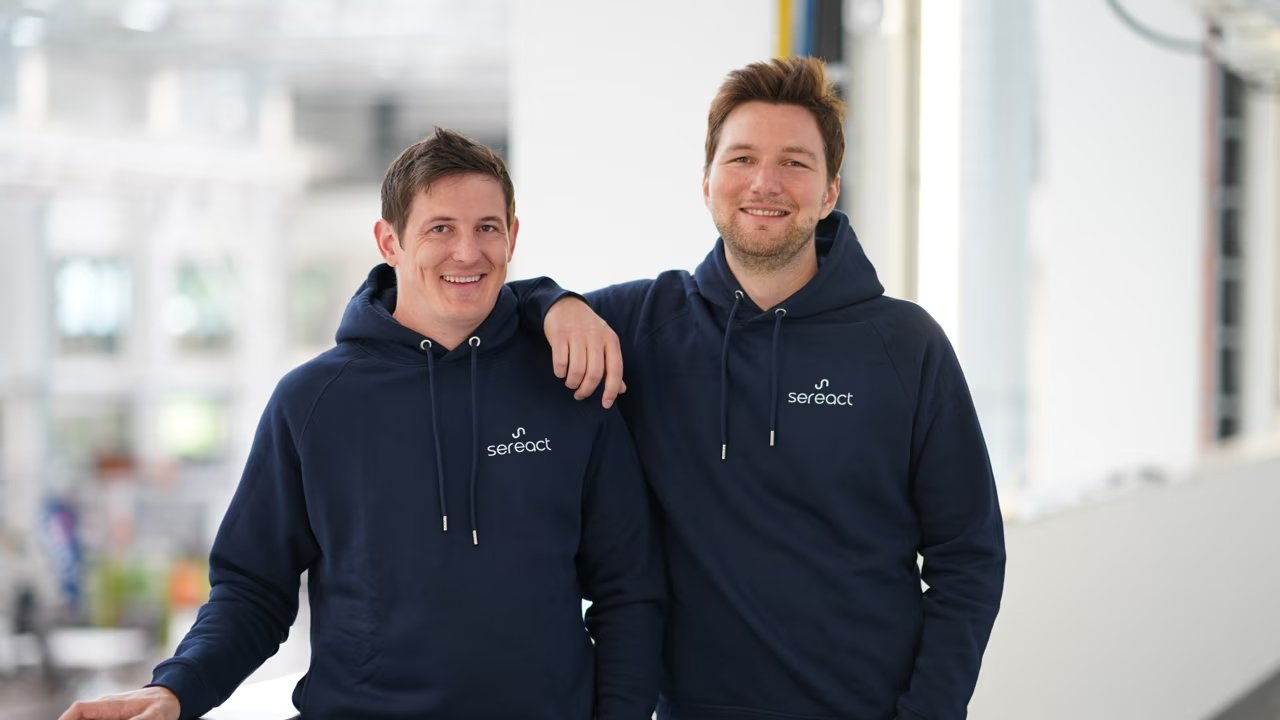
German robotics startup Sereact has raised $110m in a Series B funding round, with the funding used to develop and scale its latest AI model and US expansion, it announced today.
The round was led by San Francisco and Berlin-based VC Headline, with Bullhound Capital, Felix Capital, and Daphni also investing. Returning investors Air Street Capital, Creandum, and Point Nine also participated.
It follows its €25m ($29m) Series A funding in January last year, which was led by Creandum. It has raised more than $140m in total.
The Stuttgart-based company, which employs around 100 people. develops AI-powered robotics tech that is deployed across various industries and use cases for customers in the US and Europe. Its AI software equips robots with general-purpose visual and manipulation capabilities, enabling them to perceive their environment and devise intelligent strategies to perform a wide range of physical tasks.
The bulk of the new funding will be used to develop its latest AI model, Cortex 2, which is launching today. The model trains a robot on different physical behaviours, helping it pick the one most likely to succeed.
Ralf Gulde, co-founder and CEO, said: "It takes Cortex out of the picking bin and into work where contact matters - assembly under tension, kitting, placement where every millimetre counts. We don't build robots. We don't sell services. We ship one thing: the model that runs on any robot. Single arm, dual arm, humanoid, fixed cell - same brain across all of it.”
The funding will also be used for US expansion, the 2021-founded startup said, with a new office in Boston, where it plans to staff up across engineering, commercial and other areas.
Sereact's customers include BMW, Daimler Truck, Bol and Active Ants, and the real-world deployment of its products creates a real-time data flywheel from which Sereact systems learn to continually improve far beyond systems trained primarily on synthetic data, it added.


Would you like to write the first comment?
Login to post comments