

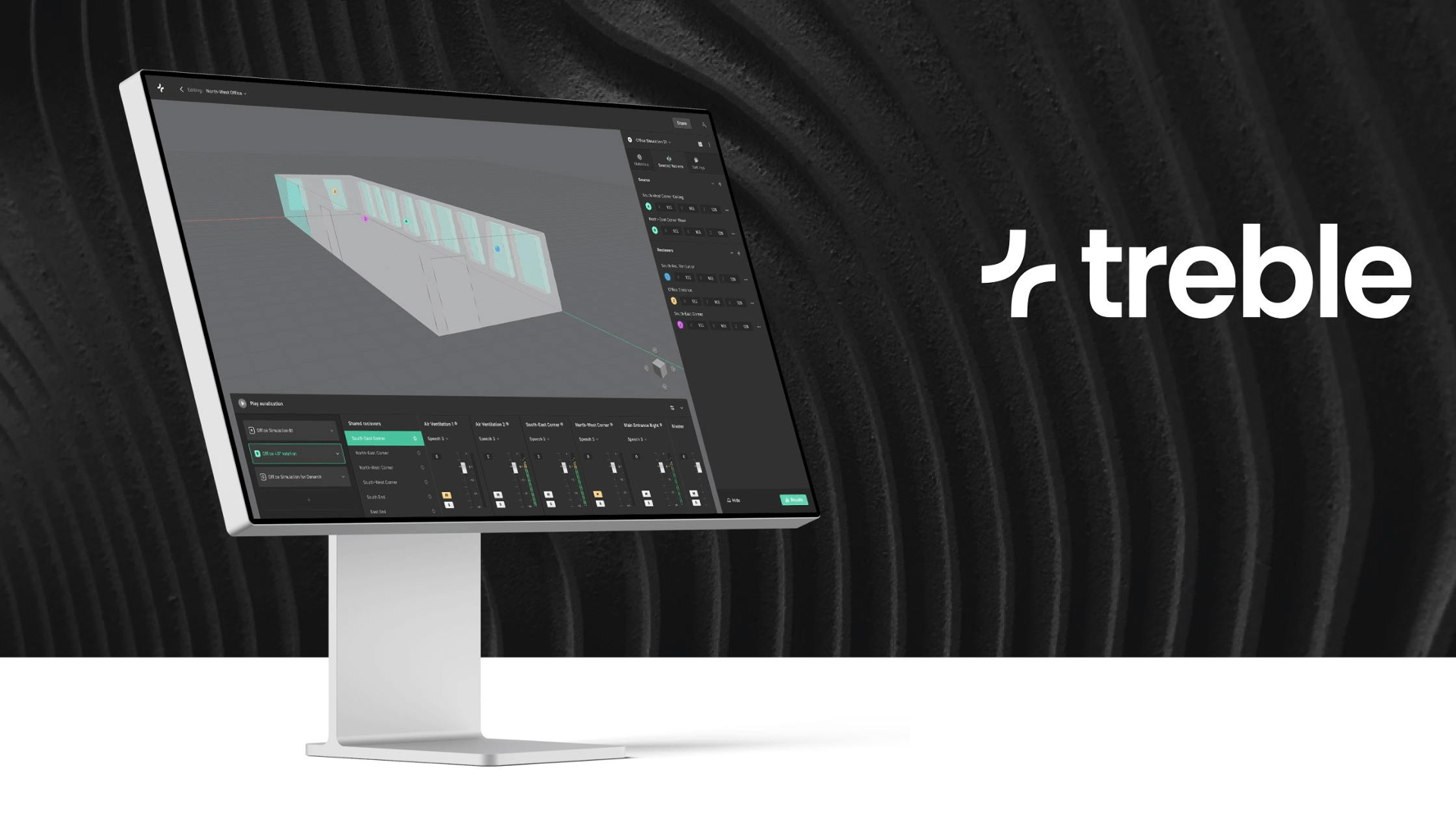
Treble Technologies, a sound simulation and synthetic acoustic data company, has raised $18 million in a Series A-2 round to expand its technology for developing and testing audio-enabled products and AI systems. Paladin Capital Group led the round, with participation from existing investors KOMPAS VC, Frumtak Ventures, and the European Innovation Council (EIC) Fund.
The latest round brings Treble’s total funding to date to €36M.
The investment comes as voice and sound are becoming increasingly important interfaces between people and intelligent devices. While much of the development of physical AI and world models has focused on vision and touch, audio-enabled systems also need to recognise and interpret sound across changing physical conditions, including background noise, room configurations and differences in microphone and device placement.
These challenges become more complex when devices move through their environments, as with wearables, head-mounted devices, humanoid robots and autonomous vehicles.
Treble's technology uses physics-based acoustic modelling to simulate how sound travels through physical spaces. Its platform combines acoustic simulation, digital twins and synthetic data generation to reproduce conditions across different rooms, materials, vehicles, devices, speakers and ambient sound environments.
This allows developers to create digital acoustic versions of real-world environments and assess how products or AI models are likely to perform before building physical prototypes or carrying out large-scale recording programmes. Teams can generate labelled audio data, test difficult-to-reproduce scenarios and compare product configurations under controlled conditions.
According to Treble, this approach can reduce the time required for prototype testing and audio data collection from months to days, while helping developers improve the performance and robustness of audio AI models and develop new product features.
Audio and voice interaction is becoming a fundamental interface for the next generation of intelligent products, but the physical world is acoustically complex. AI models and devices that perform well in a laboratory can struggle when they encounter reverberation, background noise, or an unfamiliar physical environment,
said Finnur Pind, co-founder and CEO of Treble.
He added that Treble's technology is designed to give device manufacturers a more scalable way to model these conditions, generate training and testing data, and evaluate how products perform in the environments where they will ultimately be used.
The new funding will enable Treble to further develop its simulation and synthetic data platform and expand its use across audio-enabled consumer and enterprise products. The company also plans to increase its focus on physical AI applications as voice and audio become more widely integrated into intelligent machines.


Would you like to write the first comment?
Login to post comments