

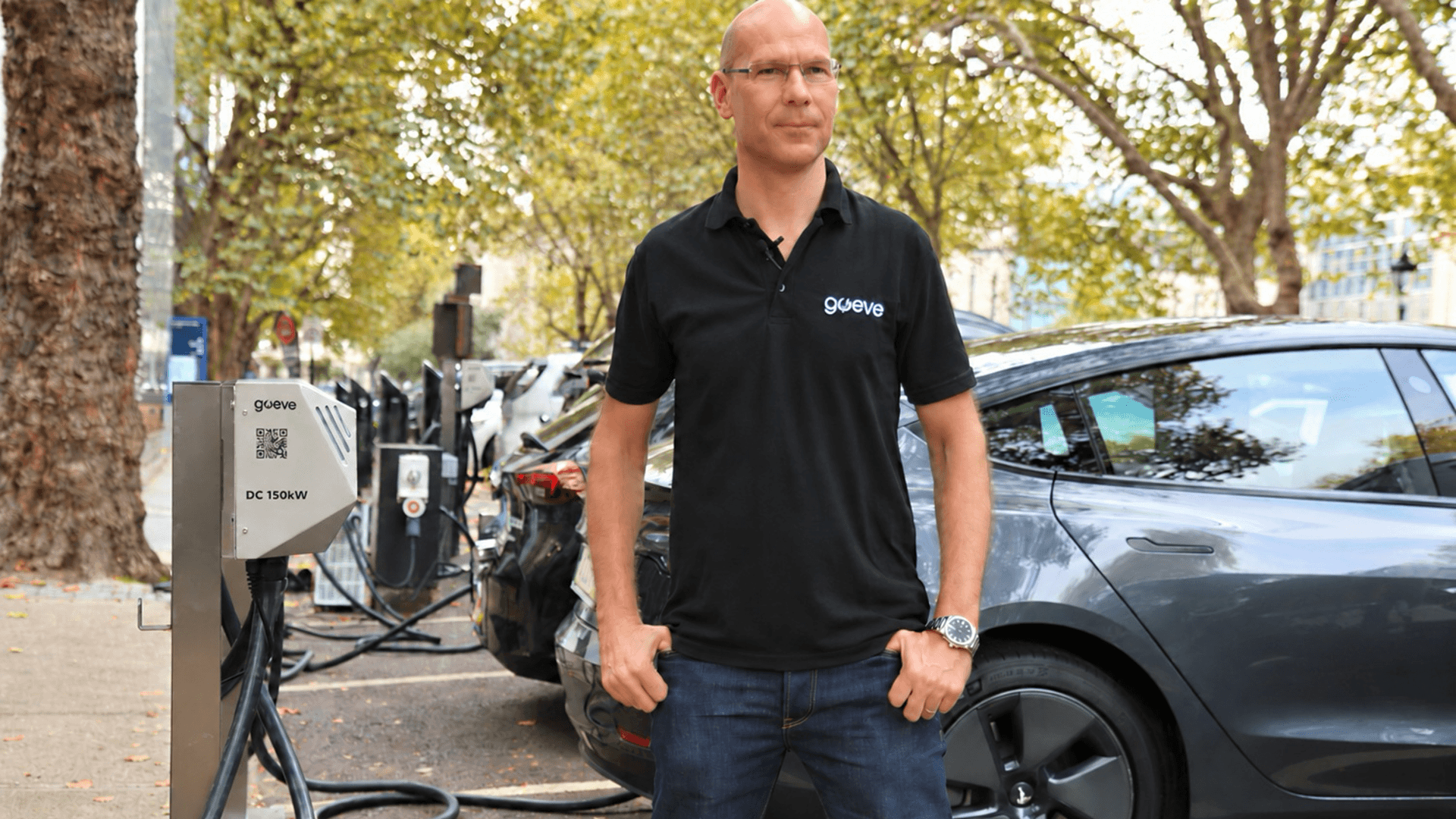
Go Eve, a joint spin-out from University College Dublin (UCD) and Imperial College London, has secured £750,000 in funding from Innovate UK and private investors to further develop its electric vehicle (EV) charging technology. The funding will support an 18-month project focused on improving DockChain, the company’s patented technology that enables a single DC fast charger to serve multiple parking bays.
Supported by NovaUCD, Go Eve has developed DockChain to help fleet operators expand their EV charging capacity without installing a separate fast charger at every parking bay. The technology allows multiple vehicles to remain plugged in while a compatible charger serves them sequentially, one at a time. This approach can reduce the number of chargers and the electrical infrastructure required, potentially lowering installation costs and accelerating deployment.
The new project will focus on developing custom hardware, firmware and software to improve DockChain’s ability to automatically start, stop and restart charging sessions without physically disconnecting vehicles.
The development follows experience from fleet installations, which has shown that EVs can respond differently during charging sessions. Some vehicles may not begin charging on the first attempt, while others may fail to restart after a session has been paused. By addressing these issues, Go Eve aims to make sequential charging more reliable and give fleet operators greater flexibility to manage charging priorities and vehicle schedules.
John Goodbody, co-founder and Marketing Director of Go Eve, highlighted the growing importance of optimising existing charging infrastructure and grid capacity as UK commercial fleets transition to electric vehicles.
We’ve already shown that fleets can serve more bays without multiplying the number of fast chargers, that’s where the immediate cost and rollout benefit comes from DockChain.
Working with fleets has also taught us that vehicles don’t always behave exactly as expected at the charging connector. Some EVs need another attempt to start; others can be reluctant to restart charging after power flow is paused for grid, or priority reasons.
This project tackles those practical issues so we can make DockChain more reliable and more flexible,
Goodbody added.
Alongside improving charging reliability, the project will explore the potential for DockChain to support bidirectional charging and vehicle-to-grid (V2G) services, which could allow fleet operators to generate revenue when their vehicles are not in use.
Supported by Innovate UK’s Growth Catalyst, Investor Partnerships programme, the project will be led by Go Eve’s engineering team in Wolverhampton, UK. The company aims to deliver a production-ready version of DockChain in 2027, with existing units eligible for upgrades.
Go Eve is also seeking fleet operators to trial the technology at sites with limited charging capacity, varying charging priorities or potential for V2G services.


Would you like to write the first comment?
Login to post comments