The European agrifood entrepreneurial ecosystem is rapidly expanding: innovative agrifood startups are becoming increasingly numerous, particularly in sectors such as agtech, functional foods, biotech, and alternative proteins.
The European Union’s AgriFood Industrial Ecosystem generates around €603 billion in value add and supports 16 million jobs. The food and beverage industry alone accounts for €227 billion and employs 4.6 million people, with more than 99 per cent of companies being SMEs.
However, the ecosystem must transform to become more sustainable and competitive. This places pressure not only on local startups and scaleup but also those seeking to enter the European market.
Europe’s agrifood transformation demands innovation — and startups need a clear path to scale
The pressure to reduce environmental impact, adopt digital technologies, and respond to increasingly conscious consumers is pushing the entire chain—from farmers to distributors — towards innovation.
But at the same time, production costs in Europe (labour, energy, regulatory compliance) are high, posing a significant barrier for new companies seeking to scale. Moreover, climate change adds uncertainty around agricultural productivity and the reliability of raw materials, demanding more resilient and circular models.
Another major challenge is market fragmentation, as each European country has its own regulations, distribution channels, consumption habits, and food-specific rules. For a startup aiming to sell across multiple EU markets, adapting to each context can be costly and time-consuming.
To address these barriers, the European Union and organisations such as EIT Food have launched programmes to support startups in the agrifood sector.
There is strong institutional support to strengthen European competitiveness in food innovation. EU programs and projects targeting startups and scaleups — especially those led by EIT Food — are helping drive a more sustainable, resilient and tech-enabled agrifood value chain. As well as a strong foundation for local startups,
Europe represents a highly attractive market for internationalisation, as its diverse economies, consumers, and regulations offer numerous opportunities for startups to scale beyond their local markets.
For a startup, expanding into new European markets not only means increasing sales but also gaining access to strategic partners (distributors, retailers, and companies within the food value chain), optimising the supply chain, and diversifying risks.
In response to the opportunity for internationalisation, EIT Food has developed a tailored program called Sales Booster to help agrifood startups that are established in their home country’s entrepreneurial ecosystem and want to expand into new markets within the European region.
Inside Sales Booster: EIT Food’s pathway for agrifood startups to enter new markets
Sales Booster offers selected startups personalised support tailored to their growth stage, current needs, and geographical focus.
Participants gain not only technical support but also recognition and visibility within the European food innovation ecosystem.
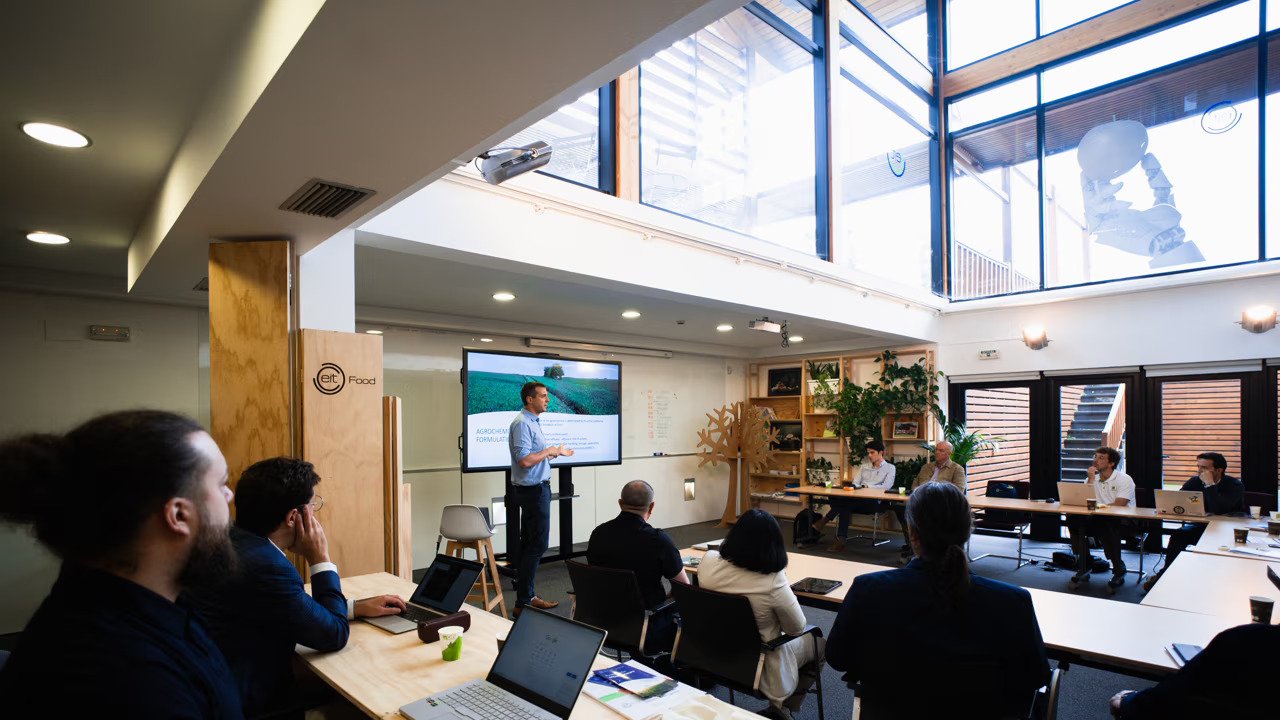
The program is run through collective activities, such as online workshops and meetings with key industry players to facilitate networking, as well as one-to-one sessions.
Each startup has a dedicated Growth Advisor, expert guidance, and resources to design its expansion plan and ultimately develop an internationalisation plan for its target country or countries.
There’s also access to EIT Food’s wider network. Startups can request meetings with industry and business experts from across the ecosystem, as well as draw on support from an experienced pool of coaches.
At the end of the programme, startups are expected to present a concrete action plan for their expansion and have established connections with experts across the European agrifood ecosystem.
Startups powered by EIT Food’s Sales Booster
Here are some of the standout startups that have taken part in the programme. Many of them are pushing the boundaries in agrifood innovation — from biotech and agritech to functional foods. They illustrate not only the breadth of solutions supported by Sales Booster, but also how the programme helps founders turn those innovations into solid expansion plans for new European markets.
By backing these companies, EIT Food is both accelerating innovation and strengthening a more connected, resilient and sustainable agrifood system across Europe:
- Agritrack SA: a platform to automate post-harvest value chains, reducing losses and improving traceability.
- Cynomys: IoT solutions to monitor environments (such as farms), enabling more sustainable resource management and improved animal welfare.
- EarthAutomations: autonomous robots for agricultural tasks, facilitating automation even on smaller farms. • BuzzUp: a startup that has developed a programme that “translates” the sound of bees to help farmers understand their condition and improve pollination, directly impacting productivity.
- Agricolus: a digital platform for precision agriculture, with satellite maps, sensors, and predictive tools to optimise crops.
- Rebread transforms leftover bread into valuable ingredients, promoting a circular economy in the food industry.

Who can apply for EIT Food’s Sales Booster?
Sales Booster targets two groups of innovative startups: agrifood ventures aligned with EIT Food’s mission areas, and non-agrifood startups whose solutions can be applied within the agrifood sector.
To be eligible, companies must be registered in one of the designated RIS countries, offer an innovative or impactful solution relevant to the agrifood industry, and aim to expand within EIT Food’s geographic footprint.
Ideal applicants are those with meaningful early sales traction, a consolidated home market, and a dedicated sales or business development team ready to scale internationally.


Would you like to write the first comment?
Login to post comments