

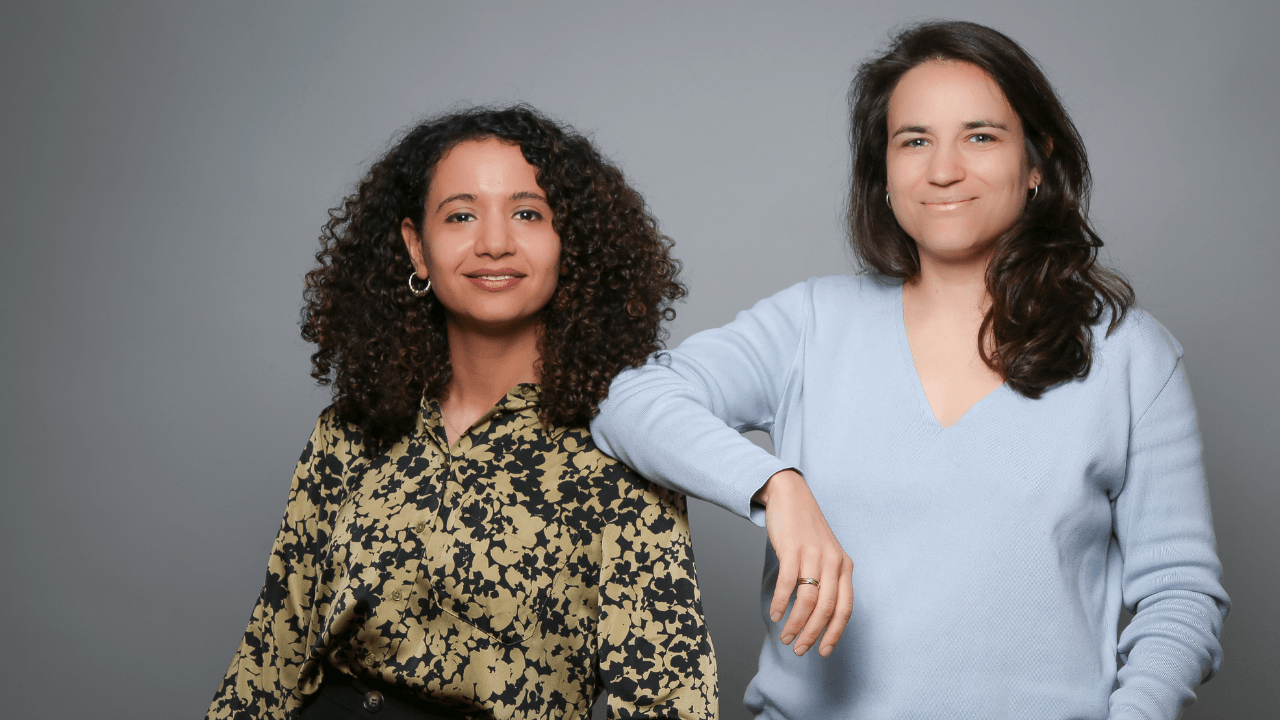
IP patent platform Ankar has raised a $20 million Series A round led by Atomico, with Index Ventures doubling down and Norrsken VC and Daphni participating.
This Series A brings Ankar’s total funding to $24 million.
AI is fundamentally changing how inventions become protected assets. It enables patent teams to analyse novelty, draft claims and evaluate prior art with unprecedented depth and speed.
Yet fragmented tools, gaps in AI trust, and slow enterprise adoption have held organisations back. Ankar solves these challenges with an operating system that unifies the entire patent lifecycle into one secure workflow for the first time.
I spoke to co-founder Wiem Gharbi to learn more.
Why Ankar’s founders saw an untapped problem
For Ankar’s founders, these challenges were not theoretical — they had seen them firsthand.
Alongside co-founder Tamar Gomez, Gharbi previously built mission-critical software at Palantir in Europe and the US. Gharbi helped adapt Palantir’s platforms to real-world business needs, supporting organisations in extracting value from complex data environments.
Beyond customer deployments, she was also involved in strategic initiatives, including efforts to make Palantir’s software more accessible to startups, and worked closely with executive teams on high-level collaboration and product strategy. Toward the end of her time at Palantir, Gharbi began to notice a recurring pattern:
“While exploring new ideas with other alumni, we began looking at intellectual property as a way to create long-term value.” Gharbi said.
“Coming from a company that builds software for governments and large organisations, I was struck by how little innovation had actually happened in IP tooling itself.”
At the same time, her co-founder, Gomez, was working in defencetech as a product manager, responsible for managing IT lifecycles. She was encountering the same issues — innovation data being tracked through tickets, spreadsheets, and fragmented systems.
Those shared experiences really became the spark for Ankar.
The broken reality of modern patent workflows
In practice, the traditional patent process is stubbornly manual.
Most teams manage innovation and IP work largely by hand. To understand the state of the art in areas such as additive manufacturing, companies often relied on patent engineers or PhDs to read hundreds — sometimes thousands — of patent filings and scientific papers, manually extracting insights, assessing relevance, and tracking everything in spreadsheets. The process was is, fragmented, and highly inefficient.
Patents can take up to 24 months to secure and still rely on scattered Word documents, spreadsheets, emails and outdated IP systems.
This inefficiency slows teams down and discourages inventors from filing altogether. In response, Ankar is building an operating system for innovation.
Turning data into defensible assets
Ankar's platform helps patent teams go from idea to granted patent in a fraction of the time, delivering an average 40 per cent boost in productivity and hundreds of hours shifted to high-value work. That efficiency matters as IP increasingly underpins long-term competitiveness.
“Today, around 90 per cent of company value is already intangible — patents, know-how, R&D output — and that proportion will only grow in the age of AI,” shared Gharbi.
At the same time, enormous volumes of innovation data already exist: patents, research publications, and technical documentation.
But they’re extremely hard for teams to digest and act on.
“What we do is provide AI-powered assistance that accelerates that process dramatically — extracting, structuring, and surfacing relevant insights so teams can move much faster and more confidently,” explained Gharbi.
Ankar aims to make that data usable. It builds AI tools that sit at the intersection of IT teams and R&D teams, helping them analyse existing innovation, build on top of it, and turn it into structured, defensible assets that actually contribute to enterprise value. One core use case is analysis and synthesis.
“Imagine a pharmaceutical company developing a new compound,” shared Gharbi.
“To understand what already exists, teams need to analyse millions of patents and research publications — for example, to identify relevant excipients or prior formulations.”
Ankar’s system uses LLMs to aggregate, analyse, and synthesise that information so teams can make sense of it quickly and make informed decisions. Once a team has created something new — say, a novel product feature or technical solution — they often need to formalise it as a patent. Writing a patent application is time-consuming, highly structured, and can run to dozens of pages.
“Our tools assist with structuring and drafting those applications, helping teams move faster while maintaining quality,” shared Gharbi.
Ankar replaces the fragmented patent process with a unified platform that orchestrates the entire patent lifecycle, helping teams turn ideas into defensible global IP in hours rather than weeks.
Acting as an assistant rather than an autopilot, it combines instant novelty and prior-art analysis across 150+ million patent applications and 250+ million scientific publications with strategic drafting, prosecution support, and a single consolidated view of examiner responses—delivering stronger claims, clearer framing, and more defensible portfolios as competition for IP intensifies.
However, for enterprise adoption, speed and intelligence are only part of the equation.
Designing patent AI for high-sensitivity R&D environments
Patent workflows require the highest confidentiality in the enterprise world, and Ankar has been built for this.
This matters more than ever: generative AI is making it easier for competitors to replicate designs, architectures and experimental approaches.
As a result, C-suites, especially in automotive, electronics and other R&D-heavy sectors, are prioritising deeper, more defensible patent portfolios to secure future revenue.
Ankar ensures that customer data is not fed back into shared models, implementing strict access controls and designing strong checks and balances throughout the system.
Gharbi asserts:
“Innovation data is extremely sensitive, so security and confidentiality were not afterthoughts for us — they were foundational design principles. We’ve spent significant time ensuring that data stays isolated, secure, and confidential within each customer environment.”
“We also pursued ISO 27001 compliance very early, which many startups only tackle much later."
For us, security isn’t a feature — it’s a prerequisite,” shared Gharbi.
Further, because accuracy is critical when dealing with chemical formulas or engineering specifications, Ankar ensures its models are grounded, meaning they operate only on verified data sources such as patent databases and research publications rather than relying on free-form model memory.
“On top of that, we’ve added verification layers in the product itself, so users can trace outputs back to source documents and validate results before acting on them,” explained Gharbi.
According to Tamar Gomez, co-founder of Ankar AI:
“Invention is how we solve humanity’s biggest challenges, yet the systems that protect those ideas are decades out of date.
AI will redefine how global organisations innovate over the next five years, turning IP from a cost centre into a growth driver. The companies that adopt Ankar now will shape the future of innovation."
Andreas Helbig, partner at Atomico, said:
“Tamar and Wiem bring exceptional technical depth and first-hand experience of how broken the patent process is. Their momentum with Fortune 500 companies shows they’re building the right product at exactly the right moment.
We’re proud to support their mission as they build the foundational infrastructure for how the world’s most important ideas are protected and commercialised.”
Ankar’s long-term ambition is to become the software layer that orchestrates how ideas become globally defensible patents, serving as the core infrastructure for innovation in the AI era.
The capital will be used to double the company’s 20-person team, expand engineering, product and design, and grow Ankar’s go-to-market organisation to support rising demand across Europe and the US.


Would you like to write the first comment?
Login to post comments