
As consumer health shifts toward longevity, quantified wellness and personalised nutrition, one of Europe’s fastest-growing health tech companies is repositioning itself for the next wave.
Founded in 2013, Kilo Health — now rebranded simply as Kilo — rose to become the second-fastest-growing company in Europe in 2022.
After building direct-to-consumer health brands used by over 10 million people worldwide, the Lithuanian company is evolving into what CEO Žygimantas Surintas calls a “high-velocity venture studio”, co-founding startups and investing in early-stage companies across health, longevity, beauty and travel.
In 2024, the company posted consolidated revenue of €234 million and EBITDA of €11 million.
Its portfolio spans established brands including Moérie, Pulsetto, Bioma, Her Bodhi, ColonBroom, and RatePunk, alongside newer ventures Agava, Iteractive, and Go Health — with products now used by more than 10 million people across the US, UK, Canada, Australia, New Zealand, France, Spain, Italy, and beyond.
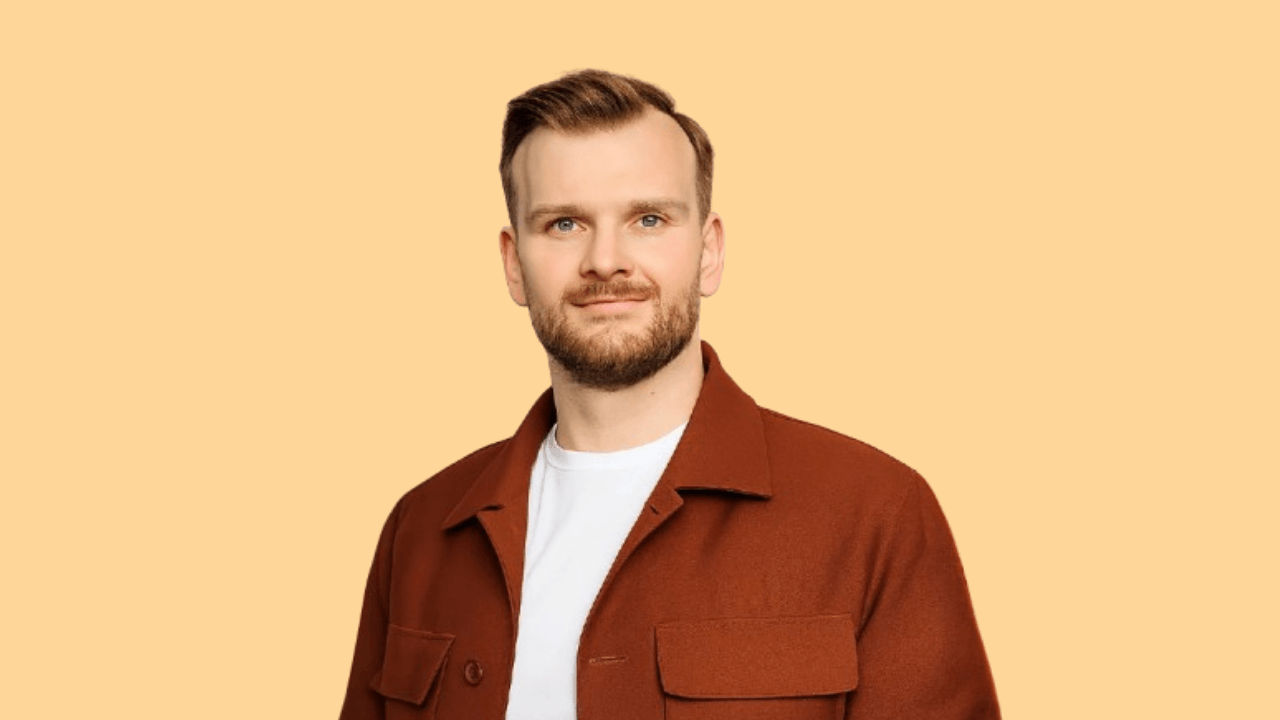
I sat down with CEO Žygimantas Surintas to find out more.
Kilo's shift to a high-velocity venture studio
According to Surintas, the rebrand from Kilo Health to Kilo signals a broader strategic shift:
"It was really about clarifying who we are. For a long time, people described Kilo Health in different ways — studio, ventures, startup studio — and we wanted one clear answer.
We did a full exercise to define where we act as an investor, as a managing partner, as a co-founder, as a financial partner, where we run operations, and where we don't. We crystallised it and landed on calling ourselves a high-velocity venture studio. We want to start and invest in companies that can develop very fast.
Our key advantage is speed — we have a strong foundation to launch businesses quickly — and extensive knowledge from years in this space."
That infrastructure is formalised through Kiloverse — Kilo's internal ecosystem, giving founders access to marketing expertise, technology tools, global partnerships, and specialists in R&D, nutrition, and research.
The company works with builders primarily in health and wellness, supporting them from the MVP stage through to scale. Investment tickets range from €50,000 to €1 million, with follow-on funding of up to €10 million. To date, Kilo has invested over €10 million in external startups and nearly twice that in its own R&D and product development.
The value of market specificity
Kilo operates across health, wellness, beauty, and travel. Surintas contends that they're different markets, but they also share a lot: they target the mid-market and often serve more mature customers.
“That means we have data and understanding around what these people want — their needs, interests, and problems we can solve. So we’re not going broad.
If we launch a beauty product, we’re very specific about the market — and it often overlaps with what we know from supplements. Same with travel. We exchange a lot of data internally and we’re clear on where we’re going.”
Venture strategy: the right fit over the obvious winner
From a venture perspective, Kilo isn't chasing segment leaders.
"We're not rich enough to invest in the obvious, loved-by-everyone winners," Surintas says.
"We focus on ideas that fit our concept — and especially where money is not the only value we bring. We're not private equity. This is our own equity — our own money — so we want to know how we'll help the business grow."
If capital is the only requirement, Kilo isn't the right partner.
"There are people with cheaper money. Our money is expensive — so we need the right fit and real synergies."
He's equally pragmatic about defensibility. In Kilo's core markets, what launches today gets copied tomorrow — and Surintas accepts that as inevitable. What separates the winners, he argues, is execution.
"Copy-paste doesn't win. A one-to-one copy never works because business takes soul, heart, and effort."
Europe’s opportunity — but America first
Kilo sees Europe as its biggest potential market in the coming years. But, Surintas admits, “We still have a rule: when we start something from scratch, we start in the United States first. It’s one country — one market. Europe is one system, but in practice it’s fragmented. You lose speed."
"But if you’re afraid of wolves, don’t go into the forest.”
Balancing speed, science, and data-driven decision making
When asked how Kilo balances scientific rigour and regulatory compliance with the pace of growth he describes, Surintas says it is actually one of the company’s key strengths.
“We have nutritionists, a legal team, and compliance specialists working on this every day.
If someone comes with an idea tomorrow, we can quickly say: this path works, that path doesn’t.”
While Kilo operates primarily in supplements and consumer health, the company does not manufacture its own products. Instead, it works with established partners — primarily in the United States — allowing it to develop scientifically grounded products while moving quickly.
“We know who we work with, how to create unique formulas and blends, and how to build something scalable and compliant,” Surintas says.
“That know-how saves time — and that’s where speed comes from.”
Data, he adds, is central to how the company evaluates both products and new opportunities. After more than a decade of building direct-to-consumer health businesses, Kilo has accumulated extensive internal datasets about consumer behaviour and product performance.
Looking ahead, Kilo plans to invest up to €20 million in AI development over the next three years, with an ambitious target of $1 billion in consolidated annual revenue.
With the rise of quantified health, machine learning and AI are becoming increasingly prominent in wellness products. But Surintas says Kilo is deliberately cautious about how quickly it adopts new technologies.
“We saw one company in our segment automate media buying with machine learning and let go of more than half their team — and sales dropped 40 per cent. That’s a hard lesson.”
While he acknowledges the potential of AI, Surintas believes it should be introduced gradually rather than treated as a silver bullet.
“As a leader, of course, I want AI to do everything today,” he says. “But the right approach is consistency and gradual adoption.” Why Kilo sees longevity as the next big health market
In terms of what’s next in the health and wellness space, Surintas contends that diet will be a big shift:
“Trends change — keto and fasting had their moment, and keto is declining year over year. People try something, then they look for the next thing. Even GLP-1 requires specific diets to reduce side effects — so it’s all connected.”
He also sees growing demand emerging around mental health and longevity, arguing that the longevity market in particular has reached a turning point after several years of experimentation.
“People are educated enough now that we can talk about mass products — what works and what’s proven versus what’s just noise,” says Surintas.
“That’s a good moment for us. This year we’re planning to introduce four or even five longevity products.”
Kilo prefers to invest once there is early traction rather than at the pure idea stage.
“We invest when there’s real initial data and strong early development,” he explains.
“The longevity point is more than the market foundations are now in place — so it’s the right moment to build and launch.”
When it comes to navigating hype cycles versus genuine opportunity, Surintas says the company relies heavily on its own long-term dataset.
“Kilo has 12 years of data and learning in this business. That’s central to our decision-making — and as machine learning improves, the importance of data only grows.”
Bootstrapped to €500M: Kilo’s biggest win and toughest lesson
Surintas sees Kilo’s independence as its greatest achievement.
“The biggest success is that the company got here without external funding. We expect to close 2025 at around €500 million in revenue — without external investment.”
The business, he notes, was originally built by its founders from a small office and scaled organically. “Times were different then, but it’s still a major achievement. And I should stress — I joined two years ago. Others built this foundation.”
But the biggest failure is also connected to success: the company grew too fast. Surintas explains. “When turbulence came, it was difficult to control and adjust the business quickly. It took time — but it also made the company stronger. Now we’re more consistent: doing less, but with better quality.”
"We want grinders"
For founders considering the venture side, his advice is direct: take the help, and don't try to protect all the equity early.
"You can have 100 per cent of something very small, or less than 100 per cent of something very big. Don't be afraid to share your ideas — we have plenty of ideas.
For us, it's not your idea we need. It's you. We want strong partners we can grind with. Read this word: grinding. We don't look for hustlers. We look for grinders."
Hustling, he contends, doesn't work anymore — especially post-COVID.
"It's tough, it takes time, and you'll spend a lot of life in the office. It's doing the work — heads down. And no AI or machine learning will change that."
Kilo’s ambitions for the next phase are both bold and pragmatic. The company aims to reach €1 billion in revenue within the next few years while maintaining strong high-digit profitability. At the same time, it plans to expand into new markets and verticals — particularly travel and longevity.
“We want consistency — not chasing the latest FOMO. We don’t have a goal to be a unicorn or whatever the new term is. We could have chased that. Our goal is a stable, strong business.”


Would you like to write the first comment?
Login to post comments