

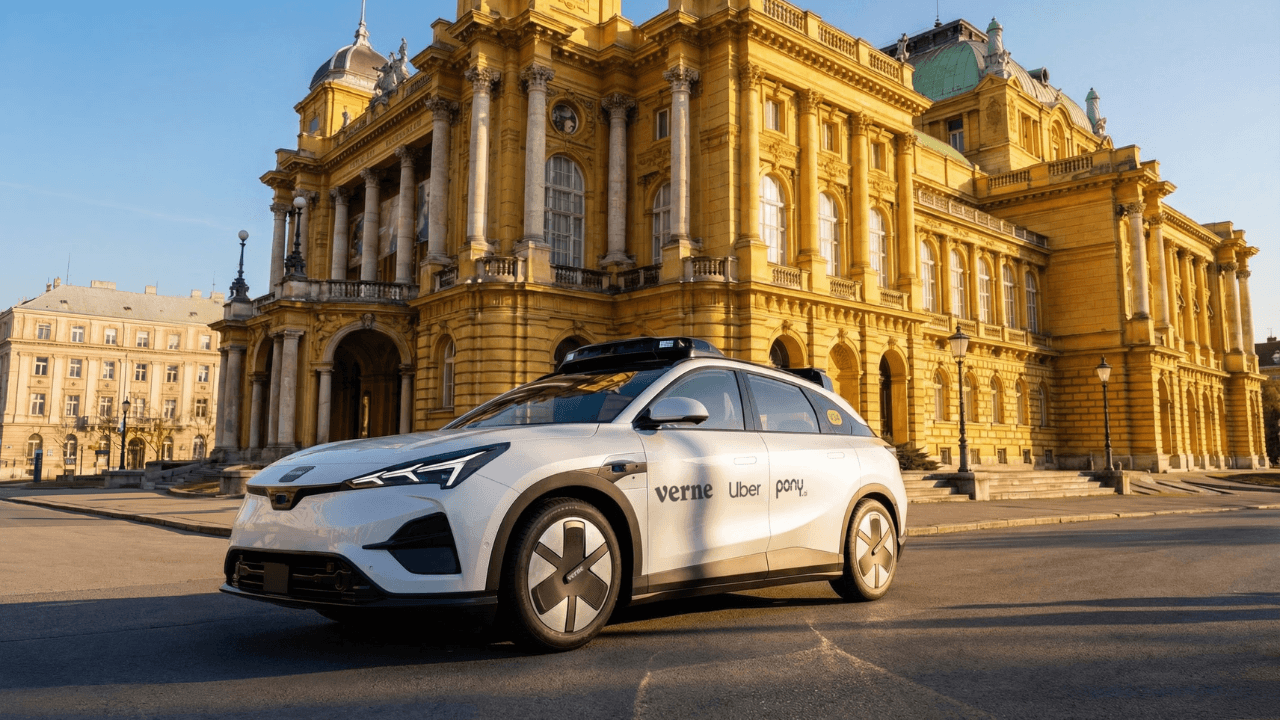
Verne today announced the launch of Europe’s first commercial robotaxi service, starting in Zagreb, Croatia.
Beginning today, members of the public can now book and pay for a Pony.ai-powered autonomous ride through the Verne app.
The service will soon also be available through the Uber app, following a recently announced strategic partnership between the three companies.
The commercial service is the result of several years of development and close collaboration with regulators, positioning Verne among the leaders of autonomous mobility in Europe.
“For the first time in Europe, there is a real commercial robotaxi service. People can use it and take real autonomous rides,” said Marko Pejković, co-founder and CEO of Verne.
“We said we would launch in Zagreb in 2026. Today, we did. This is just the start.”
Start of service in Zagreb
The initial commercial deployment will use electric vehicles equipped with Pony.ai’s seventh-generation autonomous driving system.
These vehicles will operate autonomously, with trained autonomous vehicle operators onboard during the early phase of the rollout.
The initial service zone covers key districts of the Croatian capital, with plans to expand coverage across the city.
The companies aim to transition to fully driverless operations as soon as possible, subject to regulatory approvals and the service meeting the required safety and reliability standards.
From Zagreb and beyond
Verne has begun permitting discussions with 11 cities across the EU, UK, and the Middle East, with more than 30 additional cities currently under consideration.
Verne will also eventually deploy the company’s purpose-built autonomous vehicle, a two-seat robotaxi designed specifically for driverless ride-hailing.
From EasyMile to Einride, and now Verne: Europe’s autonomy stack evolves
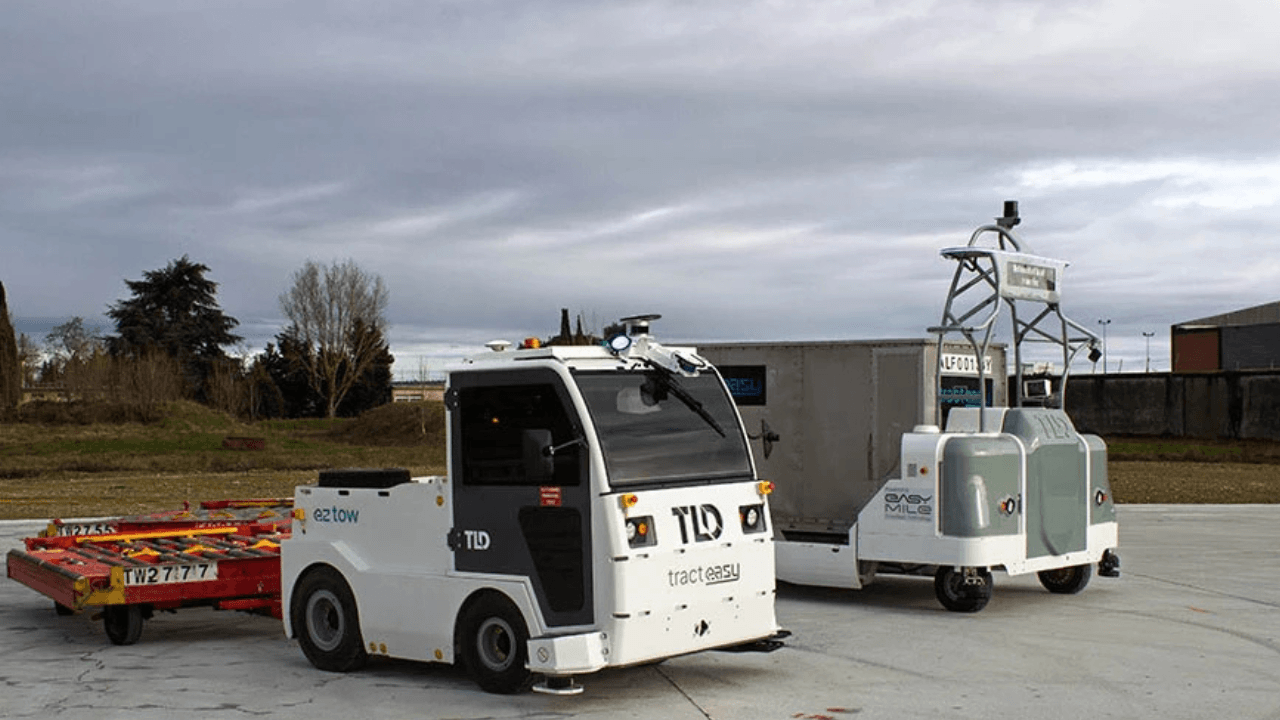
Verne marks a shift from earlier paths to vehicle autonomy in Europe. Until now, one of the region’s most prominent players has been the French company EasyMile, which was the first to offer a fully driverless L4 autonomous shuttle, the 12-seater EZ10, across locations such as business parks, campuses, and commercial roads. EasyMile operates throughout Europe, including autonomous shuttles operational on public roads in Bad Birnbach, Monheim am Rhein, and Munich in Germany, as well as Toulouse, France.
Earlier this year, the company announced a strategic pivot to heavy-duty applications for airports and industrial sites. The company is focusing on software licences for these markets, where it considers autonomy is commercially viable today, with growing deployments and a clear path to scale for heavy-duty vehicles that transport parts, goods, baggage, cargo etc. on airports and industrial sites.
In parallel, German autonomous trucking company Fernride develops human-supervised autonomous trucking systems used in container terminals, industrial yards and defence logistics, retrofitting existing vehicles with AI, sensors and software to automate repetitive transport tasks. Its technology has already been deployed in real-world operations and, in 2025, it became the first company to receive TÜV approval for autonomous trucks in Europe.
The company was acquired by Quantum Systems in late 2025 as part of a broader push to build a multi-domain autonomy stack spanning air and ground systems.

Meanwhile, Swedish-founded Einride deploys electric fleets and its driverless “Pod” vehicles, which can operate autonomously or be remotely controlled by human operators when needed. Alongside its hardware, the company runs a digital platform that plans routes, manages charging, and optimises deliveries, positioning itself less as a truck manufacturer and more as a software-driven freight operator. Already working with companies like Maersk and Oatly, Einride is part of a broader shift toward cleaner, more automated, and data-driven supply chains.
In September last year, Einride completed the first successful European cross-border operation of a cableless electric autonomous vehicle without a human driver onboard.
Against these efforts, in January, US company Waymo announced its intention to launch a fully driverless ride-hailing service in London by the fourth quarter of 2026. The company will soon begin conducting extensive trials of Waymo’s technology as part of our mapping and safety validation work across select boroughs in London. Testing hours typically run 24 hours a day, 7 days a week, to ensure its technology can safely handle all of London’s road conditions.
Teledriving as an alternative path

In commercial passenger transport, Estonia’s Elmo and Germany-founded Vay pioneered a different approach to vehicle automation, using teledriving to bring vehicles to users before switching to manual control for the trip itself.
Using an app, users can request the delivery of an electric vehicle to their location. After the car arrives, the user takes over and drives it like a regular car.
At the end of the trip, the user ends the rental in the app, exits the car, and a remote driver takes over, eliminating the time-consuming search for parking.
Combined, these approaches highlight a fragmented but interconnected approach to vehicle automation in European mobility, which straddles controlled environments and industrial use cases against complex urban settings.


Would you like to write the first comment?
Login to post comments