

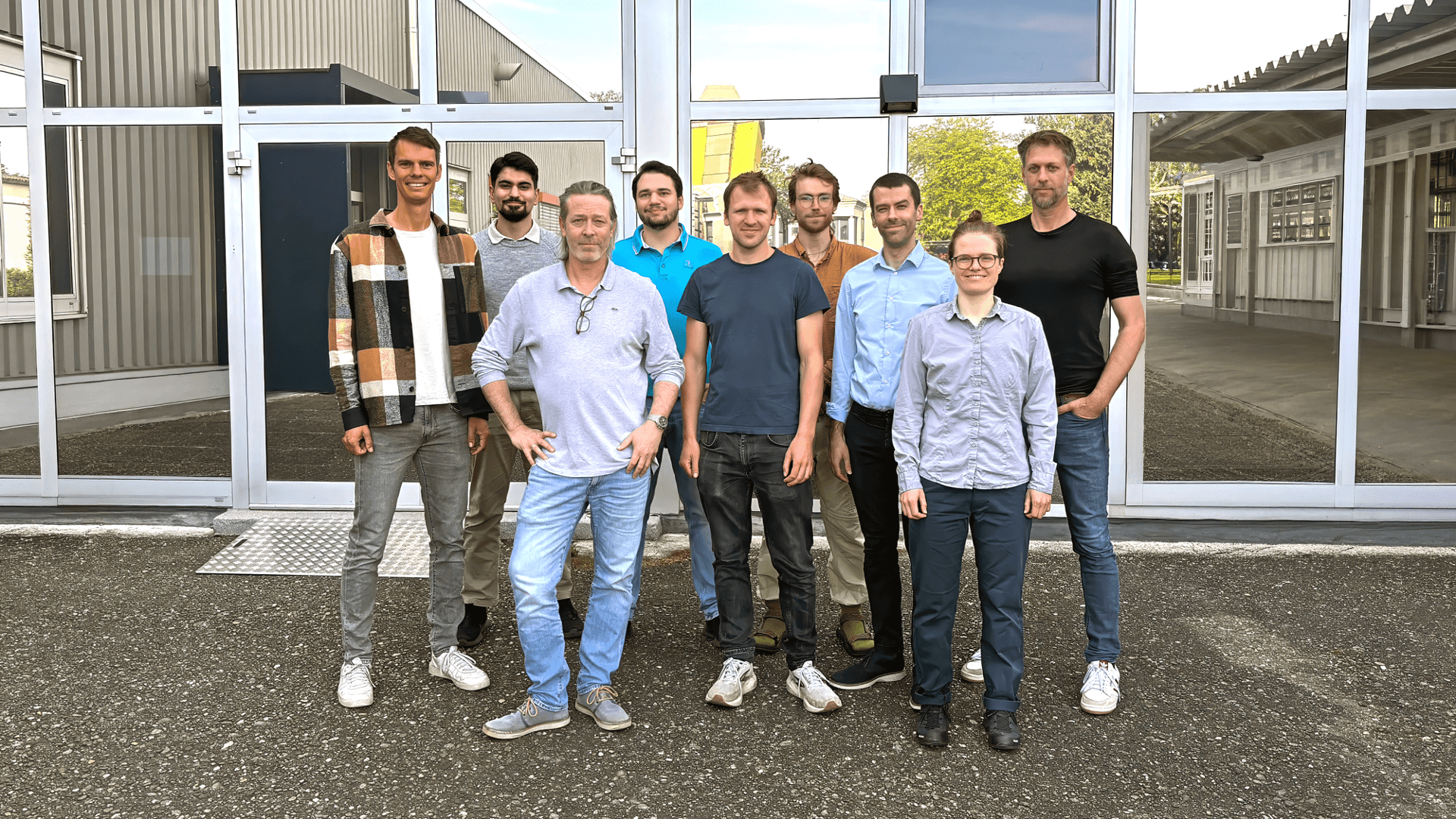
Freiburg-based climate technology startup Qurie has raised €2.2 million in funding from High-Tech Gründerfonds, Technology Transfer Fund TT49 and Aepikur GmbH.
The HVAC industry is facing increasing regulatory and environmental pressure as the European Union phases out conventional refrigerants under the F-Gas Regulation. Existing alternatives to compressor-based cooling systems have struggled to achieve commercially competitive operating costs, creating demand for new approaches to sustainable cooling infrastructure.
Founded in 2026 by Dr Christian Vogel and Dr Kilian Bartholomé as a spin-off from Fraunhofer Institute for Physical Measurement Techniques IPM, Qurie develops refrigeration systems based on electrocaloric materials, which change temperature when electric fields are applied or removed.
The company uses electrocaloric effects within stacked material structures to create solid-state cooling systems with minimal mechanical components. At the centre of the platform is a patented active electrocaloric heat pipe technology developed at Fraunhofer IPM over more than a decade.
Dr Kilian Bartholomé said the company’s heat pipe technology enables more efficient heat transfer and higher pumping frequencies than conventional liquid-based systems, helping make the platform commercially competitive.
Qurie’s systems are designed to achieve higher theoretical efficiency than conventional compressor-based cooling technologies, with the potential to reduce energy consumption. The architecture is also intended to support smaller and more flexible cooling systems for applications including industrial enclosure cooling, electronics, medical devices, automotive systems and building infrastructure.
The HVAC industry is facing a fundamental transformation - regulatory, technological and economic. We have reached a point where we can demonstrate that our technology not only works, but also makes economic sense. This is the moment we have been working towards,
said Dr Christian Vogel.
The company plans to initially target industrial enclosure cooling before expanding into commercial refrigeration, medical technology, electronics and automotive markets.
The new funding will support continued technology development, while an additional research programme funded by the German Federal Ministry for Economic Affairs and Energy will support development activities through the end of 2026.


Would you like to write the first comment?
Login to post comments