

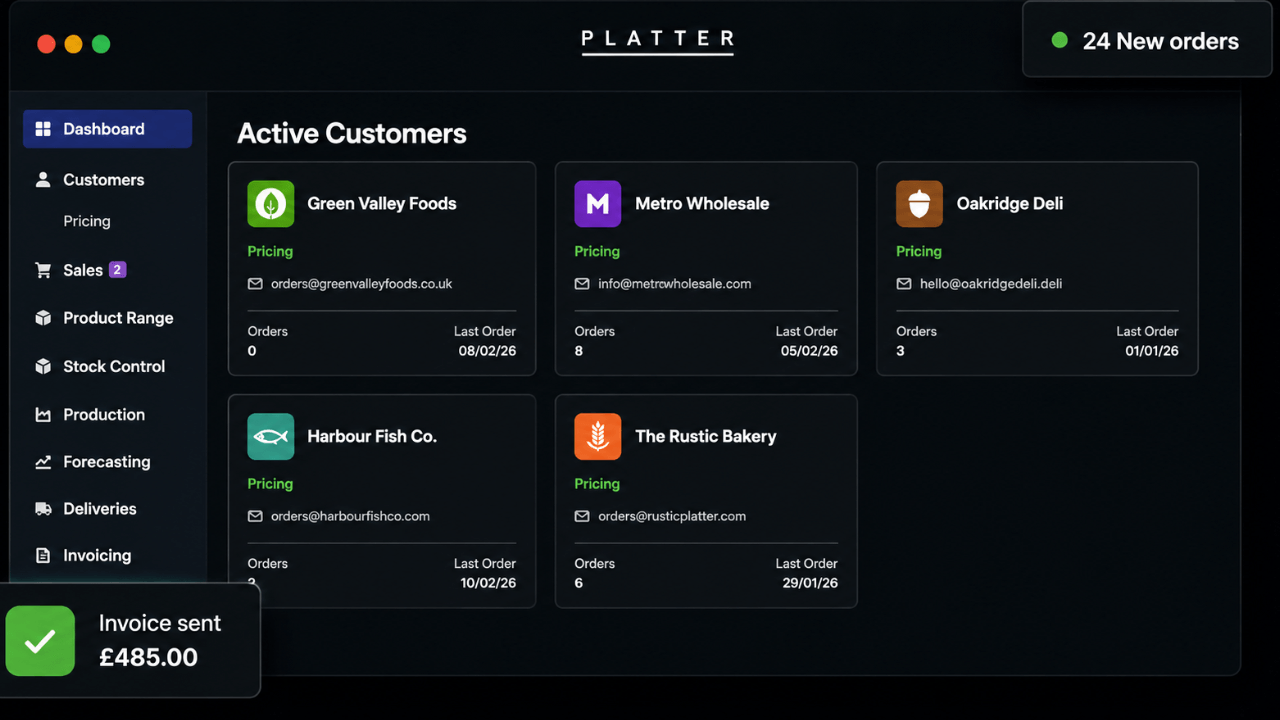
UK-based Platter, a food-native operating system for suppliers, wholesalers and manufacturers, has raised an extension to its latest venture round, joined by Verb Ventures.
The UK is home to around 25,000 food and beverage manufacturers, the large majority of them small: cheesemakers, bakeries, sauce producers, drinks brands, chilled foodservice wholesalers and regional dairies. Individually modest, collectively they account for a meaningful share of what ends up on shelves and menus, and most of them still run on a spreadsheet that someone rebuilt from scratch.
The inefficient spreadsheet is the operating system of a real business that nobody designed. They are used to document buyer-specific price lists that differ by customer and sometimes by week, alongside stock positions, production plans, delivery routes, allergen data and margin calculations.
Platter is building the missing puzzle for the sector, the back office itself, built around how the UK food trade actually works.
The product runs across three connected layers: orders and sales, including digital ordering, an online storefront and buyer-specific price list management; operations, covering delivery planning, stock and production visibility, and warehouse connections; and finance and invoicing, with automated invoices flowing straight into Sage and Xero, plus embedded invoice factoring through a partner facility that lets suppliers get paid on materially shorter terms.
Already live since mid 2025, Platter has onboarded over 30 customers, each processing approximately £3 to £ 10 million in annual trade through the platform. Collectively, the company is on track to process well over £100m in annual trade, with zero customer churn since launch.
According to Alexey Bulygin, Principal at Verb Ventures:
"We invest in the operational layers that make trade work, usually in industries everyone depends on and almost nobody has bothered to build proper software for.
Platter is going after it in the food industry from day one, and that's exactly the kind of system-of-record business we back."
Verb believes the key distinction is between software that supports operations and software that becomes operational infrastructure.
Once ordering, inventory, production, delivery, invoicing and accounting all run through Platter, switching costs become significant. In addition, ownership of the invoice and end-to-end visibility into transaction flows and pricing data create a strong foundation for expanding into payments and broader embedded services.


Would you like to write the first comment?
Login to post comments