

German fintech Solaris recently announced plans to become “Europe’s first AI-native bank”, undertaking a “strategic repositioning” following a troubled few years. Solaris, valued as a unicorn at around $1.6bn in 2021, was once a star performer in Berlin’s fizzing fintech scene, having raised hundreds of millions of dollars from investors such as US card giant Visa and Spanish bank BBVA.
In banking parlance, Solaris is called a Banking-as-a-Service provider, which means the Berlin-headquartered fintech, which has a German banking licence, offers white-label banking services to customers. Backed by its major shareholder, Japan’s SBI, its move to automate its processes with AI was announced in March.
German regulators were kept in the loop about the change. As part of the change, Solaris cut around 20 per cent of its 400-strong workforce. The change follows a difficult few years at Solaris, which has seen job cuts, unit closures, and a rescue funding round.
“Wave” coming over financial services
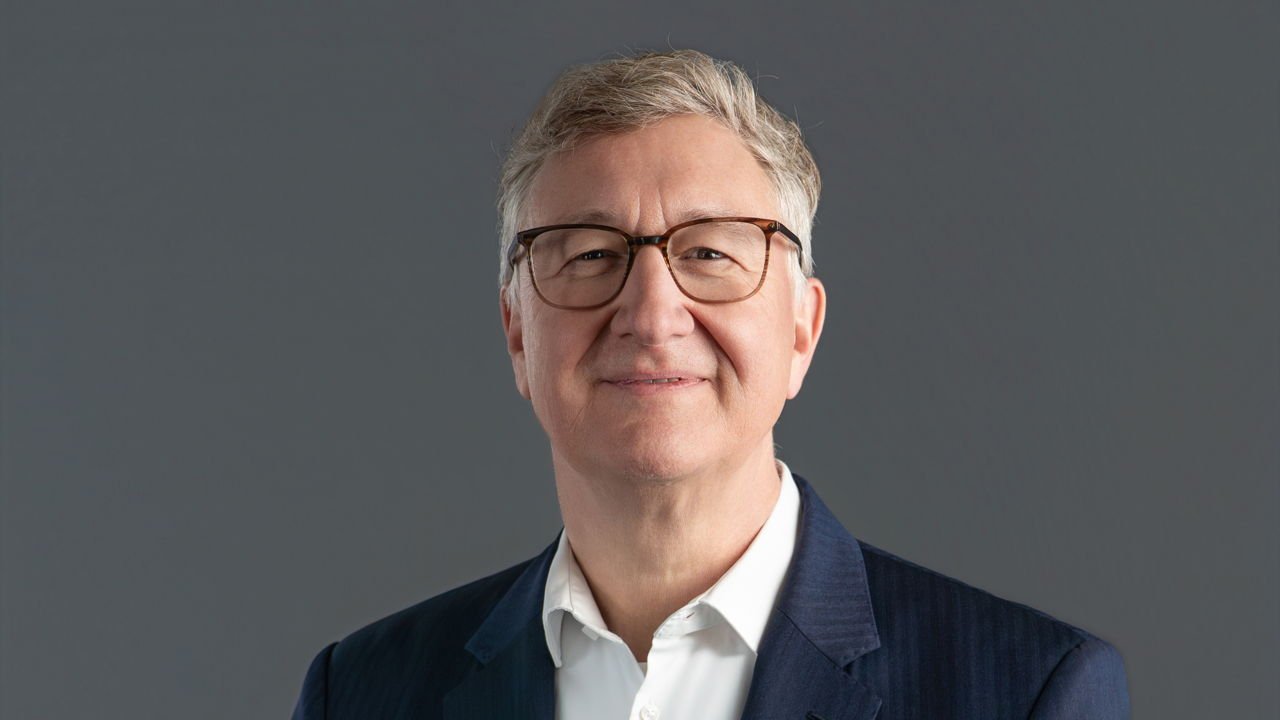
The man who is presiding over the change, CEO Steffen Jentsch, the former managing director at online brokerage Flatex who joined Solaris at the start of 2026, thinks the fintech is a pioneer.
He says: “It’s like a huge wave coming over the financial services industry and will really turn around the whole industry. We have built something like a surfboard to ride this wave.”
He says German financial service providers are keenly watching developments at Solaris, to see if they should follow suit.
Going “AI-native”
Jentsch said the inspiration behind the “AI-native” pivot was seeing robot workers in German factories, supervised by just a handful of people.
He says: “Financial services are digital products, so why can’t we implement something like that for a digital product within a bank?”
Combining Solaris’s existing API-first modular banking system with AI was not “rocket science," he says.
He says it’s easier to implement AI into a modular system, with a flexible IT architecture, than a centralised legacy banking system.
AI agents and LLMs
The change is not insignificant, with Solaris rebuilding its banking processes from the ground up with AI. Solaris is leveraging well-known Large Language Models (LLMs) as well as utilising in-house AI tech. AI agents will now handle operational processes, while humans remain responsible for control and governance. There is AI in place to fend off cyber-attacks and curb hallucinations, the CEO says.
As part of the change, Solaris says it’s developing data and AI-driven financial services for its partners, including its two big clients, ADAC, Germany’s largest motor association, and Boerse Stuttgart Group, which operates the Stuttgart stock exchange.
Jentsch says: “The productivity will explode in the same way the steam machine exploded the productivity 150 years ago.”
Staff reaction
Is there any evidence of a positive impact since the pivot?
He says it is already reaping dividends, saying it was “incredible” the precision with which AI could pick up suspicious transactions and filter out sanctioned accounts in its AML (Anti-Money Laundering) department.
Jentsch says that staff, who have been given €1,000 vouchers for AI training, are now on board with the change.
He says: “At the very beginning, they were a little bit reluctant. In the first week, I had my first all-hands, discussing the strategy and what I want to achieve. And then they carefully watched what I am doing.”
Jentsch denies any charge of AI whitewashing, as in Solaris was falsely attributing AI to layoffs it would have made anyway.
Shutting subsidiaries
This is not the only recent change at Solaris, which also plans to shut subsidiaries in Italy, Spain and France to focus on its native Germany, where it has offices in Berlin and Frankfurt.
Jentsch said that harmonised EU laws make it less important to operate subsidiaries in different European countries, adding that face-to-face meetings can run in tandem with video conferences.
ADAC contract
In its early days, Solaris targeted fintech clients but has pivoted to targeting major enterprises.
Its flagship client is ADAC, which has around 23m members. Solaris won the contract with ADAC in 2022, which is said to be worth more than €100m in annual sales.
It has issued ADAC-branded credit cards and will next issue its members with savings accounts.
Boerse Stuttgart and ADAC make up around 80 per cent of Solaris’s revenues. Is this concentration of clients not a danger?
Jentsch admits there is a danger but says it also represents potential, pointing to the “lock-in effect” of two big clients.
Timeline on profitability
Solaris announced an earlier restructure in 2024, amid the loss of key clients and trouble signing new clients. It discontinued major parts of a UK business it acquired, which had been hit with an €840,000 fine by the Bank of Lithuania over AML violations and closed a business in Lithuania.
Solaris is still under BaFin restrictions, meaning the regulator must approve new clients.
Early last year, Japan’s SBI Holdings agreed to increase its stake to more than 80 per cent in Solaris as part of a €140m funding round, which also included investment from Boerse Stuttgart, and a slashing of its valuation.
Visa and BBVA no longer hold stakes in Solaris.
Reputation of Solaris
There are no plans for imminent future funding. Jentsch says SBI “provided us with sufficient cash to go through the whole process”.
Solaris has also pushed back the timeline on when it will be profitable, saying it will hit profit in 2028, not 2027 as previous management had indicated. Jentsch hopes it will get there by offering new services and picking up new customers.
Does he think that Solaris has lost its sheen in the market?
He says: “To be very open, it was about a bit over promise and under deliver and now I turn it around and under promise and over deliver. We don’t want to put the carriage before the horse, so let’s do it the right way.”


Would you like to write the first comment?
Login to post comments