

According to the chief surgeon of the Armed Forces of Ukraine, colonel of the medical service Kostyantyn Humenyuk, the main cause of death on the battlefield is bleeding.
If a large artery is damaged, the injured person often dies before receiving help. Severe bleeding from arms or legs can kill within minutes, and a tourniquet is often the fastest way to control it.
Tourniquets are widely regarded as lifesaving in both battlefield and civilian emergency medicine, but users struggle to use them correctly.
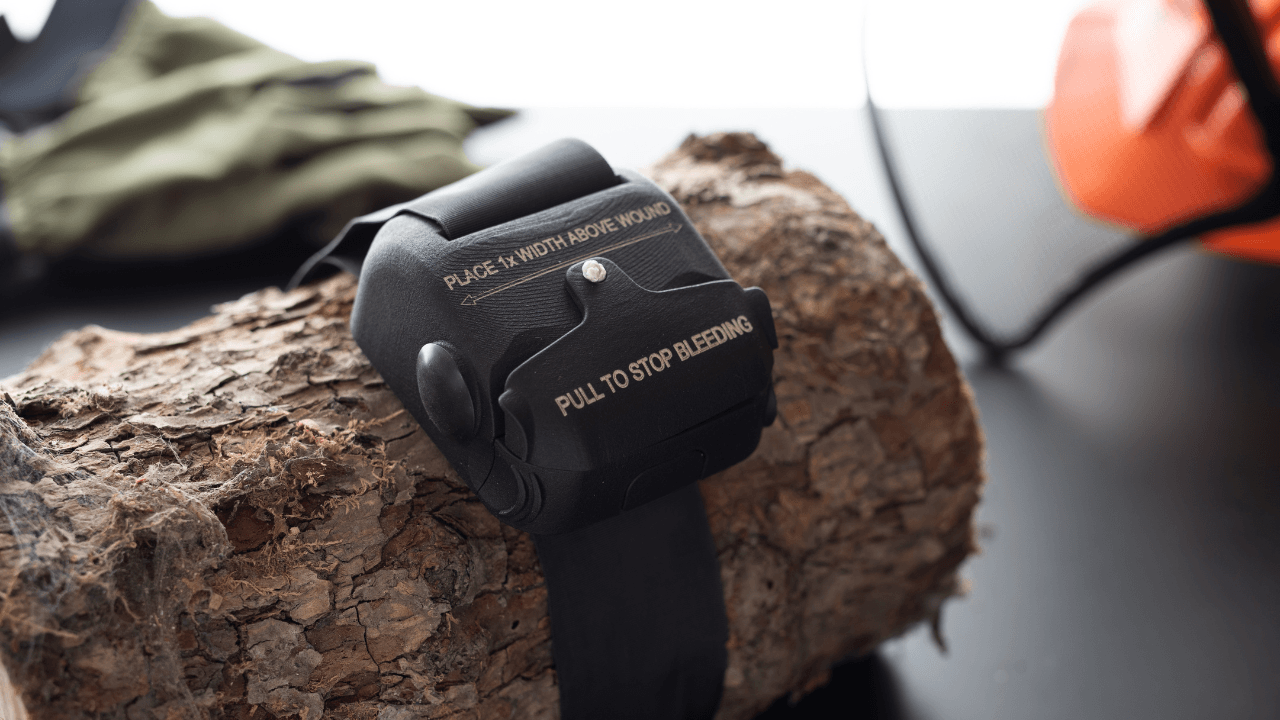
Norwegian startup Aristeia is developing a next-generation emergency tourniquet designed to make it faster, easier, and less painful to stop life-threatening bleeding for both professional first responders and non-medical users.
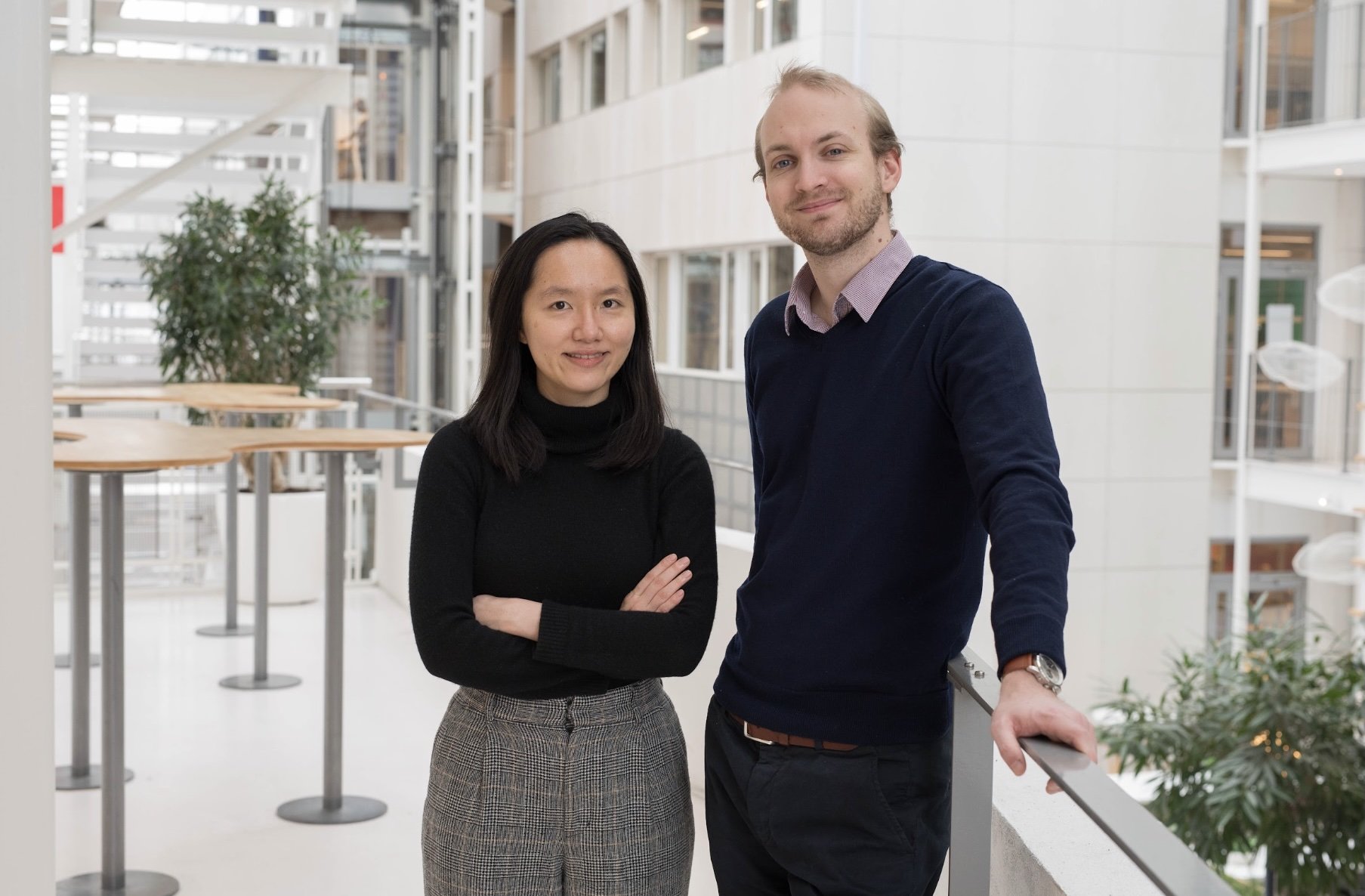
On my trip to Kyiv earlier this year, I sat down with Aristeia founders Gard Fostad Moe (CEO) and Hsin Chen (COO) to learn all about it.
From a napkin sketch to a medical device
Moe describes himself as a “hillbilly biophysicist from a small village with an interest in engineering, physics, and mathematics.”
The idea for the tourniquet began at university, with the initial concept sketched on a napkin.
Gard actually worked on cancer drug delivery systems for his Master’s degree but admits, “I've always enjoyed building things and solving practical engineering problems. While I'm not a mechanical engineer myself, I enjoy approaching technical challenges from a physics perspective and then working with specialists who can help turn those concepts into reality. This project gave me the opportunity to work on something tangible that could potentially save lives.”
Chen joined Aristeia in 2018. My background is in health economics, and I've been involved in helping bring the concept from development towards commercialisation.
Rethinking the tourniquet
Following a decade of R&D, the concept for the tourniquet is straightforward. The device is placed around the limb and pressure is applied by pulling the mechanism. It's extremely fast to deploy. Within just a couple of pulls, you can reach enough pressure to stop arterial blood flow in an arm.
While the engineering principle itself is relatively simple, developing a device that can safely manage those forces and remain reliable in life-threatening situations is very challenging.
Most tourniquets in use today rely on what's known as a windlass mechanism — essentially a rod that is twisted to tighten the strap.
One common failure point is that users either don't secure the device properly or can't generate enough pressure. Conventional designs also require significant physical strength to operate.
Hsin explained:
“Traditional tourniquets require a lot of force, particularly as you continue tightening them. In an emergency situation, simplicity matters. The easier a device is to operate, the more likely it is to be used correctly.”
Our device incorporates a transmission system that makes it much easier to generate and maintain the required pressure. Users can achieve effective occlusion with considerably less effort."
Developed with the Norwegian Armed Forces
Aristeia began working with the Norwegian Defence Research Establishment (FFI) and the Norwegian Armed Forces early in the company's development, after both organisations identified capability gaps in existing haemorrhage-control equipment.
According to Moe, the partnership with FFI played a key role throughout the development process.
"We worked closely with FFI from the very beginning. Prototyping was carried out using their advanced facilities, and we adopted many of the same testing and verification methods used in the United States.
That was important because it allows our results to be benchmarked against international standards and makes them easier to compare and communicate globally."
The company recently completed another major testing phase. The next step is to place units in the hands of end users, including partners in Ukraine, and gather operational feedback.
Why Aristeia chose a mechanical approach
Notably, Aristeia is a mechanical device, unlike sensor-equipped tourniquets in development in places like North America, Israel, and Turkey that can measure pressure, detect pulse cessation, log application time, and transmit data digitally.
But Moe believes that future tourniquets will likely incorporate sensors and monitoring capabilities.
“Continuous monitoring of pressure and patient condition could become increasingly important, particularly in situations where medical personnel cannot continuously observe the casualty.
But our immediate focus has been on creating a simple, highly effective mechanical solution.”
Could tourniquets become as common as AEDs?
Significantly, Aristeia’s tourniquet requires minimal training, and the team is equally interested in civilian applications — emergency services, police, firefighters, ambulances, first-aid kits, public spaces, and potentially even vehicles.
According to Hsin:
“The product has the potential to change how tourniquets are used beyond military settings.
The easier you make emergency equipment to operate, the more useful it becomes for everyday emergency preparedness. In many ways, we see parallels with automated external defibrillators (AEDs). Tourniquets could become similarly accessible emergency devices in locations where large numbers of people gather.”
The challenge of scaling production
Aristeia is experiencing a common challenge familiar to hardware startups. From here on, Moe sees manufacturing as the company’s biggest challenge, admitting that the company has reached a stage where the technology is mature enough to make scaling production viable, but that this requires a completely different level of capital.
“We are moving beyond what can realistically be funded through angel investment and into a phase where institutional investment becomes necessary.
Manufacturing a mechanical medical device at scale is significantly more complicated than many people realise. The device only becomes commercially viable at meaningful production volumes.”
But Aristeia's immediate priority is to deploy units, collect feedback, and continue the validation process. Moe explained:
“We want to make sure the device performs reliably across a wide range of real-world scenarios. That's why direct engagement with end users is so important.
We're also eager to connect with additional medical, military, and emergency-response communities internationally. The more perspectives we can gather, the stronger the product will become.”


Would you like to write the first comment?
Login to post comments