

Getting a drone off a ship is easy. Getting it back is another matter. Although drones are increasingly used for offshore inspection, surveillance and search-and-rescue missions, recovering them safely on a vessel that's constantly moving with the sea has remained a major technical obstacle.
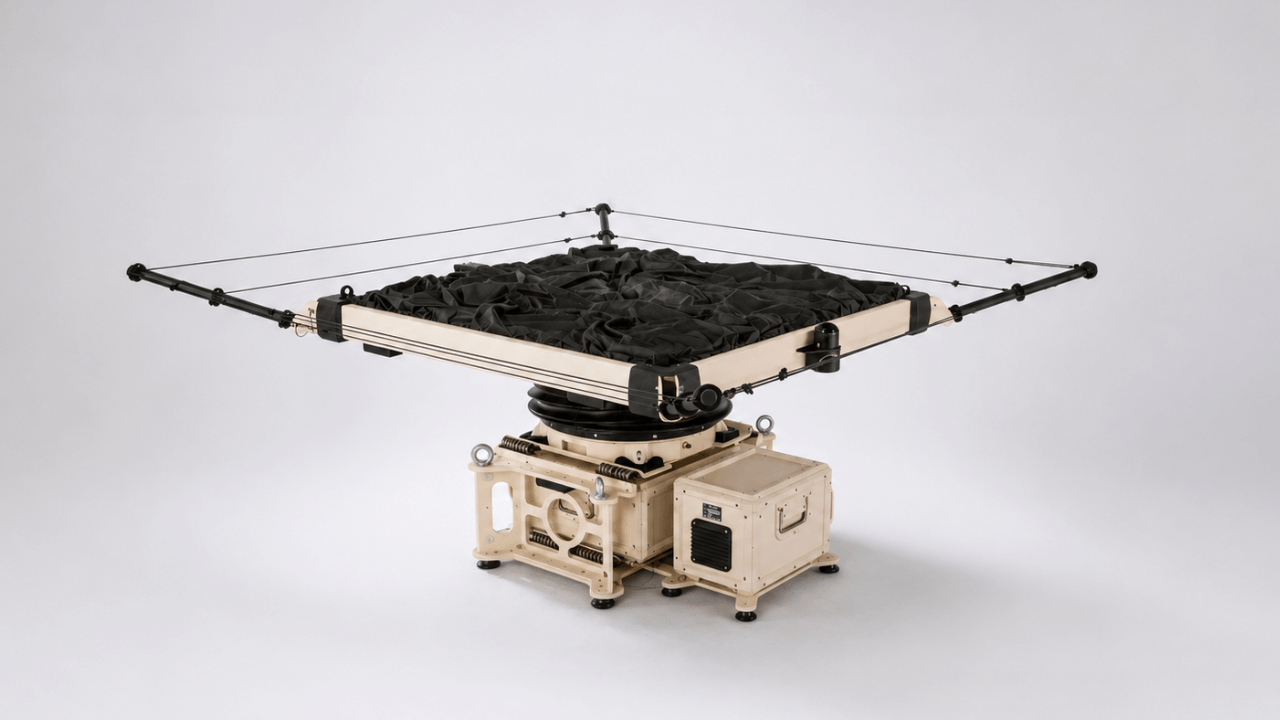
UK startup WaiV Robotics recently emerged from stealth with an autonomous recovery system designed to solve that problem, allowing drones to land safely on moving vessels without anyone on deck.
I spoke with Johnny Carni, founder and CEO of WaiV Robotics, about the technology behind the system and the commercial opportunities it could unlock.
Why landing at sea so difficult
Commercial drones are designed to land slowly and gently on stationary ground. During normal flight, GPS provides a stable reference point, allowing the drone to hold its position accurately even in strong winds. Automatic landing systems typically rely on visual markers or fiducials placed on the ground. The drone identifies the marker with its camera, tracks it and descends gradually until touchdown.
However, that approach doesn't work at sea because the landing surface is constantly moving. A vessel pitches, rolls, and yaws with the waves, while also moving vertically and laterally and changing direction as it drifts.
By the time the drone has descended, the landing pad has already moved, explained Carni.
“If it continues trying to follow the platform's current position, it's always reacting too late — effectively chasing a moving target rather than converging on it.”
To land safely on a vessel, the drone has to predict where the landing platform will be, not where it is at that moment. That requires a completely different approach to control.
According to Carni, the challenge isn't simply stabilising a landing pad. It's solving the entire landing sequence.
"You have to guide the drone onto a constantly moving target, absorb the impact of landing and immediately secure the aircraft. Those are three separate engineering problems, and they all have to work together.
Over the past three years, we've developed each technology before integrating it into a complete system. From there, we moved from research and prototyping into manufacturing a commercial product that can be supplied to customers.”
From naval aviation to WaiV Robotics
WaiV Robotics was founded in 2022, but the idea emerged much earlier. Prior to founding the company, he spent four years working in Singapore, working closely with coast guards and other maritime operators.
“During that time, I kept hearing the same requirement: they wanted to operate drones reliably from boats and ships.”
This resonated as he had previously flown helicopters onto ships.
“Landing on a moving vessel is one of the hardest things a pilot can do. The sea is constantly changing, the deck is moving in multiple directions, and there are strict limits on the conditions in which manned helicopters can safely land.
Traditional helicopters solve part of that problem mechanically, using deck-locking systems and other equipment, but they still have operational limits.”
While experimenting with drones, it quickly became obvious that, although extremely capable in the air, drones simply aren't designed to land on vessel decks. That was the starting point for Waiv Robotics.
The team began research in the summer of 2022 and spent the next several years developing the technology, building prototypes and validating the system before turning it into a commercial product. The technology behind autonomous recovery Waiv Robotics' autonomous recovery system combines three integrated technologies that enable drones to land safely on offshore platforms in rough sea conditions without human intervention.
The first is a gyro-stabilised landing platform that keeps the landing surface level as the vessel pitches and rolls. While stabilised platforms are already used in the maritime sector, they form only one part of the overall recovery system.
The second is a specially engineered landing pad designed for the harsh marine environment. It provides grip to prevent the drone from slipping after touchdown and also absorbs the significantly higher impact forces generated when landing on a moving vessel. Rather than bouncing or sliding across the deck, the drone lands on a cushioned surface that dissipates impact energy and keeps the aircraft stable.
The third component is an automatic locking mechanism. As soon as the drone's landing skids touch the platform, they are mechanically secured, preventing the aircraft from moving even as the vessel continues to pitch and roll. The drone remains locked until the operator sends a remote release command, allowing it to take off immediately for its next mission.
"The goal was to remove the need for anyone on deck," said Carni.
"Historically, some operators landed drones in nets to stop them falling overboard, but someone still had to physically retrieve the aircraft before it could fly again. Our system eliminates that requirement."
How the landing system works
When the drone returns from a mission, it enters a holding position around 10 to 15 metres above the vessel. Waiv Robotics' recovery system continuously tracks the aircraft using both LiDAR and radar, allowing it to operate day or night and in poor visibility where optical systems alone become unreliable. Once the drone is acquired, the landing computer connects directly to the drone's flight controller.
"You can think of it as becoming a virtual pilot," Carni explained.
"Instead of a human moving the joysticks, our software generates those control inputs and flies the final approach from the holding position all the way to touchdown."
At the same time, the system continuously measures the vessel's pitch, roll and acceleration. By predicting where the landing platform will be moments later, it guides the drone to the precise interception point rather than where the deck is at that instant. "That predictive guidance is one of the key technologies we've developed," Carni said.
Drone-agnostic tech
WaiV Robotics has completed integration with some of the most widely used commercial platforms, including DJI, and will continue adding support for additional manufacturers.
Carni explained that WaiV Robotics doesn’t install any additional hardware on the aircraft because it changes the aircraft's weight, affects performance, and complicates certification.
“We also don't require software to be installed on the drone itself.
Many operators, particularly government and security organisations, are understandably cautious about modifying flight software or introducing additional cyber risks. Instead, we integrate with the drone's existing remote controller.”
Commercial opportunities offshore abound
The company’s initial focus is the commercial energy sector and the inspection of remote assets — drones are an ideal tool for those inspections, but only if they can reliably take off from and return to vessels operating at sea.
Beyond energy, fishing fleets are increasingly using drones to locate fish and support operations. Search and rescue organisations can use drones to extend their visibility during emergencies, particularly in rough weather when reliable recovery becomes even more important.
Then there are government users, including coast guards, port authorities, homeland security organisations and navies.
Offshore operators are increasingly relying on drones for inspection, surveillance and emergency response.
Built for the maritime environment
The ocean is notoriously harsh, as saltwater, humidity, vibration, and continuous motion place enormous demands on equipment. WaiV Robotics is currently completing environmental qualification testing, including salt-spray, humidity and vibration testing, to validate the system under the conditions customers will operate in.
“That also influences every engineering decision,” explained Carni.
“The connectors, electronics and mechanical components all have to be ruggedised and waterproof. Those components are significantly more expensive than standard industrial parts, but they're essential if the system is going to operate reliably offshore.”
Wherever possible, the company uses commercially available components. For example, the radar technology comes from the automotive industry, while the LiDAR sensors are widely used in robotics. All of those sensors connect to our onboard computer, which in turn interfaces with the drone's remote controller. Depending on the controller, that connection can be made either through a cable or wirelessly.
The next milestone is battery swapping — battery replacement systems already exist for land-based drone docking stations, so the technology itself isn't new. The difference is that on land, those systems move the drone into position after landing before replacing the battery.
Towards fully autonomous operations
The landing itself is fully autonomous. The only remaining manual step is to replace or recharge the battery before the next mission.
The next stage is integrating automated battery replacement with that secure locking system.
Once battery replacement is automated, the entire operational cycle — from take-off and landing through to preparing the aircraft for its next mission — can be completed without human intervention.
"That becomes particularly important for unmanned surface vessels, where there may be nobody onboard at all,” explained Carni. Customer demonstrations begin this summer, with commercial deployments expected shortly afterwards.
WaiV Robotics is initially targeting Europe and the US, where offshore energy and maritime industries present immediate demand, before expanding into Asia. If the company succeeds, autonomous recovery could remove one of the last major obstacles preventing drones from operating routinely and continuously at sea.


Would you like to write the first comment?
Login to post comments