

Following three years of product development and refinement, MIRAVA has raised $5M in angel funding to support further product development, small-batch production and customer deliveries as it moves towards its European market introduction. The company plans to showcase its technology and first production model at the Cannes Yachting Festival in September 2026, followed by boot Düsseldorf in January 2027.
For many owners, enjoying time on the water still comes with familiar challenges. Navigation, docking and positioning can require significant attention and experience, while many boats are designed around a relatively specific activity.
At the same time, consumers have become accustomed to products that are increasingly intelligent, connected and responsive. From vehicles to smartphones and wearables, technology is gradually moving from something people actively operate to something that quietly assists them.
MIRAVA believes recreational boating is ready for a similar transition.
Technology should reduce complexity.
According to MIRAVA, the role of technology should not be to make a boat feel more complicated. It should help make the experience simpler and more intuitive.
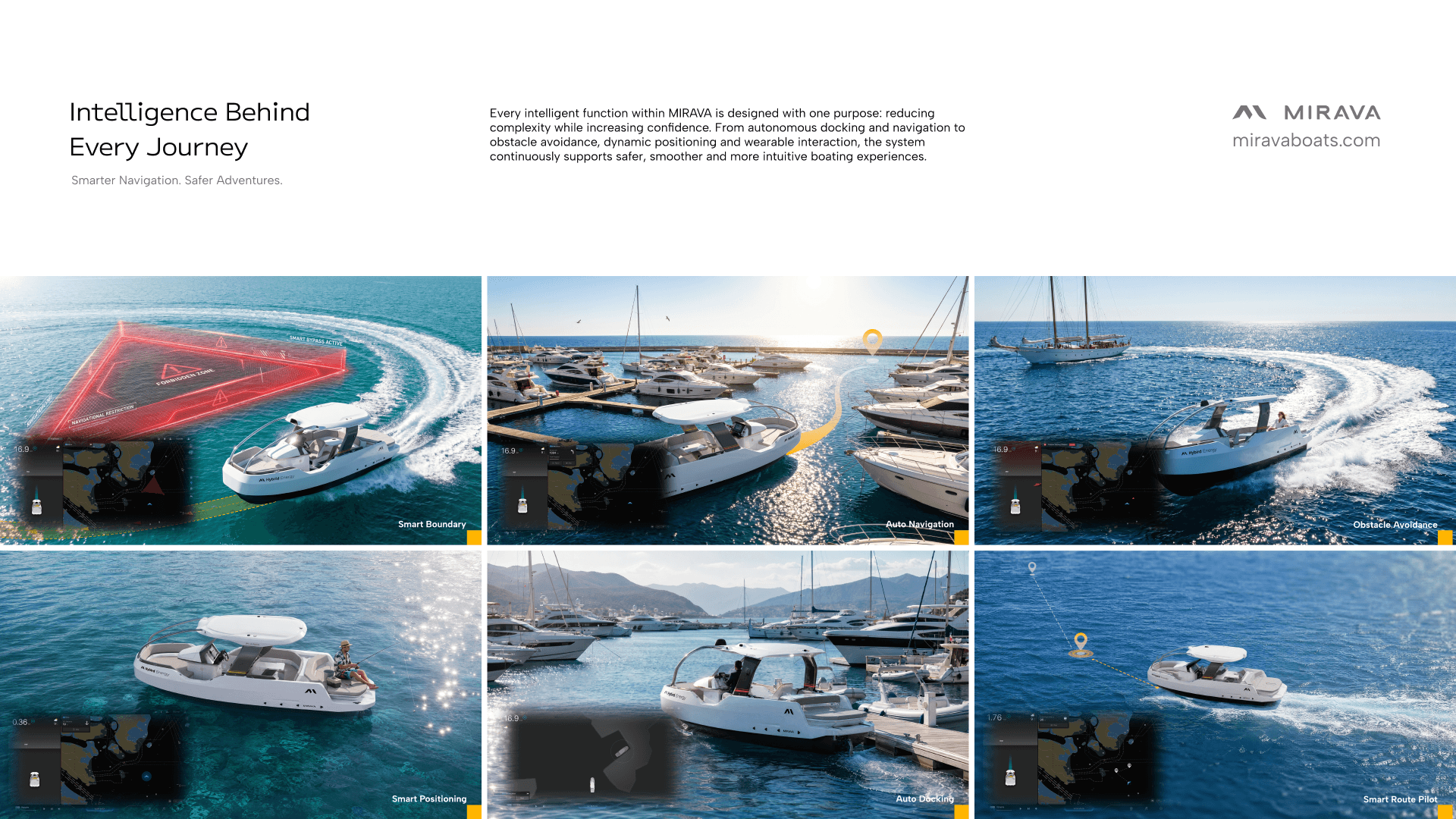
This idea sits at the centre of the company's approach to intelligent boating. MIRAVA is developing autonomous and intelligent capabilities designed to reduce some of the operational tasks that can interrupt time spent on the water.
These capabilities include autonomous docking, autonomous departure and arrival, station keeping and intelligent following.
The objective is not to remove the human element from boating. Instead, it is to give people more choice over how they spend their time on the water.
A boat that can assist with docking could allow an owner to spend less time concentrating on manoeuvring. Station keeping could help maintain the vessel's position while people swim or relax.
According to MIRAVA, intelligent following could also allow the boat to remain connected to its users during certain water-based activities.
The idea is not that people should stop driving their boats. They should be able to enjoy driving when they want to and receive assistance when they would rather focus on family, friends or the experience itself.
Rethinking how people interact with boats.
MIRAVA is also exploring whether the traditional helm should remain the only way people interact with a boat.
The company is developing an intelligent wearable designed to support functions including user recognition, presence detection and intelligent following.
According to MIRAVA, the broader idea is to create a more natural connection between people and the vessel.
Instead of requiring users to constantly think about how to operate the boat, an intelligent system could become more aware of where users are and what they are doing.
This could create different recreational experiences on the water. A user could potentially move away from the vessel to swim while remaining connected to it, while groups of friends or family could spend more time together rather than constantly managing controls.
In this model, the interface becomes less about pressing buttons and more about communicating intent.
Intelligence is only part of the experience.
For MIRAVA, creating a next-generation smart boat is not only about autonomous navigation.
The physical design of the vessel also needs to become more adaptable.
Traditional recreational boats are often strongly associated with a particular activity. A fishing boat is designed around fishing, while a watersports boat is optimised for watersports and a cruiser is designed around cruising or entertaining.
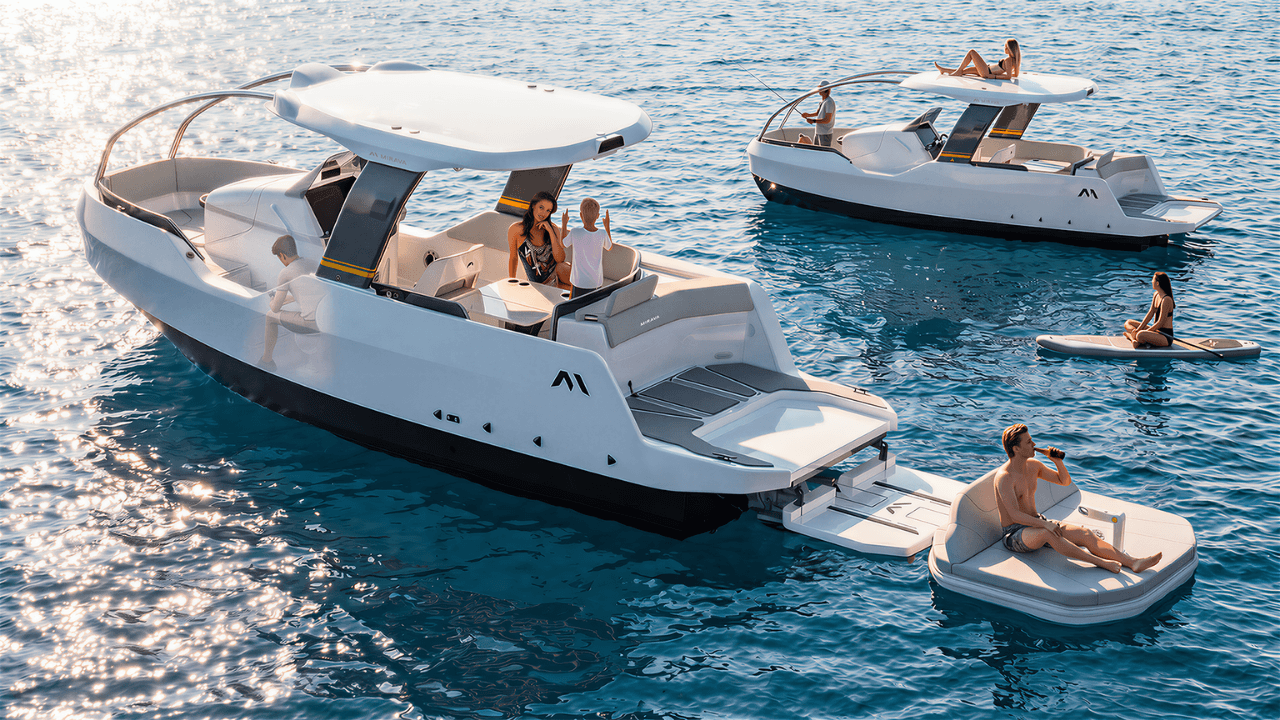
MIRAVA is exploring a different approach. According to the company, its modular design is intended to allow the same vessel to adapt to different activities and moments on the water.
The rear section can be configured in different ways, including an expanded platform and a tender-style function.
The intention is to allow the same vessel to support different experiences, including family cruising, relaxing by the water, entertaining friends and enjoying watersports.
The underlying question is therefore not simply what type of boat someone wants to own. It is whether a boat can adapt to what its owner wants to do.
Software could change the boating experience.
The combination of intelligent software and flexible physical design reflects a broader change taking place across many technology-driven industries.
Innovation has often been associated with adding more functions, more controls and greater technical capability. But some of the most meaningful innovation can come from removing friction.
For recreational boating, that could mean making docking easier, reducing the effort required to maintain position or allowing a vessel to remain connected to its users during activities on the water.
MIRAVA's approach is based on the idea that technology should be a means rather than an end.
According to the company, the goal is not to demonstrate how much technology can be added to a boat. It is to use technology to create more freedom to play, more freedom to sail and more freedom to enjoy the water without being limited by a single use case.
From technical capability to real-world use.
Behind these concepts is MIRAVA's experience in intelligent navigation technology.
According to MIRAVA, its technology development has drawn on more than 500,000 nautical miles of accumulated operational data and intelligent driving systems deployed across more than 1,500 boats.
This experience is particularly relevant in marine environments, where autonomous navigation presents challenges that differ from those found on roads.
Water conditions can change quickly, while wind, current and waves can affect the behaviour of a vessel. Other boats, docks and obstacles can also create constantly changing environments.
The challenge is therefore not simply developing autonomous capability. It is translating that capability into a recreational environment where technology needs to feel reliable, intuitive and unobtrusive.
Towards a new generation of recreational boating.
The opportunity extends beyond autonomous navigation.
As software, AI and intelligent systems become increasingly integrated into everyday products, recreational boating could follow a similar path.
The next generation of boats may be defined not only by horsepower, size or luxury, but also by how intelligently they interact with users and how flexibly they support different lifestyles.
MIRAVA describes its approach as the development of the next generation of smart boats.
Rather than designing a vessel around a single predefined purpose, the company is exploring a more flexible concept built around family, leisure, exploration and shared experiences.
According to MIRAVA, this could lead to a different way of thinking about recreational boats: not simply as machines that take people across the water, but as intelligent platforms that adapt to how people want to spend their time there.
Technology becomes meaningful when it requires less attention rather than more.
For MIRAVA, that is ultimately the purpose of intelligent boating: to give people more freedom on the water.
Learn more about MIRAVA at miravaboats.com.


Would you like to write the first comment?
Login to post comments