

Glovo's biggest legacy might not be food delivery There are some companies that I love to interview. And one of those companies is Barcelona’s Glovo. The founders are brutally honest about the challenge, especially in their early years,, willing to answer hard questions, and provide enough anecdotes that make any article a joy to work on and a pleasure to read.
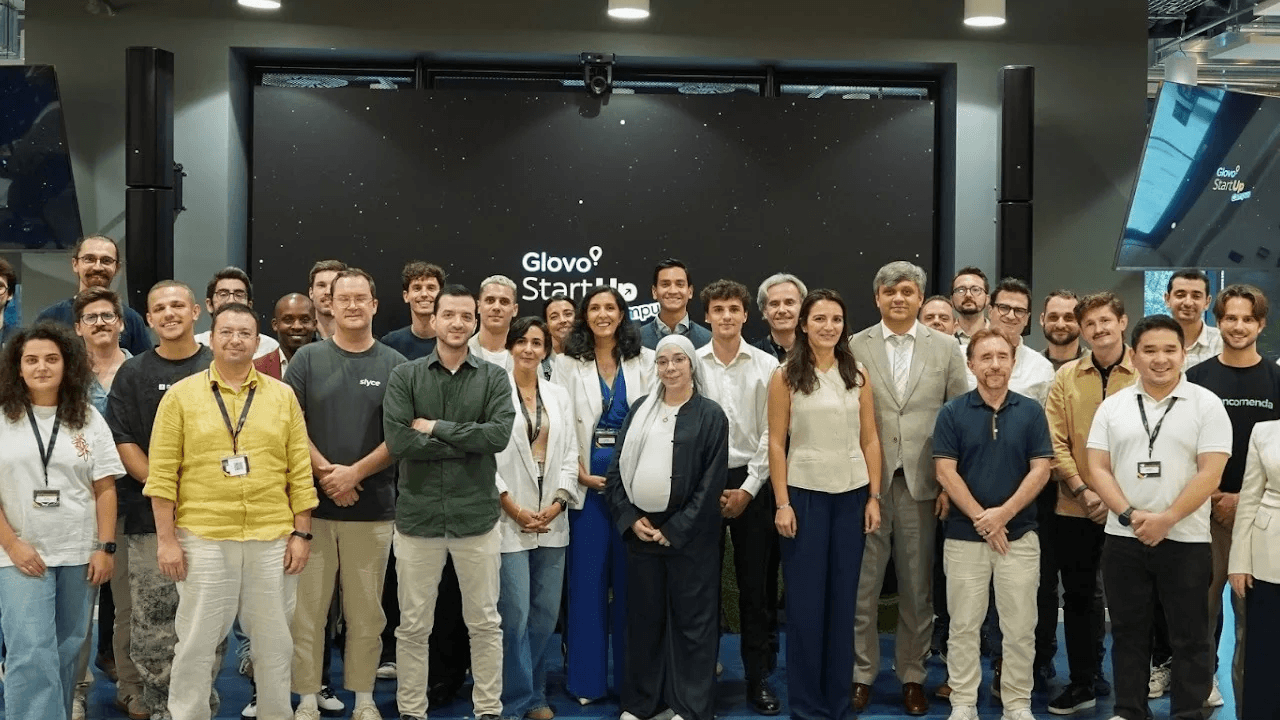
Glovo hosted its fourth annual Startup Campus at its Yellow Park headquarters in Barcelona. last month and you know I just had to attend.
This year, 19 startups and 33 founders and their teams from Germany, Kazakhstan, Kenya, Moldova, Morocco, Poland, Portugal, Romania, Spain, Tunisia and Ukraine participated. The event included three days of intensive immersion designed to accelerate the growth of early-stage startups and share Glovo's experience with emerging innovation ecosystems.
Opening the event, Glovo co-founder Sacha Michaud said:
"When we started Glovo in Barcelona in 2015, we had to figure out the startup playbook the hard way; we learnt by doing with little resources.
Today, through Startup Campus, we are proud to pay it forward as the local digital ally who brings together exceptional founders from across emerging tech ecosystems to share our learnings, connect them with great mentors and investors, and help them build resilient businesses that can scale globally."
Founded in Barcelona in 2015, Glovo became part of Berlin-headquartered Delivery Hero in 2022, when the publicly listed German delivery group acquired a controlling stake of approximately 94 per cent. Glovo continues to operate under its own brand within the wider group.
150 startups and €7.5 billion: Europe's largest founder factory
During the opening day, Michaud and Eszter Ungar, Delivery Hero's Vice President for Corporate Affairs, discussed new research published by Delivery Hero and startup data platform Dealroom. The research revealed that alumni of Delivery Hero's European brands have founded 150 startups worth an estimated €7.5 billion.
This makes Delivery Hero Europe's largest founder factory by number of next-generation startups, ahead of companies including Klarna, Zalando and Spotify.
Glovo accounts for 35 of those startups, with a combined estimated value of €461 million. The research also found that alumni-founded startups have collectively raised €4.4 billion in venture capital and created 11,000 jobs.
Ungar asserts:
"We know that in Europe, it's not as easy to start a business as it might be in the US, China or other parts of the world. I feel very passionate about playing a role in keeping this ecosystem strong and helping it grow.
We depend a lot on regulation and funding, but it's also important for businesses that have scaled, like ours, to give back to the next generation of companies."
She also highlighted the influence of Delivery Hero's decentralised structure, which requires employees to develop ideas, convince stakeholders and adapt to different markets.
"Even though we're a global company with tremendous scale, we still have a setup that requires people to pitch ideas and look at local markets."
But the figures only tell part of the story. Behind the billions in company value are former employees who have taken lessons from building and operating one of Europe's largest delivery businesses and applied them to entirely different industries.
From Glovo employees to startup founders
Beyond building its own business, Glovo has contributed to Barcelona's startup ecosystem through former employees who have gone on to establish their own companies.
Glovo co-founder Óscar Pierre describes this as an organic development, with employees gaining the experience and confidence to pursue entrepreneurship.
"There's a lot of people that go through Glovo and then they get the final push, maybe, or conviction that they need to jump and start something, and that's fantastic."
When Glovo launched in Barcelona in 2015, the local technology ecosystem was considerably less developed, making it difficult to recruit experienced talent. Today, the emergence of successful scaleups has created a larger pool of skilled employees, investors and entrepreneurs, making it easier for new companies to get started.
"When we started Glovo in Barcelona, it was tough to find talent with tech experience. Right now, if you want to start something in Barcelona, you can poach talent from a lot of places already."
Pierre sees similar opportunities emerging in other cities where Glovo operates, highlighting Casablanca and Moldova as examples of markets with untapped potential.
One example of Glovo's alumni network is
, a Barcelona-based ecommerce technology startup founded in 2022 by former Glovo employee Màrius Montmany and Oriol Hernández i Fajula. REVER develops software that helps online retailers automate returns, exchanges and refunds. The company joined Y Combinator's Summer 2022 programme and raised €8.5 million in seed funding in June 2023, with investors including Sequoia Capital, Global Founders Capital and Mundi Ventures. Montmany traced the idea to his time in Glovo's quick-commerce division, where he noticed a growing disconnect between increasingly rapid ecommerce deliveries and the often lengthy process of returning purchases. "How is it possible that you can buy something online and receive it within 24 hours, or even less, but when you want to return it, you might wait two or three weeks to get your money back?"He recalled discussions with brands including Apple and Nike about whether Glovo's logistics infrastructure could help improve returns. "Everyone was trying to solve the last mile. There were huge funding rounds going into last-mile delivery, but almost nobody was trying to solve returns. Our first hypothesis was that the problem was logistics. But it turned out that logistics wasn't the main problem. It was everything else."
Although REVER's approach has evolved, Montmany says its central ambition has remained unchanged.
"We've remained stubborn about one thing: returning something should be as easy as buying it."
Another former Delivery Hero executive, Robin Steps, described how running virtual restaurant operations across approximately 20 to 25 countries inspired him to build AI-powered marketing technology for restaurants. The platform aims to automate advertising decisions across delivery services, using factors including competition, weather, promotional timing and margins to optimise campaigns.
"I wanted to increase orders for our restaurants in a cost-efficient way, but doing that across so many markets was incredibly difficult without the right technology."
He also described the experience of working inside Delivery Hero as preparation for entrepreneurship.
"Delivery Hero isn't one centralised organisation. It's a group of different businesses. If you want to build something, you need to convince internal stakeholders. That makes it very similar to running a startup. At a startup, you're selling every day. You're selling to customers, investors and prospective employees."
Why Glovo helps its best talent leave
Michaud revealed that Glovo established an internal initiative called Glovo House to support employees interested in founding their own companies. Rather than attempting to retain every promising employee, Glovo recognised that some would inevitably leave to pursue entrepreneurship.
"We could try to retain them, but we recognised that someone with that entrepreneurial drive was going to leave whether we liked it or not. So instead of trying to stop them, we decided to improve their chances of success."
The initiative provided mentoring, fundraising assistance and access to the company's network. However, the decision was not universally popular.
"We had a lot of detractors asking, 'Why are you helping your top talent leave the company?'"
Montmany also credited Glovo's willingness to give young employees substantial responsibility. He recalled being promoted to manage a team of more than 20 people while still at university.
"I think I was 19 when I was promoted to lead a team of more than 20 people. At that point, Glovo had already raised significant capital, so it probably would have made more sense, and been safer, to hire someone experienced from outside.
But instead, they bet on someone who had been in the company for two or three years."
He has carried that mindset into REVER, sharing:
"When you bet on young people, the most likely outcome is that they'll make mistakes. But you need to embrace that and make sure you're supporting them in the right way."
The Glovo connection: Opening doors to investors
For Montmany, his Glovo experience proved particularly valuable when REVER began fundraising. He recalled that mentioning the support of Glovo founders Michaud and Pierre changed the dynamics of early investor negotiations.
But his most memorable example came during REVER's (successful) application to Y Combinator.
"Our first interview wasn't going particularly well. I was convinced they were going to say no."
Towards the end of the interview, a partner who had previously worked at DoorDash noticed Montmany's Glovo experience and began asking about his responsibilities there.
"That opened the door to explaining why we believed we were the right people to solve the problem."
Robin described a similar advantage when approaching customers and investors.
"Delivery Hero and Glovo are globally recognised brands. It's not just investors who recognise them. It's also customers, restaurant chains and other delivery platforms."
While access to investors, industry knowledge and established networks can give former employees an advantage, the founders were equally candid about the less tangible lessons they had taken from their time at Glovo and Delivery Hero, particularly resilience, adaptability and the importance of building the right team.
Why the team matters more than the idea
Pierre believes that the success of an early-stage startup depends far more on the people building it than the idea itself.:
"I'd say it's 80 per cent about the team and 20 per cent about the problem space where they are operating, especially in the early stages."
Glovo has increasingly professionalised its investment process by looking more closely at founders' individual strengths and motivations.
"If it's a good idea or a good industry, it's going to get busy. At some point, we found that there were like 16 people doing the same thing. So it's about why you're going to win. What makes you and your team different?"
Michaud also highlighted resilience and adaptability as qualities that former Glovo and Delivery Hero employees take into their own startups.
"We all work hard, but working hard when things are really tough is even more difficult. That's where having co-founders and teammates helps. When you're feeling down, they're up, and when you're up, they're down. Teamwork is incredibly important."
He argued that founders must be prepared to change direction.
"Every company I've built has ended up being different from what I imagined when I started it. You have to adapt to what makes it work."
Michaud encouraged founders to challenge established ways of working, although Ungar offered a qualification from a public affairs perspective.
"I think pushing the boundaries is what people should do. Obviously, representing public affairs, we have to pay attention to certain rules. But it's also our job to give the business as much space and flexibility as possible."
He identified two common mistakes among early-stage founders:
"Founders generally try to do too many amazing things instead of concentrating on the fundamentals, especially in the beginning. You can add the nice stuff later.
He also stressed the importance of complementary skills and personalities. "That's what diversity means to me. It's not just gender. It's different personalities and different skill sets."
Montmany questioned whether this approach always applies to the earliest hires, explaining that REVER initially benefited from having a small team of like-minded people."
Asked about a risky decision that ultimately transformed Glovo, Pierre pointed to the company's aggressive international expansion. Rather than concentrating on Spain, where the business was already operating successfully in Barcelona, Madrid and Valencia, Glovo raised capital to launch in multiple international markets.
Pierre believes this decision was essential:
"We wouldn't probably have survived by only staying in one country because this industry is for very big players.
Without very top technology, you cannot run this business profitably. You cannot make the logistics efficient enough to run this business with a profit."
Around 2018, Glovo was launching operations in numerous countries simultaneously, often while operating with limited cash reserves. Not every expansion succeeded, and the company eventually withdrew from markets that failed to deliver the expected results.
South America was one region where Pierre believes Glovo could have continued growing had it possessed greater financial resources:
"We were doing very well, but it got to a point where we had so many open fronts that we couldn't fund all of them. So we decided to sell and use that money to invest in other places."
The next chapter: AI, automation and profitability
While autonomous vehicles and delivery robots attract considerable attention, Pierre believes some of the most immediate opportunities for automation lie in the repetitive processes underpinning delivery platforms.
Despite the speed of customer-facing services, Glovo still relies on significant manual work:
"Delivering everything in minutes still requires a lot of very manual, repetitive processes, from how we onboard new restaurants, menus, pictures and prices, to how we solve incidents."
Looking further ahead, he expects the next biggest thing will be partially automating the fleets.
After more than a decade of investment and expansion, Pierre says Glovo is approaching a significant financial milestone. Although the company had initially anticipated reaching profitability in 2026, regulatory changes in Spain required substantial additional investment to adapt its operating model.
With those adjustments underway, he expects 2027 to mark Glovo's first profitable year.
For Pierre, reaching profitability would demonstrate that the delivery model can create value for customers while remaining financially sustainable. However, he stressed:
"My always-on priority number one is making sure that the talent in Glovo is very strong. If we score very high there, then things happen."
Startup Campus: The next generation of founders
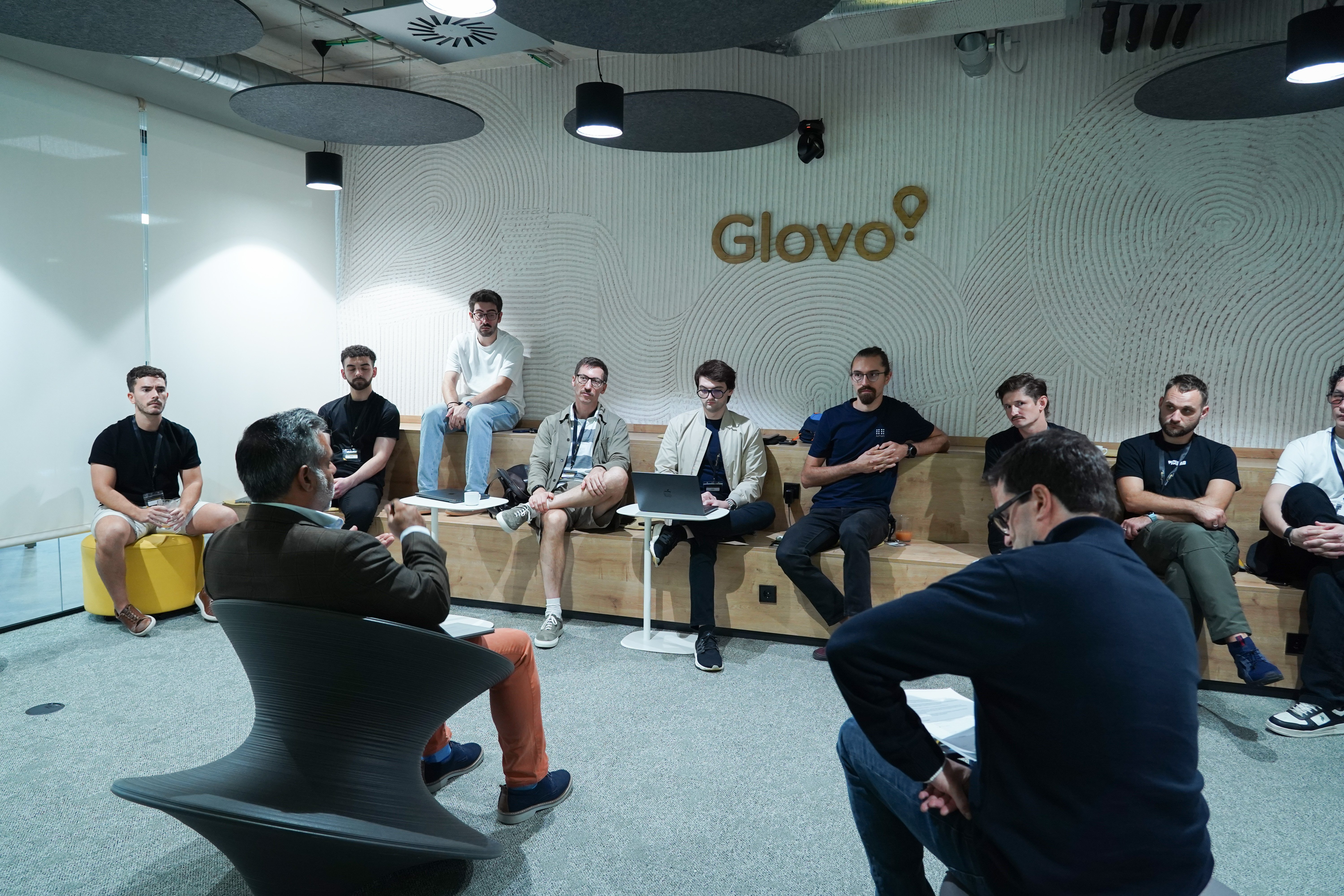
For Glovo, supporting the next generation of startups is not only about sharing its experience. It also provides opportunities to discover technologies and business models that could help the company address challenges of its own.
In an earlier interview, Glovo's VP of Quick Commerce, Connie Kwok, explained that the company benefits from the ideas emerging from programmes such as Startup Campus.
"We can't do everything ourselves. One of the reasons we invite startups to participate in events like this is to discover new ideas and approaches to problems we're facing.
The last time I participated, I heard four different pitches that made me think, that could actually work in a particular market or situation.
I can't personally be present in all 21 countries, so it's valuable to have this groundswell of ideas coming from entrepreneurs who understand different markets and challenges.
That's what makes these events exciting."
Romanian startup .lumen won the competition with its AI-powered glasses designed to help visually impaired people navigate independently. Portuguese AI grants consultancy Granter finished second, followed by Spanish inventory automation company Bleecker Technologies in third place. All three will continue to receive mentoring and advice from Michaud.
Cornel Amariei, CEO of .lumen, said:
"We're incredibly honoured. We are building a technology which potentially can be of immense use for Glovo and its customers. I'm very excited, and I can't wait to get home and work on the things which we have promised to deliver."
Since Startup Campus was established in 2023, Glovo has hosted 53 startups, organised more than 20 local Power Up competitions and supported more than 1,000 startups through the programme.
For Glovo, the programme reflects an ambition to extend its influence beyond the delivery industry, helping founders build new businesses while strengthening the entrepreneurial ecosystems in the markets where it operates.


Would you like to write the first comment?
Login to post comments