
The Tech.eu Q1 2026 Report reveals that European tech companies raised €20.2 billion across 855 deals during the first quarter of 2026.
Approximately 6.9 per cent of these companies successfully closed seed rounds, amounting to €1.4 billion.
Here is the list of the 10 largest seed rounds among European tech companies that were completed in Q1 2026.

Advanced Machine Intelligence (France)
Amount raised in Q1 2026: $1B
AMI (Advanced Machine Intelligence) is a frontier AI research lab developing a new class of systems that understand and interact with the real world.
It focuses on building “world models”, AI that can reason, plan, and operate safely across complex physical environments, with applications in areas such as robotics, healthcare, and industrial systems.
Founded by a global team of leading researchers and engineers, the company aims to advance reliable, controllable AI and enable real-world intelligence beyond traditional language-based models.
AMI raised more than $1 billion in what it describes as Europe’s largest-ever seed funding round.

Onodrim Industries (Netherlands)
Amount raised in Q1 2026: €40M
Onodrim is an Amsterdam-based defence and industrial technology company developing integrated platforms that combine hardware, software, and manufacturing capabilities to strengthen Europe’s defence infrastructure and industrial capacity.
Its approach focuses on building interoperable systems across sensing, production, and data networks, aiming to improve readiness, operational efficiency, and cross-border coordination in response to evolving security and industrial challenges.
Onodrim Industries raised €40 million in seed funding to accelerate product development and expand manufacturing and R&D capabilities across Europe.

PAVE Space (Switzerland)
Amount raised in Q1 2026: $40M
PAVE Space is a Swiss aerospace company developing in-orbit transportation and servicing solutions, centred around its “kickstage” platform designed to move satellites from low Earth orbit to their final destination within 24 hours.
The company combines propulsion, navigation, and autonomous systems to enable flexible satellite deployment, as well as future services such as in-orbit inspection, life extension, and space infrastructure operations.
PAVE Space raised $40 million in seed funding to develop a new generation of spacecraft designed to move satellites rapidly between orbits.
Hades Mining (Germany)
Amount raised in Q1 2026: €15M
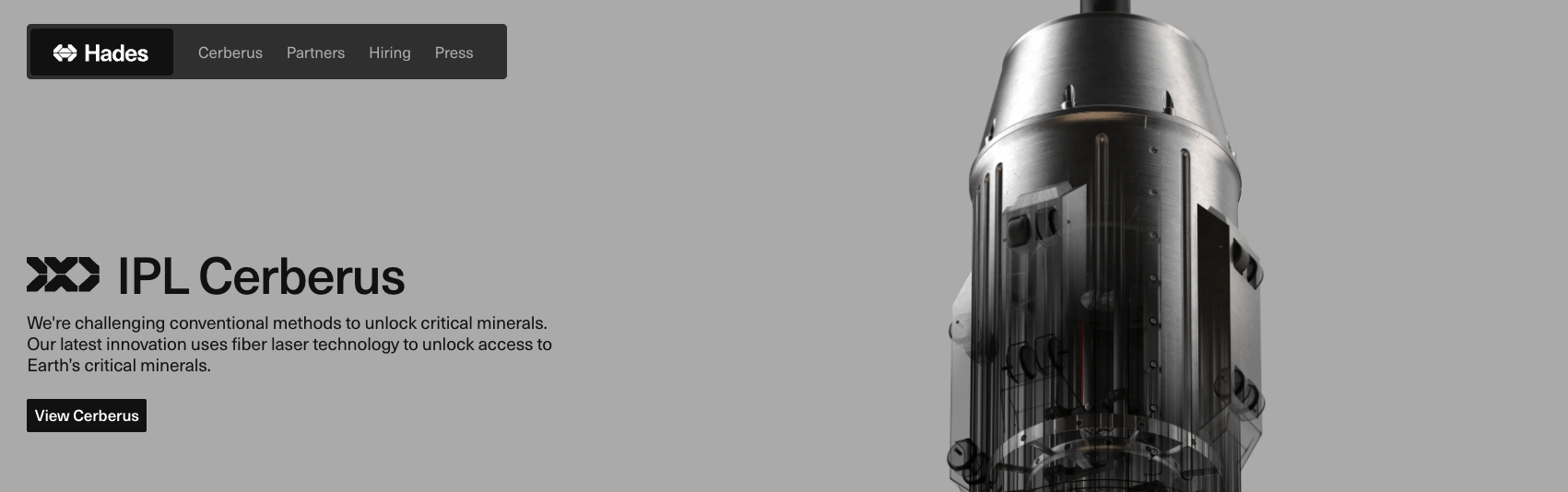
Hades Mining is a deeptech company developing next-generation drilling and subsurface technologies to unlock geothermal energy and critical minerals from ultra-deep underground resources.
Its platform combines advanced techniques such as laser-based drilling and low-impact extraction methods to enable faster, more efficient, and sustainable access to resources that are currently difficult or uneconomical to reach.
Hades Mining raised €15 million in seed funding to advance its laser-based drilling technology aimed at making deep hard-rock mining more economical.
ShanX Medtech (Netherlands)
Amount raised in Q1 2026: €15M
ShanX Medtech is a medtech company developing in-vitro diagnostic platforms for rapid antimicrobial susceptibility testing, enabling clinicians to identify the most effective antibiotic directly from patient samples.
Its technology delivers results in around one hour, significantly faster than traditional methods, supporting faster, evidence-based treatment decisions and helping combat antimicrobial resistance.
ShanX Medtech closed a €15 million seed funding round to support scaling, advance clinical validation, and prepare for market launch.
Interloom (Germany)
Amount raised in Q1 2026: $16.5M
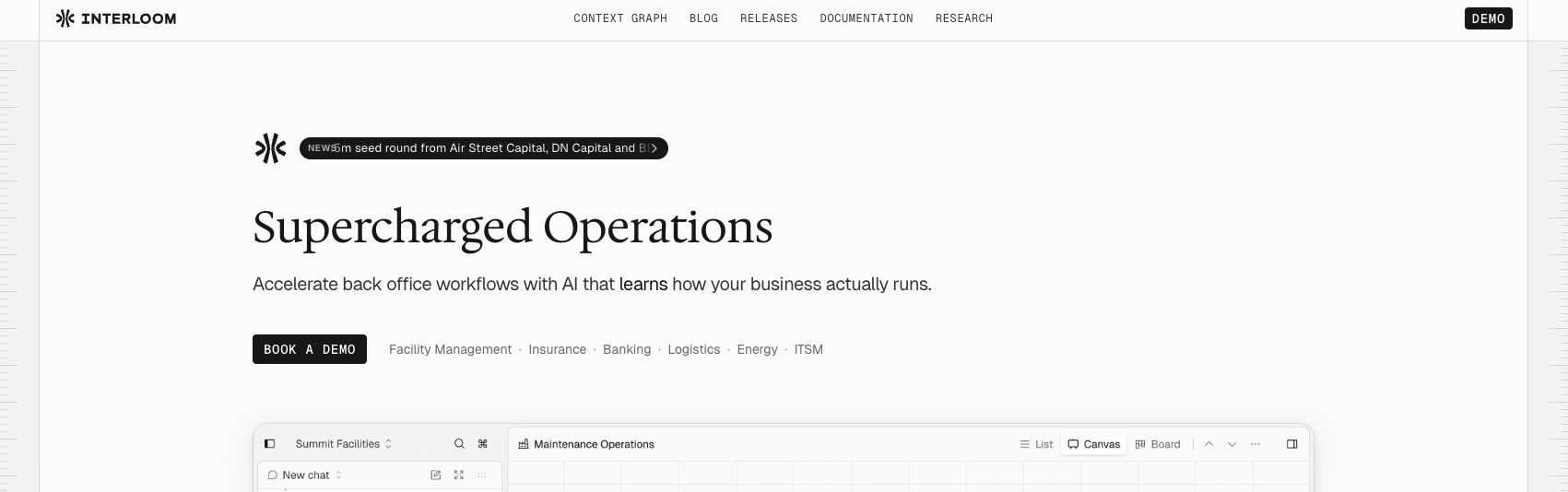
Interloom is an enterprise software company developing an AI-powered “navigation system for work” that maps how teams actually operate and turns organisational knowledge into structured, reusable workflows.
Its platform captures insights from documents, conversations, and processes to guide decision-making and enable AI agents to automate tasks based on real operational experience rather than rigid, pre-defined workflows.
Interloom raised $16.5 million to advance its AI agent memory platform and expand enterprise automation capabilities.

Zepo Intelligence (Spain)
Amount raised in Q1 2026: $15M
Zepo is a cybersecurity platform focused on human risk management, helping organisations detect, simulate, and respond to social engineering threats in real time.
Its AI-driven system combines threat detection, behavioural analytics, and personalised training to reduce employee-related security risks and improve overall resilience against increasingly sophisticated cyberattacks.
Zepo Intelligence secured $15 million to advance the company’s efforts to strengthen human risk management on a global scale.

Plato (Germany)
Amount raised in Q1 2026: $14.5M
Plato is a Berlin-based AI software company that provides a sales intelligence and workflow automation platform designed for wholesale distributors, integrating directly with existing ERP systems to enhance sales processes.
Its platform uses AI-driven insights and automation to identify sales opportunities, reduce manual tasks, and enable more proactive, data-driven decision-making across B2B sales teams.
Plato raised $14.5 million to scale its AI platform for distributors internationally, starting with its sales intelligence offering.

Oska Health (Germany)
Amount raised in Q1 2026: €11M
Oska Health is a digital health company that provides AI-supported coaching and virtual care tools to help patients manage chronic conditions such as kidney disease, diabetes, and hypertension between medical visits.
Its platform combines human health coaches with data-driven insights and behavioural support to improve treatment adherence, reduce complications, and enable continuous care outside traditional clinical settings.
Oska Health raised €11 million in seed funding to scale its continuous care model for high-risk, chronically ill patients.
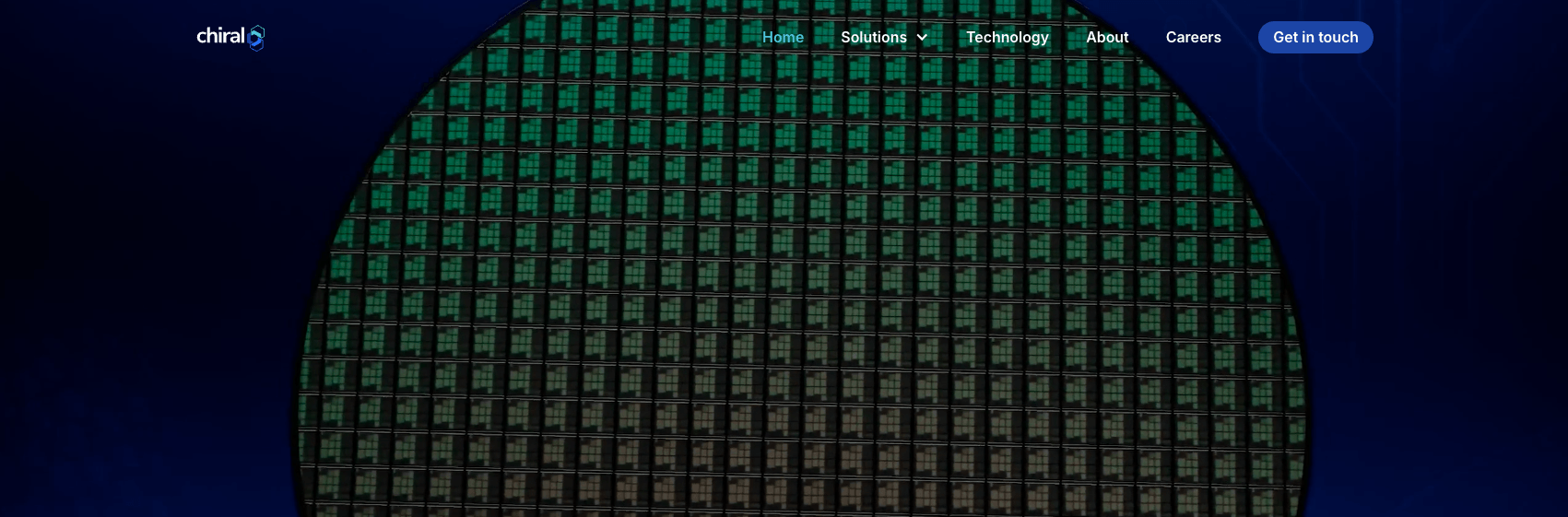
Chiral Nano (Switzerland)
Amount raised in Q1 2026: $12M
Chiral is a Swiss deeptech company developing high-precision manufacturing equipment for integrating nanomaterials into next-generation semiconductor and quantum devices at an industrial scale.
Its proprietary robotic nanoassembly technology enables reliable, scalable placement of materials such as carbon nanotubes and graphene onto chips, unlocking higher-performance electronics beyond traditional silicon-based approaches.
Chiral secured $12 million in seed funding to support the commercialisation of its robotic platform for wafer-scale integration of nanomaterials such as carbon nanotubes and graphene.


Would you like to write the first comment?
Login to post comments