

Across Europe, accessing professional mental health support can mean long waits or costly private care. Yet there is also a gap between needing clinical treatment and feeling fine. People experience stress, overwhelm, sleeplessness, or anxiety before a social situation or meeting, or moments when their usual ways of calming themselves just aren't working.
An expanding wellness industry has moved into that space, offering everything from meditation and breathing apps to haptic wearables, and now one Berlin startup is betting that the most useful technology might not be technology at all.
Attuned combines smartphone-based haptics and guided audio with something considerably more analogue: access to another human being who is simply there to help you become grounded.
I spoke to co-founder and Chairperson, Julian Teicke, to learn all about it.
From insurtech to human connection
Teicke is a German serial entrepreneur, investor, and co-founder and Chairman of The Delta, a Berlin-based startup ecosystem and venture builder. He founded wefox, the Berlin insurtech that reached a $4.5 billion valuation in 2022, and through The Delta has since helped co-found and back more than 20 ventures, including luca, Kenjo, handly, hallo theo, and doctorly.
He is also one of the leaders of Bad1, a community-led initiative that brings together founders, investors, and other ecosystem players to make Berlin Europe’s most builder-friendly tech city within the next 12 to 24 months.
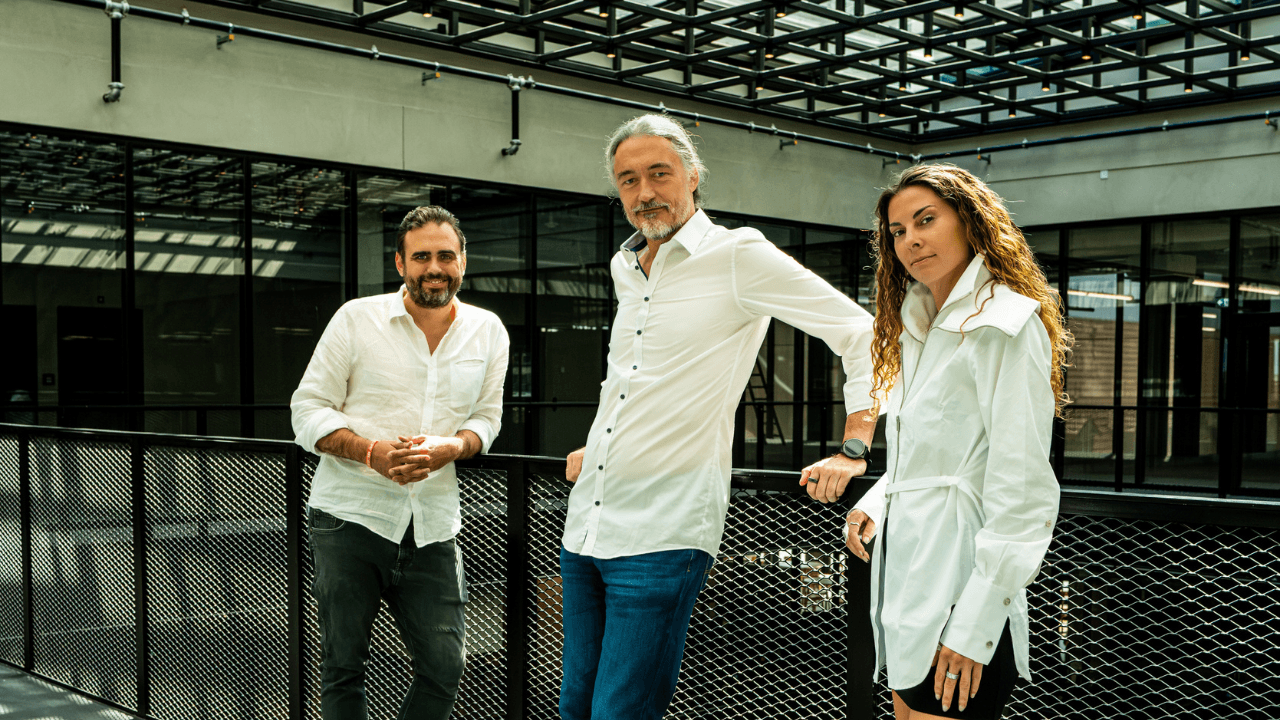
Attuned was founded by Teicke alongside Rebecca Godfrey, a product leader who spent more than a decade as a touring electronic music artist and was diagnosed autistic as an adult; and Thomas Hübl, teacher and author of Healing Collective Trauma, founder of the Academy of Inner Science, and one of Watkins’ Spiritual 100 in 2026.
His work on trauma has included teaching at Harvard University's Wyss Institute.
How Attuned works
Attunement combines two functions into a single interface that are designed to manage dysregulation and improve wellbeing.
For self-regulation, it offers short haptic sessions that translate designed frequency patterns into vibration through the phone, plus guided audio sessions created by Hübl.
For co-regulation, users can connect with a vetted Anchor, a person trained in Attuned’s peer-presence protocol. In quiet sessions, the Anchor is simply present, with no conversation required; in open sessions, the user can talk if they choose.
When operating on autopilot stops working
For Teicke, the idea behind Attuned grew partly out of his own experience of becoming stressed, easily triggered and finding himself operating on “autopilot”.
He realised that he wasn’t showing up as his real self or being the best version of himself in his relationships with family, colleagues, and friends. It also changed how he looked at the behaviour of people in positions of power.
“You look into politics, you look into business, and these are not mature adults operating there. These are triggered people that act like little children,” he says.
“And in this way, we're not going to be able to solve the big challenges that we have ahead of us.”
What does a ‘dysregulated nervous system’ mean?
Dysregulation is central to the language Attuned uses, but it can be a vague term.
A dysregulated nervous system is characterised by difficulty shifting appropriately between states of alertness and calm. It can manifest as heightened activation — anxiety, irritability, racing thoughts or difficulty relaxing — or as shutdown, including exhaustion, withdrawal and feelings of disconnection.
Teicke traces some of his own responses to overwhelm back to much earlier experiences:
“The problem with overwhelm is that what happened when you were super young was: right now, right here, it's not safe. I need to shut down or disconnect from the world around me. I need to isolate myself, or behave aggressively, or whatever that compensation strategy was.
What this attunement does is create what we call relational presence at the moment when you decide to shut off and disconnect from the world.”
Teicke says he has experienced this relational presence helping situations that previously triggered him simply “flow by”.
‘The most ancient human technology’
At the heart of Attuned is Teicke's belief that self-regulation tools can only take people so far.
“I've used various devices such as Nurosym and a lot of other wellness apps — breathing apps, meditation, all of that. It's useful, but it only goes so far.”
Instead, he believes another person can provide something technology cannot: co-regulation through human presence.
Attuned’s approach builds on Hübl's coaching work. In coaching sessions with Hübl, Teicke would meet with a small group, and participants would “attune” to one another. The practice involved simply giving each other their presence, sitting silently for a minute or two and looking into each other’s eyes.
Teicke admits that initially he found this “super uncomfortable”, partly because it was something he simply didn't do in his everyday life.
“I had never actually looked people in the eyes. I realised that I'd been missing out on so much. The depth of connection you feel with another human just by looking into their eyes and being fully present is a tremendous gift. And the impact it has on your nervous system is magical.
In the end, it added so much richness to my life and my relationships. I think it's the most ancient human technology that's probably been forgotten in some way or form. And it's incredibly powerful.”
According to Teicke, the practice, combined with a long period of inner work, also changed how he showed up in his relationships and work.
“It also allowed me to show up more authentically in life and more vulnerably — more like me and how I am. And it gave me a tool to cope with overwhelm and operate from a more grounded place.
As a leader, for example, it helps me make better decisions.”
That experience also changed how Teicke thought about technology. Despite years working with and investing in AI, he concluded that this was one problem he didn’t want to solve with an AI companion.
“The only thing that is going to support the regulation of dysregulated nervous systems is another human, another system.”
That realisation ultimately shaped what he calls “the most important project of my life”: building “an infrastructure that allows human-to-human connection at scale.”
The science behind co-regulation
I wanted to dig into the science that underpins Attuned’s claims. The haptic sessions build on three decades of peer-reviewed research into low-frequency sound and vibration.
Randomised crossover studies have found that low-frequency vibration increases heart rate variability, a standard marker of parasympathetic nervous system activity.
There is a growing market for technologies using physical sensation to support relaxation and grounding. For example, UK-based Sensate combines chest-worn vibration with audio, while doppel uses heartbeat-like wrist vibrations for grounding.
Attuned's distinction is its argument that self-regulation tools can only go so far without another human in the loop.
The co-regulation feature draws on research showing that human nervous systems regulate one another through social interaction. In a well-known 2006 fMRI experiment, neuroscientist James Coan and colleagues studied 16 married women who were told they might receive a mild electric shock while lying in a brain scanner.
Researchers compared their responses when they were alone, holding the hand of an anonymous experimenter, or holding their husband’s hand. Holding another person’s hand reduced activity in brain regions associated with threat.
Social baseline theory, built on this work, holds that proximity to others is the brain’s default strategy for managing stress, and developmental research shows that infants first learn self-regulation through co-regulation with caregivers.
When supportive others are present (or even anticipated), stress responses, self-regulation demands, and associated neural activity are reduced.
This is the principle Attuned is attempting to bring into its Anchor sessions.
Rather than physically holding someone’s hand, the platform connects a distressed or overwhelmed user with a grounded person via video, with the Anchor providing calm, attentive presence.
Does co-regulation work over video?
However, whether comparable effects can be achieved through video interaction remains a question Attuned has yet to establish scientifically.
Teicke says the company intends to validate this through research.
He points to Hübl’s experience moving his courses — including eye-contact practices — from in-person sessions to Zoom during the pandemic as well as the first batch of Attuned testers.
“We've seen this now for years, and there is almost no difference in the effect between doing this in person and over video. The effect is almost the same.”
What early users are doing with Attuned
Attuned is currently on closed alpha. Attuned has been piloted with 150 test users and ten anchors. Teicke asserts that the self-regulation feature has seen “crazy retention” compared to other wellness apps. Teicke says co-regulation is also becoming part of some users’ everyday routines:
“We’re seeing quite regular usage and repeat usage, where people are turning this into part of their practice — for example, every night before going to bed, or before going into a meeting with their boss.”
He says people are also using it to manage everyday situations that cause stress or anxiety. “People might be going into social gatherings and having anxiety. That’s not a complete nervous-system overwhelm or a panic attack, but it’s: all right, let’s get grounded, and then I can go into the social gathering with a different state of mind.”
“Some people have real difficulties falling asleep, and it helps them get grounded. They do it every night.”
He revealed that one of the nicest things to hear from these early testers was that, because they have Attuned in their pocket and could potentially jump on a video call, they are already much calmer.
What makes a good ‘Anchor’?
In terms of what makes a good Anchor — the person at the other end of the phone, either sitting in silence or offering a brief conversation — Teicke characterises them as someone who has done significant inner work and developed the self-awareness to recognise when they are calm and grounded enough to support someone else.
“It's almost like you're providing a nervous system as a service,” he explains.
“You need the ability to understand: okay, I'm now in a grounded place where I can provide my nervous system to someone who's in a distressed situation.”
He believes that level of self-awareness is not innate but can be developed through training.
“I don't think everyone has that kind of awareness, and that's something that you learn in the courses we're offering.”
For now, the platform's anchors are drawn from people who have paid for and completed Hübl's coaching programmes.
“Over the last 30 years, that's been tens of thousands of people, so that's already a good starting point.”
But Teicke's ambitions for the platform extend far beyond this existing community.
Can Attuned scale human connection?
Regarding rollout, Attuned aims to onboard new users in batches to ensure a sufficient number of Anchors. But ultimately Attuned will be open to everyone, “because we believe everyone can relate.”
Teicke admits that many people won't understand it and therefore won't be open to trying it." And the challenge is that the first experience may be uncomfortable. Are people going to stick with it and do it again if they have a slightly uncomfortable experience?
“But I think the amount of things that happen between two people, even on the phone, and the complexity of the communication of the nervous systems is tremendous.”
That said, Attuned wants to heal a billion nervous systems, so it will need to find ways to train as many people as possible.
Could relying on an Anchor create dependency?
I wondered whether Attuned creates a dependency on having someone else on a call holding space — a concept that's hard to think about at the scale required if Attuned does what it aims to do.
Teicke is quick to stress that Attuned offers a starting point for independence:
“Right now, what we're offering is SOS support. In the future, these ten-minute sessions are already going more into that. And we might look into longer sessions for really helping the integration and healing process.”
Further, the company stresses that Anchor sessions are peer presence, not therapy, and Attuned is not designed for people struggling with mental illness or serious health issues.
“However, if needed, SOS features are built in on both sides. If a situation becomes very serious, the company can immediately alert the authorities. That’s built into the system,” said Teicke.
Putting a price on ‘inner work’
The company aims for a membership model with a cut of the funding going to the anchors.
Teicke sees two broader possibilities for the app and its broader ecosystem: creating a new kind of work centred on human connection, and giving people a more direct way to support others during crises.
“There are two things I think are going to be awesome,” he asserts.
First, he believes being an Anchor could become a form of work that is difficult to automate.
“I think this is a job that AI will never replace. Maybe it will become an important new job, because this is a very unique skill.”
It could also, he suggests, give economic value to the personal development required to become an effective Anchor. “The inner work might get a monetary value. You can start earning money for the work that you do internally — becoming more grounded and so forth.”
The second possibility is giving people a greater sense of agency when confronted with crises around the world.
“A lot of people feel a little powerless when they look at events in the world. They're like, "Okay, so what do I do?" Do I donate money to people in crisis situations? Do I post on social media? Do I go to the street?”
Teicke believes the platform could offer another way to respond. The plan is to make the service free to people affected by major crises.
“Whenever there's a crisis happening — an earthquake, for example, or a war situation, or a terror attack, whatever — we offer it to affected people for free.”
Attuned’s public beta opens in September 2026 with the self-regulation library broadly available. Access to Anchor sessions will expand gradually as the network of trained Anchors grows.


Would you like to write the first comment?
Login to post comments