
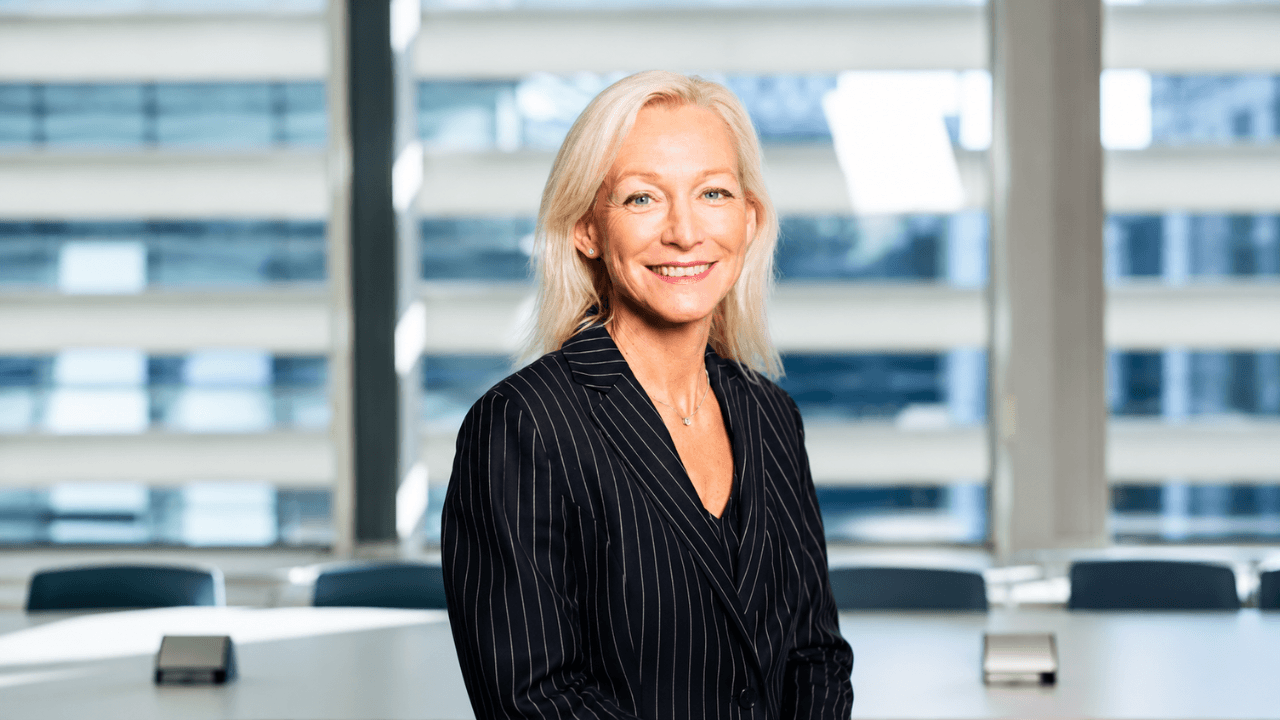
Europe has no shortage of promising technology companies, but turning them into global players remains a persistent challenge. For Cecilia Bonefeld-Dahl, Director-General of DIGITALEUROPE, the problem is not simply a lack of capital: Europe needs faster access to funding, less regulatory complexity, more ambitious public procurement, and a greater willingness to take risks on its own scaleups.
I sat down with Bonefeld-Dahl to learn more.
DIGITALEUROPE represents a broad cross-section of Europe’s digital economy, with 137 corporate members and 45 national trade associations across 30 European countries.
Through those associations, its membership encompasses more than 56,000 businesses, mainly SMEs, spanning AI and critical technologies, defence, health, energy, finance, mobility, and the public sector. Its corporate membership includes major global technology and industrial companies such as Microsoft, Google, Apple, Amazon, NVIDIA, OpenAI, Intel, Airbus, Siemens, SAP, Ericsson, Nokia, Helsing, IQM Quantum Computers, BMW, and Bayer.
DIGITALEUROPE’s network also extends to Switzerland, Turkey, and the UK, while the organisation is building relationships with potential future EU member states. It also has an office in the US — partly, Bonefeld-Dahl says, because “we realised nobody was really representing the European tech ecosystem in Washington.
“Our members have invested €1.7 trillion in the US over the last few years, so we need to be heard there.”
Bonefeld-Dahl has more than 25 years of experience spanning technology, entrepreneurship, and policymaking, including senior roles at IBM and Oracle and founding cloud provider GlobeIT. Her work focuses on European digital competitiveness, AI and cloud policy, cybersecurity, scaleup funding, digital skills, defence tech, and international technology cooperation.
She is a former adviser to the NATO Secretary General on Emerging and Disruptive Technologies and has held leadership roles with the Danish ICT association, Danish Chamber of Commerce, and Royal Danish Export Council. Bonefeld-Dahl came to Brussels about nine years ago from the tech world and admits:
“I was very surprised that nobody spoke about tech with excitement. It was much more about risk and regulation.”
Finding Europe’s next unicorns
DIGITALEUROPE’s Future Unicorn Awards, founded in 2018, recognise European scaleups considered to have the potential to become the continent’s next major technology companies.
Rather than a cash prize, the awards give visibility and access to capital.
Since 2020, winners have included Danish health AI company Corti (2020), Hungarian precision oncology company Oncompass Medicine (2021), UK supply-chain traceability company Circulor (2022), Spanish brand-protection company Red Points (2023), Spanish quantum software company Multiverse Computing (2024), Estonian AI negotiation company Pactum (2025), and French photonic quantum computing company Quandela (2026).
The Dual-Use Technology Award was introduced in 2025, with German drone company Quantum Systems as its first winner. In 2026, the award went to Spanish satellite connectivity company Sateliot, which is developing a low-Earth-orbit 5G IoT satellite constellation.
In September, DIGITALEUROPE launched the Transatlantic Dual-Use Unicorn Award, designed to identify and help scale security and dual-use technology companies from Europe, the US, and Ukraine. Organised with Ukraine’s Ministry of Defence, Ukraine House, and Cerberus, it aims to connect companies with capital, customers, and deployment partners across civilian and defence markets. Ukraine’s Brave1 defence innovation platform will nominate up to five Ukrainian companies.
DIGITALEUROPE has an alumni community of around 250 European scaleups across three different awards.
According to Bonefeld-Dahl, around 50 of them are funded within the first year, whether through the EIB, EIF, EIC, or private investment. The awards are also intended to create a direct link between founders and policymakers. Last year, the president of the EIB, a commissioner, and the CEO of the EIF met with members of the scaleup community.
“They really listened and understood the issues.
They came out of that with a position that they were going to shorten the cycles for getting money and remove bureaucracy.”
DIGITALEUROPE also convenes small CEO roundtables to advise the Commission and member states.
“Our mission is also to showcase companies that are staying and scaling in Europe and use them as spearheads to make politicians listen.”
Europe’s €800 billion investment gap
For Bonefeld-Dahl, one of DIGITALEUROPE’s biggest priorities is ensuring more of Europe’s next budget goes towards technology, scaleups, and resilience.
“Instead of 90 per cent of the budget going to all kinds of other things — which are nice — we need to move some of that money into European value creation, the next generation of companies, and resilience. That’s one of our big lobbying priorities.”
DIGITALEUROPE is also working with the EIB and EIF to make their processes more agile.
“We say there should be a maximum of three months from application to receiving the money. “We have a commitment for six months now, so hopefully that will change. We want to get it down to three.”
Bonefeld-Dahl describes the EU Scaleup Fund as little money, but a significant win. It’s a new growth-stage fund targeting €5 billion, including a €1 billion commitment from the European Commission, designed to address Europe’s persistent shortage of large growth-stage funding for strategic technology companies and help more of them scale without having to look outside Europe for capital.
“This has never really been done before. You have the regulators, and then you have the EIB and the funds. There are a lot of conversations happening behind the scenes that people don’t necessarily see.
“We’re aiming to get three or four other scaleup funds. Not necessarily €5 billion in size, but perhaps €25 billion or €50 billion.”
But she admits Europe still has a long way to go.
“If you look at VC funds in Europe, I think it’s around €130 billion. If you go to the US, it’s around €930 billion. So we have this €800 billion gap that we’re not attracting, and we need to ask ourselves why.”
Pension funds are another part of the equation. The US has traditionally been much more comfortable using institutional capital to support startups and scaleups, while European startups regularly receive backing from overseas pension funds without equivalent pools of domestic capital playing the same role.
According to Bonefeld-Dahl:
“Pension funds are extremely cost-driven. They look at the cheapest route into funds, and therefore they often end up in very large, typically American funds.
We could change that. We could give them different incentives and make it more attractive. We could lower the costs. There are many things we could do before we go to regulation and restrictions again.”
The European Commission has proposed a nearly €2 trillion Multiannual Financial Framework (MFF) for 2028–2034, including a new European Competitiveness Fund intended to channel more investment towards strategic technologies and strengthen Europe’s industrial and technological capacity.
“We have the new budget coming up, and one of our biggest priorities is moving some of the funding from old investments into new investments and making sure the Competitiveness Fund uses genuinely competitive funding mechanisms such as the scaleup fund.”
Europe can’t regulate its way to scale
For Bonefeld-Dahl, closing the investment gap isn't simply a question of finding more money. She points to the AI Act as a cautionary example. In May, EU policymakers reached a political agreement on changes to the AI Act, including how the rules interact with other EU legislation.
For the medical technology sector, however, the agreement did not resolve longstanding concerns about how AI-enabled medical devices will be regulated alongside the existing Medical Devices Regulation (MDR) and In Vitro Diagnostic Medical Devices Regulation (IVDR).
In response, MedTech Europe, COCIR, and DIGITALEUROPE called for a more coherent approach to AI-enabled medical technologies. They argue that companies should not have to navigate overlapping regulatory regimes covering many of the same risks and requirements.
Instead, they want policymakers to better align the AI Act with existing medical-device rules, reducing duplication and creating a clearer route to market while maintaining requirements around patient safety and product performance.
“We already have very strict rules in this area. It becomes a never-ending story of trying to avoid risks that are already covered.”
So, are things changing fast enough?
“No. But it’s also about organising our financial markets and harmonising things such as employment rules and the taxation of capital.
These are the things that make it attractive for a company to spread across Europe rather than establish itself in one country and then go to the US.”
Fragmentation is also what the EU’s proposed EU Inc (aka 28th regime), is intended to address, which DIGITALEUROPE supports in its originally intended format.
Europe needs to become a customer, not just a regulator
Capital is only part of the scaleup problem. Europe also needs to make it easier for startups and scaleups to sell to the public sector.
The UK, Bonefeld-Dahl notes, has set targets around buying from scaleups and is prepared to accept some of the risks that come with purchasing from younger companies.
“Can we somehow incentivise procurement in Europe from some of these scaleups? That could be amazing.”
Today, she argues, that appetite for risk remains extremely low.
“But I do think we can learn from places like the US, which says that in certain areas, a percentage needs to be done locally — whether you’re European, American, Japanese, or whatever. That could be a tool.”
Another option is reducing the risk for public-sector buyers.
“We could also lower the risk barriers for the public sector and say: buy more from scaleups. Try more innovation.”
Defence provides one potential model.
“In defence, for example, we need test centres where you buy one or two products, test them, see if they work, and, if you really trust that the company can deliver, then you buy.
Germany and Sweden do this very well.”
While European sovereignty is a compelling topic in the startup ecosystem, with many startups and scaleups pushing to build locally for local markets, using local technology and materials where possible to reduce dependency on US and Chinese tech, Bonefeld-Dahl stresses that DIGITALEUROPE remains committed to open markets.
“We don’t believe the answer is simply ‘buy European’ because technology moves so fast. In some areas, such as energy technologies and connectivity, Europe leads the world. In cloud, we don’t. “
At different times, different players from different places will lead in different areas. As long as they are allies, I think we should be able to work with them. “What we need to do is incentivise more risk-taking rather than always buying from the safest option.”
What defence tech can learn from NATO
Bonefeld-Dahl was involved in the work around NATO DIANA and later the NATO Innovation Fund, spending two years on the initiatives. She points to the network of test centres available across NATO allies as a model for connecting young technology companies with real defence users.
“With DIANA and the Innovation Fund, you have around 200 test centres across NATO allies. They can take these amazing scaleups and say, ‘We’re going to invest a little bit of money, but you can also test your products in Finland, Denmark, Germany, and the US.’
All of a sudden, you have these incubators where companies are already working with defence. Defence customers can see the products, companies can hear what those customers actually need, and then they’re ready to sell.
We need much more thinking like that: create common test centres where we can work together and test products under different conditions.”
For Bonefeld-Dahl, the next step is making that approach less fragmented.
“Instead of Denmark doing it the Danish way, Germany doing it its way, and Finland doing it its way, we could think more like an alliance.
How can we create five or six big test centres where we incubate defence tech? Then we buy two, three, or four products and test them together.”
The next battles for Europe’s tech sector
Simplification remains one of DIGITALEUROPE's major priorities. Bonefeld-Dahl argues that the accumulation of the AI Act, data rules, and new cybersecurity regulations has not reduced the burden on European companies. Data access is another battleground.
“We are basically asking European companies to share data with competitors. I think it’s private property, and I’m ready to defend that.
In a crisis situation, fine. If something is wrong and companies need to help, that’s different. But if we want European companies to be competitive, we need to think very carefully about requiring them to give data away.”
Then there’s the Digital Fairness Act, a proposed EU law intended to strengthen consumer protection online, particularly where existing EU rules have gaps or overlap.
DIGITALEUROPE is sceptical of the need for another law, arguing that the problem is not a shortage of consumer-protection rules but enforcement and regulatory coherence. It says practices including dark patterns, subscription traps, addictive features, personalised advertising, influencer marketing, and misleading online practices are already covered by legislation including the DSA, GDPR, Unfair Commercial Practices Directive, and Consumer Rights Directive.
More recently, DIGITALEUROPE joined other industry associations in calling on the Commission to “pause and reset” the DFA, warning that it could create another layer of rules, increase compliance costs, and conflict with the EU's wider push for regulatory simplification and competitiveness.
Bonefeld-Dahl admits, “it’s going to be extremely sensitive. It’s going to be a hot potato, and it’s very extensive. “We already have members with different views on it, so internally we’re preparing very carefully. “In principle, we are pro-open markets and pro-competition, and our position will be along those lines.”
Making Europe somewhere scaleups want to stay
Despite those concerns, Bonefeld-Dahl doesn't see Europe as fundamentally unattractive to investors. Her vision is that, in ten years, European founders will choose to remain on the continent because the conditions for scaling make it the obvious choice.
“I stay in Europe because it’s so attractive here. There’s a great framework. It’s easy for me to do business. It’s easy to attract risk capital. Procurement is simple.
We basically maintain our liberal, open markets, but we’re just so attractive that nobody can get around us.”


Would you like to write the first comment?
Login to post comments