

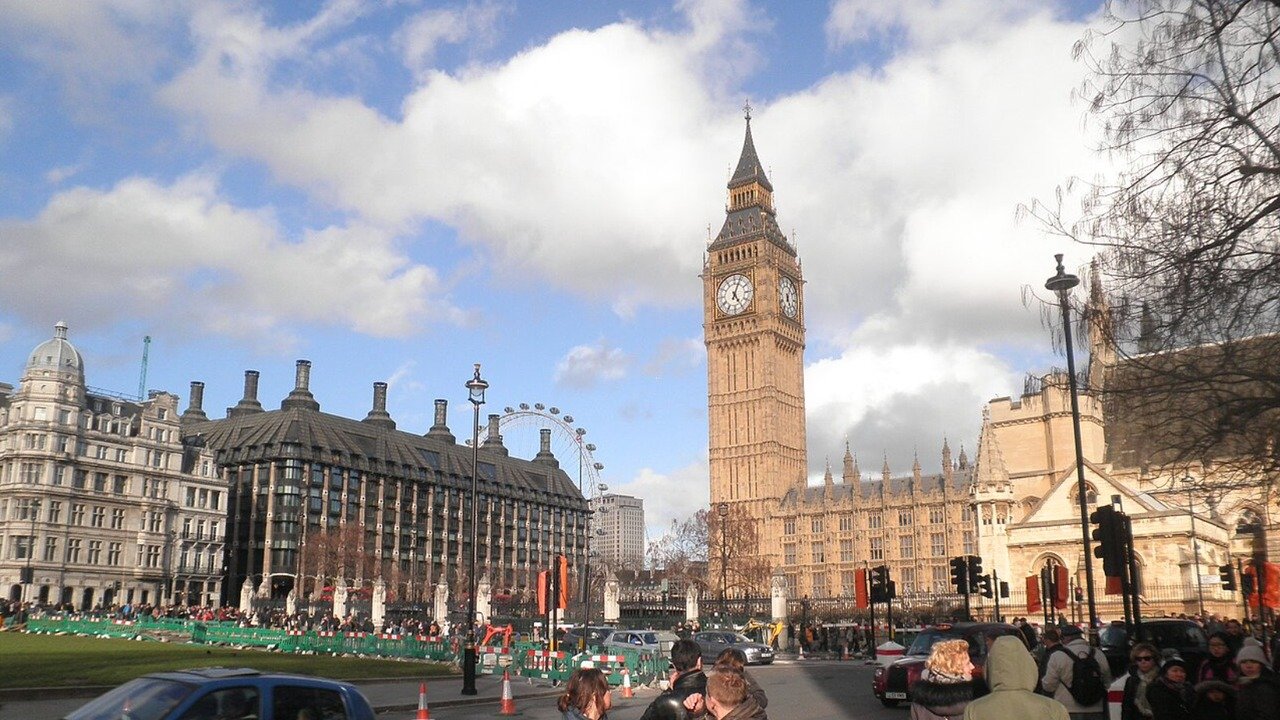
It's a cold and wet London day and the queue of entrepreneurs snakes outside the Cholmondeley back entrance to the Houses of Parliament.
The Thames flows adjacently, turbulent as the weather, as the crowd awaits the 8am opening of this particular entrance. There are no Black Rods here to summon attention and open the door, just shivering wonks and wannabes hoping their ill-fitting clothes don't chafe and nobody compares their dress sense to the horrors of Sam Altman or Elizabeth Holmes.
Finally the locks are unopened and the people go slowly through security, laptop bags scrutinised, passes checked and directions given. The entrepreneurs are here to hear the AI minister and his shadow counterpart talk about the country's future and to network.
Invited by the UK think tank, The Entrepreneurs Network for the launch of Starting Out and Starting Up: Making self-employment a route into work for young people, I'm not just here for the impressive 'continental' breakfast and human politicians espousing AI, I'm here to see what young entrepreneurs think about the upcoming budget and whether their efforts at setting up businesses and startups will receive the support it deserves.
The energy in the room, unlike the dress sense, is vibrant and cool, this is no country for tech bros. It was a diverse audience, and not everybody was from London either. I wade through the pastries and berries to listen to optimistic conversations and the feeling that the budget might deliver for them.
While I'm yet to meet a depressed or pessimistic entrepreneur, the vibe does feel positive although a recent report published before the Budget told a slightly different story.
According to new polling of UK entrepreneurs by Public First for The Entrepreneurs Network, run in partnership with Blick Rothenberg, more than 75% of UK founders expected the taxes they personally pay or on their business to go up.
What founders fear
Nearly 90% of founders took a negative view on the level of taxation in the UK and the same amount disagreed that the government understands the needs of entrepreneurs and almost 80% said life as an entrepreneur had become harder after they'd started their business.
There were other fears about rising employer National Insurance contributions and raising Capital Gains Tax as well as dividend tax, but the truly damning of the damned statistics was that 23% of founders expected to leave the UK in the next 12 months.
Moreover, unlike the conversations I wigged on to in the Cholmondeley Room and on the Thames terrace, there was also true pessimism, not optimism, for the UK economy outlook with almost 80% saying they feared for it. These fears were summed up by Philip Salter, founder of The Entrepreneurs Network:
Founders are going into this Budget expected to pay more. Nine in ten take a dim view of the level of tax and nearly a quarter expect to leave the UK within a year. That should worry anyone who wants the UK to grow.
The message from entrepreneurs is loud and clear. Cut the cost and complexity of employing people and don't hike taxes. This would do more than anything else to show founders that the UK wants them to build here and stay here.
AI will save the day
Not that the speakers mentioned any of that, not least Rt Hon Kanishka Narayan MP, Minister for AI or Dr Ben Spencer MP, Shadow Minister for AI. Narayan was brisk and all about business, talking as if he had a private jet waiting to whisk him to Mar-A-Lago and a meeting with Trump, while Spencer looked and spoke as if he had just arrived in an overdue Uber after a night meeting with Boris Johnson.
Different strokes for different folks, but the story was the same. UK entrepreneurs and their businesses were going to be saved and heavily assisted by AI, not particularly by political parties' policies, just that AI was great and the UK was great at AI and had always been great at AI.
The humans in the room nodded their heads while Narayan's PR ushered him away, looking as if he was in rehearsals for a new version of the TV satire In The Thick Of It, all strutting peacock and the usual hideous dress sense. Stephens meanwhile stayed, bestowing handshakes and advice to all who approached him as if he had nothing better to do that morning, such is being in the Opposition.
As the stage emptied and networking reached the second level, I spoke instead to one of the caterers when I reached for my final pastry, thanking him for his service. In return, he told me of a secret covered passageway that went from the House of Lords to Westminster Tube station meaning I wouldn't get drenched by the rain on departure.
Thinking this was the best advice I'd had all morning, I hid my visitor's badge and naturally followed his instructions, but I was nabbed at the entrance and told to go the normal way. I wondered why the guard had cottoned on to me so easily and then I knew... I was too well-dressed for this crowd. I should have worn trainers.


Would you like to write the first comment?
Login to post comments