

When a startup's press pitch cites the Draghi report — with a reminder that not a single company with a market value above €100 billion has been built from scratch in the European Union in the past fifty years — you can bet I take notice.
Especially when the company is not only developing software to challenge legacy enterprise technology providers but also to guide other startups to glory.
Berlin-based Agent F, which is building AI agents to automate accounting, financial controlling and planning for high-growth companies, has raised $4 million in pre-seed funding. Los Angeles-based Alpha Edison led the round. Its partners have experience helping build technology companies including Microsoft, Apple, Google and Snap.
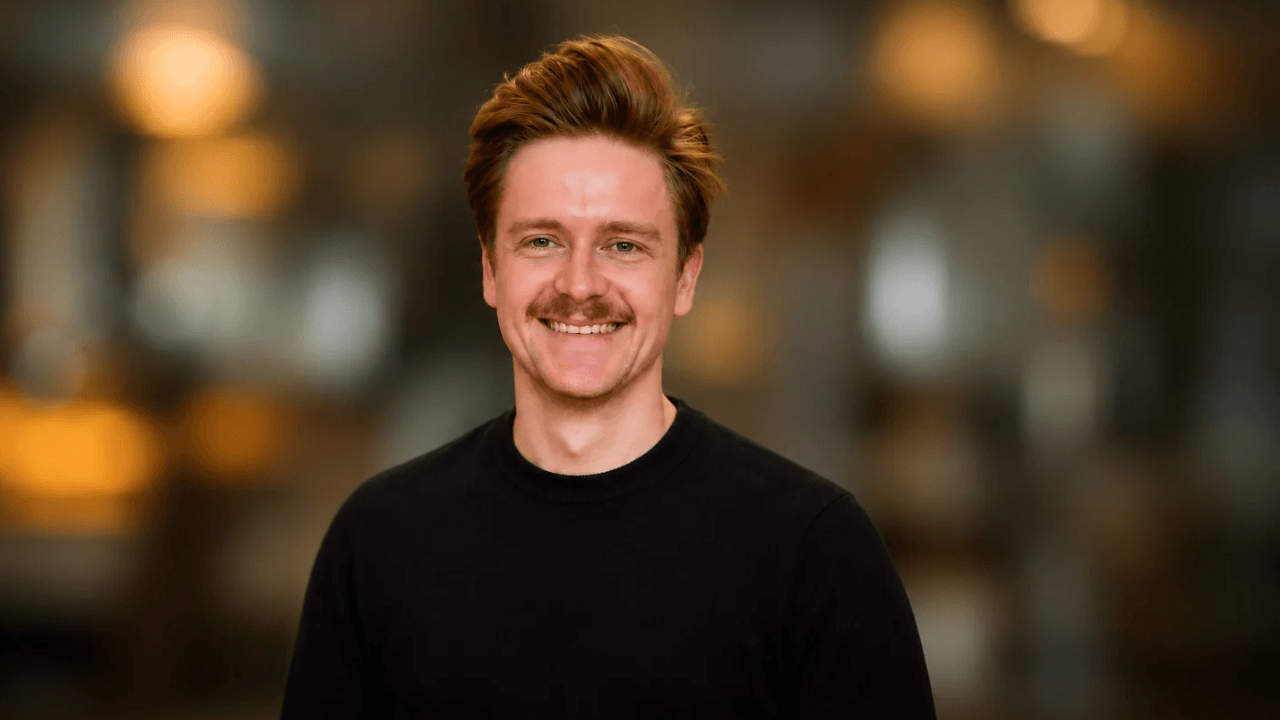
I spoke to Agent F CEO Felix Schläger to learn more.
In Europe, the back office grows faster than the business. Every new hire, customer and country adds filings, reports and reconciliations.
For growing companies, keeping track of finances and administrative obligations can soon become a job in itself. As businesses scale, financial information becomes scattered across bank accounts, payroll providers, accounting software and other systems. Bringing it all together can involve hours of manual work each week.
"Imagine you're a founder, managing director or CFO at a fast-growing startup. You might be working across ten different bank accounts, integrations and systems, each providing a different view of the company at a particular point in time," Schläger explains.
"At a certain point, the complexity of the underlying operations and administrative work increases exponentially."
Agent F is developing an AI-native enterprise resource planning (ERP) platform that connects existing financial and operational systems. Its AI agents can consolidate financial information, connect banking data with accounting software such as DATEV, and track KPIs, giving founders and finance teams a clearer picture of the business without having to manually gather data from multiple sources.
The agents carry out tasks across the tools a company already uses, document their actions so entries can be traced and present the results for human approval.
"The idea is to give founders and finance teams a clear overview of the business without having to spend hours manually collecting information from different systems," says Schläger.
Agent F is already seeing administrative tasks that previously took five to six hours a week reduced to around one hour.
Learning workflows rather than imposing them
Schläger acknowledges that the challenge isn't necessarily that a capable managing director doesn't know what needs to be done.
“It's that so much of their time is consumed by operational tasks."
Rather than simply automating existing processes, Agent F draws on best practices observed across fast-growing companies to help standardise workflows and account for the exceptions and inconsistencies that arise as businesses scale. In doing so, the company doesn't expect startups to reorganise their operations completely around its software.
"We first learn how the company already operates and then compare those processes against what we consider best practice," Schläger explains.
This is Agent F’s key distinction from traditional ERP systems, where you're typically given a standardised system and then have to adapt your business to fit it.
"That implementation process can be incredibly painful," admits Schläger.
Instead, Agent F's approach is designed to evolve alongside a company, adding functionality as its operations become more complex.
For example, a startup might initially use the system for bookkeeping before expanding into controlling, financial planning or warehouse management. The platform also supports multiple legal entities, currencies, and countries without requiring a complete reimplementation. It connects with banks, payment providers, and accounting tools, retaining financial records and agent activity for review.
"Agent F learns the company instead. The agents watch how your bookings, approvals and reports actually run, take over the repetitive work, and leave a trail a finance professional can check line by line," says Schläger.
And crucially, nothing goes out without a human signature.
Will AI agents replace finance professionals?
I wondered if a tool like Agent F would eventually make some people redundant? Schläger admits:
“Initially, I also thought there might be a reduction in jobs as a result of this technology. But what we've experienced has been almost the opposite.”
The role of a CFO or finance expert is becoming more complicated and more valuable.
“Everyone we've spoken to is frustrated by repetitive, complicated and stressful administrative processes, particularly when they're responsible for delivering accurate results."
When AI makes a financial mistake, who's responsible?
As AI agents take on more financial and administrative responsibilities, accountability questions become increasingly important, especially when mistakes could have legal or financial consequences. Schläger stresses that Agent F's technology is designed to support decision-making, not independently execute consequential financial actions.
"We're clearly a software provider, and our agents can't take definitive actions independently.
There's always a human in the loop for final approval, whether that's a tax adviser, managing director or another responsible professional."
When it comes to situations with legal consequences or where money is being transferred, we don't put those decisions in the hands of AI agents yet.
"I think that will remain the case for the foreseeable future."
Schläger also believes existing legal and regulatory frameworks aren't equipped to handle fully autonomous financial decision-making.
"Governments and regulatory systems aren't really ready for a situation where an autonomous agent takes an action and nobody knows who ultimately signed it off."
Challenging SAP and Oracle et al. in the AI-native ERP race
Agent F is entering an increasingly competitive market, with newer AI-native ERP companies such as Campfire and Rillet challenging established providers including SAP and Oracle.
Schläger asserts:
"I actually think the biggest challenge is facing SAP and Oracle. As we build what I believe is a leading AI ERP platform in Germany, we're seeing SAP's market defensibility deteriorate.
We have a great team, including the former CTO of SAP as an adviser, and I think we can make a real difference. Hopefully, we can also help strengthen the German and European enterprise software market."
Agent F is initially targeting fast-growing German tech companies, particularly startups from Series A onwards, before expanding across continental Europe. Schläger argues that European companies often need sophisticated ERP systems earlier in their development, particularly as they expand across borders and navigate different regulatory and administrative requirements.
"We have urgent problems to solve, in industry, in energy, in society, in defence. And too many of our smartest people spend their days with stupid tasks — correcting spreadsheets, updating databases and chasing reports.
Admin is Europe's growth tax. We want to automate it away so that engineers, managers and founders can build faster again."
While declining to disclose customer numbers or name individual clients, Schläger says Agent F is "working with some very interesting companies, including well-known, fast-growing German startups.”
Agent F’s immediate priority is to become the first company German businesses think of when looking for an AI-native ERP platform. As companies grow, they often expand into other countries. A business with a hardware component, for example, might open a production facility in France, Poland or Romania.
"Suddenly, it has more entities, more operational complexity and a greater need for a sophisticated ERP system," Schläger explains.
"We want to grow alongside those companies as they expand internationally."
A team with experience at Amazon, Snapchat and Interactive Brokers
Founded in Berlin in 2025 by CEO Felix Schläger, Agent F currently has an international team of ten. Schläger brings experience in finance and entrepreneurship, including at Interactive Brokers, one of the largest US brokerage firms, where he expanded database systems for the company and its clients, including major hedge funds.
CTO Paul Ohlhaut spent 12 years at Amazon, including more than a year reporting directly to Jeff Bezos. He later joined Snapchat when it had fewer than 20 employees and remained through its IPO. Ohlhaut also participated in Agent F's funding round.
Agent F's investors see an opportunity to challenge the traditional ERP market with AI-native technology.
"We believe agentic AI will transform how businesses operate, and ERP is integral to the ecosystem," said Nick Grouf, Managing Partner of Alpha Edison.
"Agent F is challenging the rigidity of traditional ERP systems with an AI-native approach that has the potential to redefine the category. The team has the technical expertise and ambition to lead that shift."
United Founders, a pan-European investment firm backed by a community of more than 160 European founders, sees an opportunity for Europe to lead in this emerging software category.
"For a long time, Europe watched big technology categories being born elsewhere. Enterprise software is one of the last places where the rules are being written from scratch again, so we are not chasing anyone here," said Vít Horký, founder and general partner of United Founders.
"I think this category will be won by whoever builds it first and best, and we want that to be someone from Europe. Agent F is a small team with a hunger for big success, and those are exactly the founders we look for."
The round also attracted a who's who of technology founders and executives, including Jan Oberhauser, founder of Berlin-based n8n, and serial entrepreneur Julian Teicke, founder of The Delta and co-founder of insurtech unicorn wefox.
Check out our earlier interview with Julia Teicke.
Former SAP CTO Dr Jürgen Müller also invested and advises Agent F.
Other investors include Maximilian von Düring, Daniel Lauchardt, Paul Ohlhaut, Nicklas Teicke and Timo Gerken. London- and Berlin-based investor Tiny Supercomputer also participated. Founded in 2017, the pre-seed investor has backed more than 450 companies, including Synthesia, Wayve, Payhawk, Sorare and n8n.
Beyond the funding itself, Schläger believes Agent F's investors' experience and connections will play an important role in the company's development.
"Being able to exchange ideas with people who were involved in building companies such as Apple in their early days is incredibly valuable.
I think people in Europe sometimes underestimate what access to that level of experience and those networks can mean for a young company.
It's something we can bring into the business and ultimately share with our customers."


Would you like to write the first comment?
Login to post comments