

Investor appetite is increasingly shifting toward infrastructure-heavy categories tied to food resilience, including AgTech, aquaculture, robotics, bio-inputs, and precision fermentation.
Europe’s foodtech sector is entering a more sober, pragmatic phase. According to DigitalFoodLab’s State of the European FoodTech Ecosystem in 2026 report, European foodtech startups raised €3 billion in 2025 — a 25 per cent decline year-on-year — as the industry continues to cool from the investment frenzy of 2021 and 2022.
I spoke to Matthieu Vincent, co-founder of DigitalFoodLab, to learn more.
Europe’s food startups face a timing problem, not an innovation problem
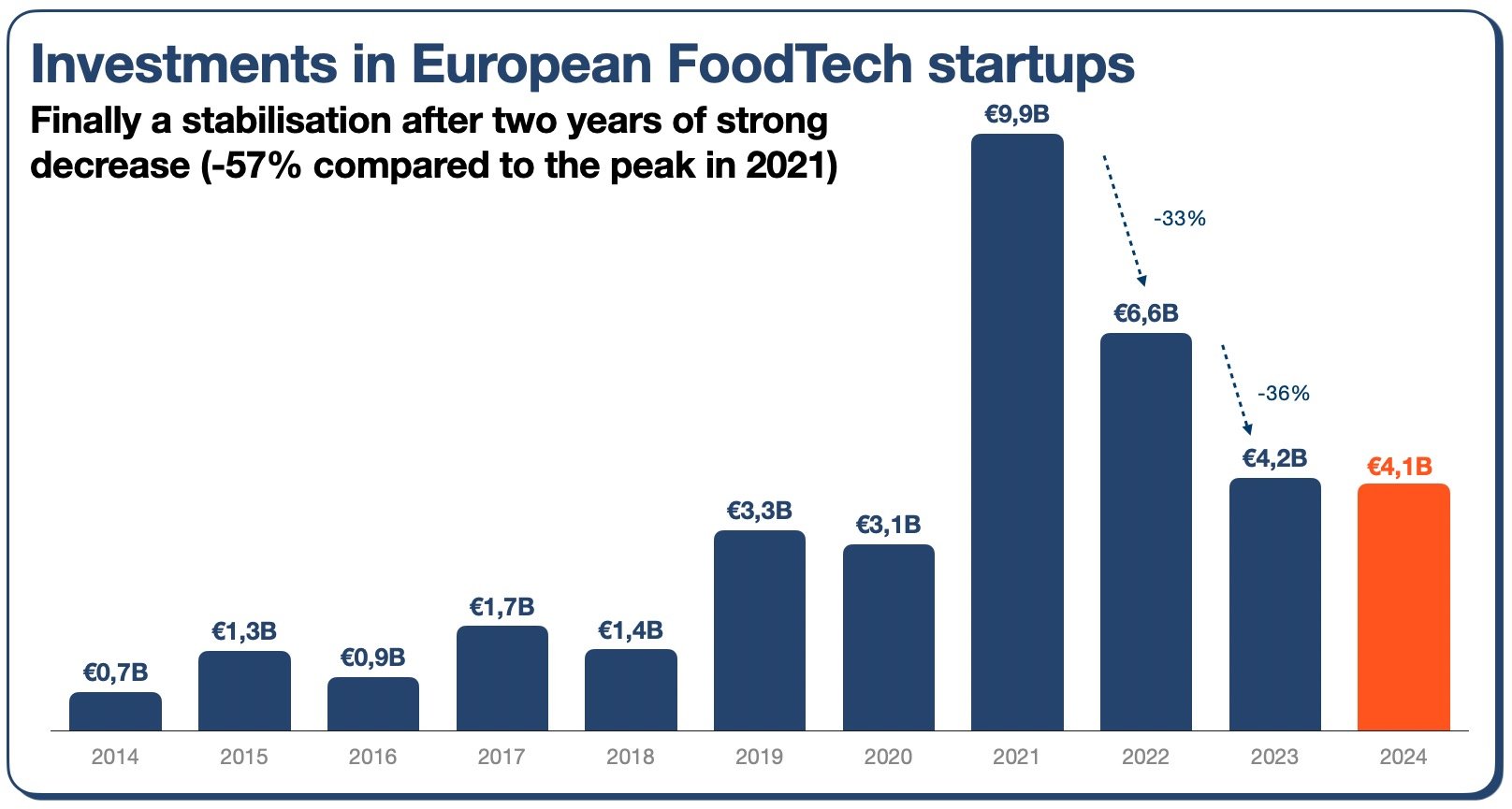
Reading the report, I found the investor funding rates shockingly low for such a sector that touches everyone. Vincent attributes the rate to “a dichotomy between the expectations of investors (rapid scalability) and the reality (5 to 10 years of research before real market adoption).
However, he notes that on the positive side, “we can compare AgriFoodTech funding to R&D investments of the industry: traditionally, food companies invest a tiny share of their turnover in R&D, much less than in other industries.”
Further, in most cases, food innovation is incremental (notably new food products) and doesn't require much funding.
“As many technologies are (finally) maturing, they will enter the market in the next 12 to 18 months, which should lead to a new wave of funding.”
Beyond this, early-stage funding has remained relatively stable; Europe now accounts for 28 per cent of global FoodTech investment.
According to Vincent, this is “a very positive sign” in an otherwise depressed ecosystem.
“Investors, as well as established companies, are betting on early-stage innovation. The support of leading companies has become a "must-have" as many investors now want corporate validation before investing.”
Despite regulatory friction, Europe remains a powerhouse for next-generation food startups
Europe’s Novel Foods framework continues to slow the commercial development of many startups across both agriculture — including robotics and bioinputs — and food innovation sectors such as precision fermentation and cellular agriculture, particularly when compared to markets like the US and Singapore. As a result, many European startups now prioritise regulatory approval in the US or Singapore first, using those markets to validate demand and scale commercially before eventually expanding back into Europe.
According to Vincent, “The goal is to test the market there and eventually come back to Europe at some point when they receive approval."
"And, it should be pointed out that nowadays, a very large share of the "new ingredient" startups are based in Europe rather than in the US or Israel.
So, European regulation is a challenge, but not a barrier.”
I’ve long been bullish on cell-cultivated meat and was disappointed to hear that Meatable announced its dissolution in December last year due to its inability to obtain further funding from existing or new investors. In April 2024, Meatable was the first company in the European Union to receive regulatory approval from the EFSA for a public tasting of cultured meat, in this case sausage.
Earlier this month, cultivated meat pioneer Meatly, Europe’s first company to sell cultivated meat for pet food raised £10.4 million in Series A funding.

Check out our earlier interview with Owen Ensor, founder and CEO of Meatly.
Further, French dairy protein precision fermentation company Standing Ovation announced a €30 million Series B financing round in April this year, including €25 million in equity.
Food manufacturers are becoming foodtech’s key startup partners
The food and beverage industry has continued to show strong interest in startups, although that engagement is coming primarily from food manufacturers rather than retailers — with notable exceptions such as REWE Group in Germany, which has taken a more active approach to investing in and partnering with startups.
According to Vincent, both global and European ingredient companies are also increasingly investing in and collaborating with startups as they recognise that many of these technologies are moving closer to commercial readiness.
Last year, foodtech startup Nosh.bio publicly debuted its Koji-based hybrid beef mince through a week-long cafeteria partnership at Speisemanufaktur Adlershof in Berlin.
Rather than the conventional B2C route, Nosh.bio partners with food manufacturers to overcome the taste, texture, and price challenges, especially in hybrid and plant-based applications. With a focus on industrial readiness and cost-effective scale-up, the team is helping accelerate the shift toward more sustainable, consumer-ready products.
Check out our earlier interview with Nosh.bio co-founder and CEO Tim Fronzek.
Agritech and aquaculture emerge as Europe’s foodtech stabilisers
Agritech is holding up the sector, especially in the Nordics, due to a rise in funding for aquaculture: “Europe is indeed importing a lot of fish from other areas of the world, and consumption is rising,” explained Vincent.
The report notes that Europe as a whole is doing well in agricultural robotics, but, again, due to regulatory challenges (and other farm-size challenges), many companies have to move to the US for commercialisation.
“That's an issue that should be tackled at the European level.”
Further, he notes that many startups, initially focused on supporting carbon credit verification through satellite imagery, emerged in Europe but struggled to scale up and find clients.
“The rise of defence budgets is creating new business streams for them, and we can hope that agriculture will, in the end, benefit from it.”
Dutch grocery delivery startup Picnic raised the largest deal of 2025: €400 million. The investment is notable as the company has triumphed where numerous competitors, including Gorillas, Getir and Jiffy, etc.closed over the past few years.
Vincent attributes the company’s success to price and affordability:
“From the consumer perspective, companies like Picnic and Rohlik Group have focused on delivering groceries at competitive prices rather than simply maximising convenience.
That contrasts sharply with many quick-commerce startups, where convenience was the core value proposition. In an environment shaped by inflation and growing consumer sensitivity to price, the model centred on affordability is clearly performing much better.”
Further, the rapid growth of quick-commerce startups, with the opening of many dark stores in urban centres, made them enemies of many city councils, which banned them.
“Instead, Picnic has a model focusing on suburbs, with large hubs, and is not creating the same defiance.”
Ultimately, the report suggests that Europe’s foodtech slowdown is less a collapse than a reset. The question now is not whether Europe can generate foodtech innovation but whether it can create the regulatory, industrial, and investment conditions needed to keep those companies scaling at home rather than abroad.
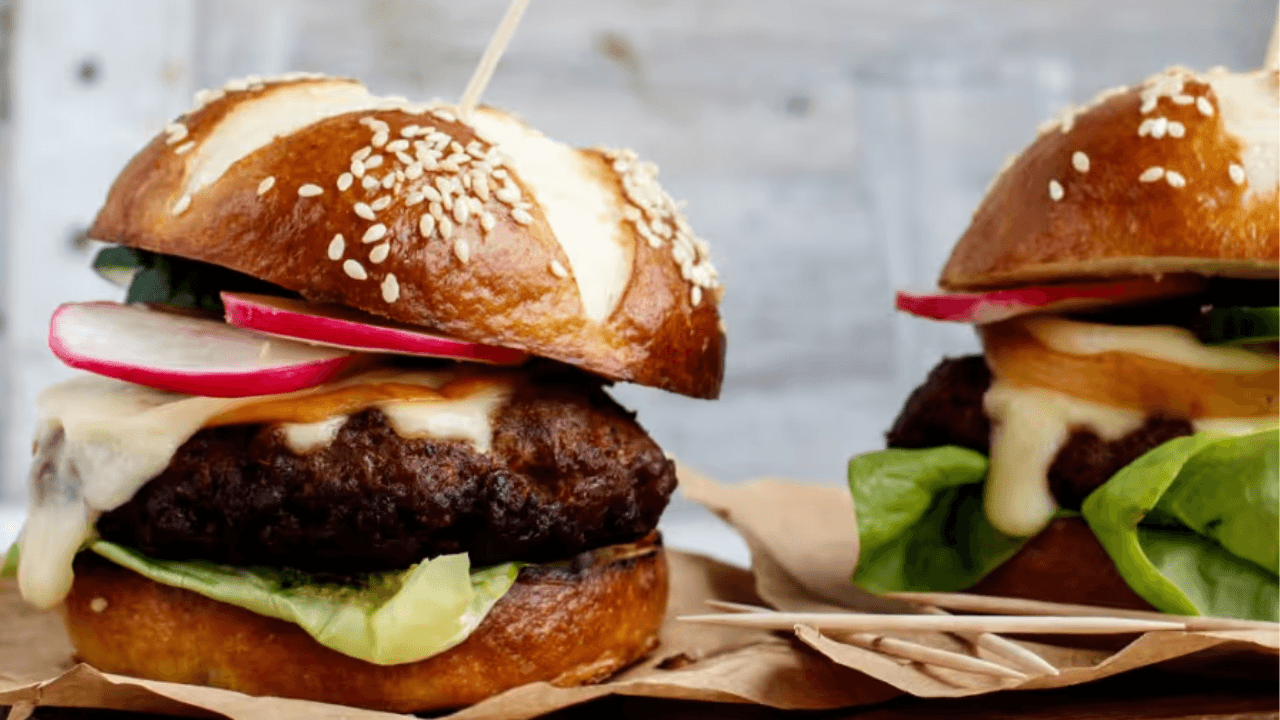
Lead image: Nosh.bio.


Would you like to write the first comment?
Login to post comments