

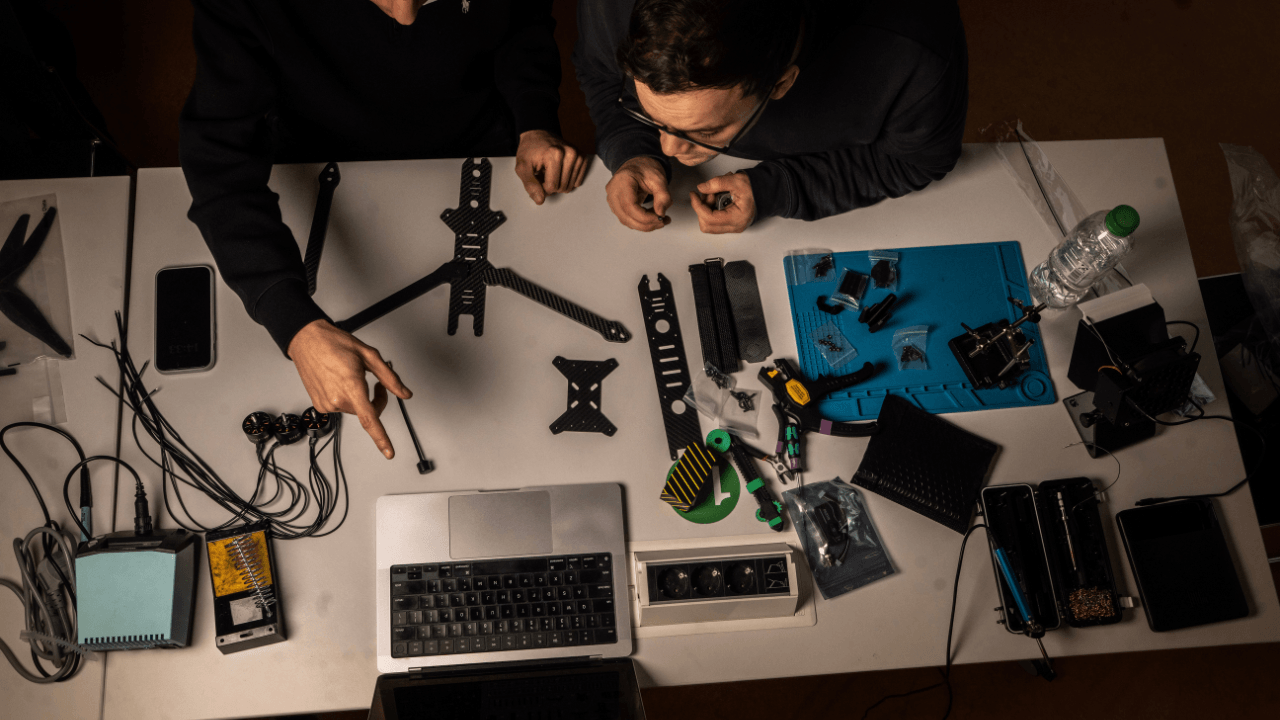
Here in Europe, a new generation of defence startups is emerging far outside the traditional military-industrial complex. Across weekend hackathons, engineers, software developers, drone builders, researchers, soldiers, founders and investors are coming together to prototype technologies for the modern battlefield — many of which are already finding their way to Ukraine.
At the centre of that movement is the European Defense Tech Hub (EDTH). I sat down with co-founder Benjamin Wolba to learn how a grassroots initiative became one of Europe's fastest-growing defence innovation communities.
From physicist to accidental defence founder
Wolba has no background in defence and has never served in the military. He admits his path into defencetech happened almost by accident. He studied physics and completed a PhD in condensed matter physics, researching why materials are magnetic.
He admits, “I loved science, but towards the end of my PhD I realised I wasn't going to become a professor, and I didn't want to work for a large corporation. I wanted to build technology with real-world impact, so entrepreneurship felt like the natural next step.”
After graduating, he joined Entrepreneur First, although he didn't find the right co-founder at the time, so he later spent two years working as an associate at Lunar Ventures. Following that, he started doing what every good investor tells founders to do — customer discovery.
“I explored lots of ideas and spent time figuring out what problem I wanted to solve.”
In February 2024, Wolba was in Silicon Valley, networking and trying to understand the startup ecosystem there. At the same time, in El Segundo, near Los Angeles, a defence hackathon was taking place.
He admits, “ I was simply fascinated by the idea."
He messaged his friend Jonatan Luther-Bergquist, who’s also a physicist and partner at VC firm Inflection.
“We looked at what was happening in the US and thought, "Maybe we could organise something like this in Europe. So we organised the first European Defence Tech Hackathon.”
Just four months later, that idea became reality.
Building a movement from scratch
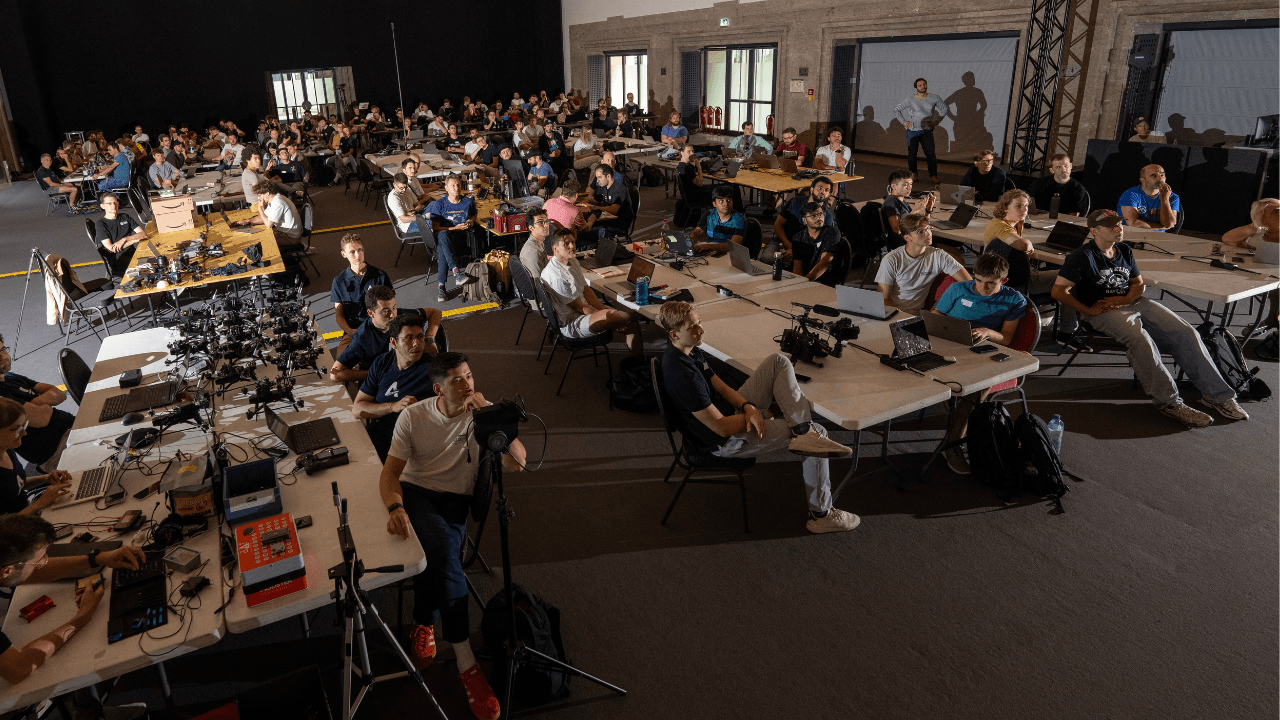
EDTH’s first hackathon took place in Munich in June 2024. Around 150 people attended and built 34 projects covering everything from air defence to demining technologies.
Wolba recounts:
“We received incredible support. We worked with the Ukrainian Ministry of Defence, Quantum Systems became one of our partners, and many other organisations came on board.
Looking back, what surprises me most is that we were complete outsiders. We had no reputation, no previous experience organising anything like this and, honestly, no real reason to expect people would come. Yet the response was overwhelming.”
The momentum continued:
“After the event, people kept calling me. They'd ask, "Benjamin, do you know an investor?" or "Can you introduce me to someone in defence?" or "Can you help us connect with potential customers?" That was the moment someone said to me, "You're not organising an event anymore—you're building an ecosystem." They were right,” shared Wolba.
Today, EDTH has organised 35 hackathons across Copenhagen, Paris, Kyiv, Berlin, London, Prague, Brussels and Tallinn, involving more than 400 teams, with around 40 going on to form companies.
inside an EDTH weekend
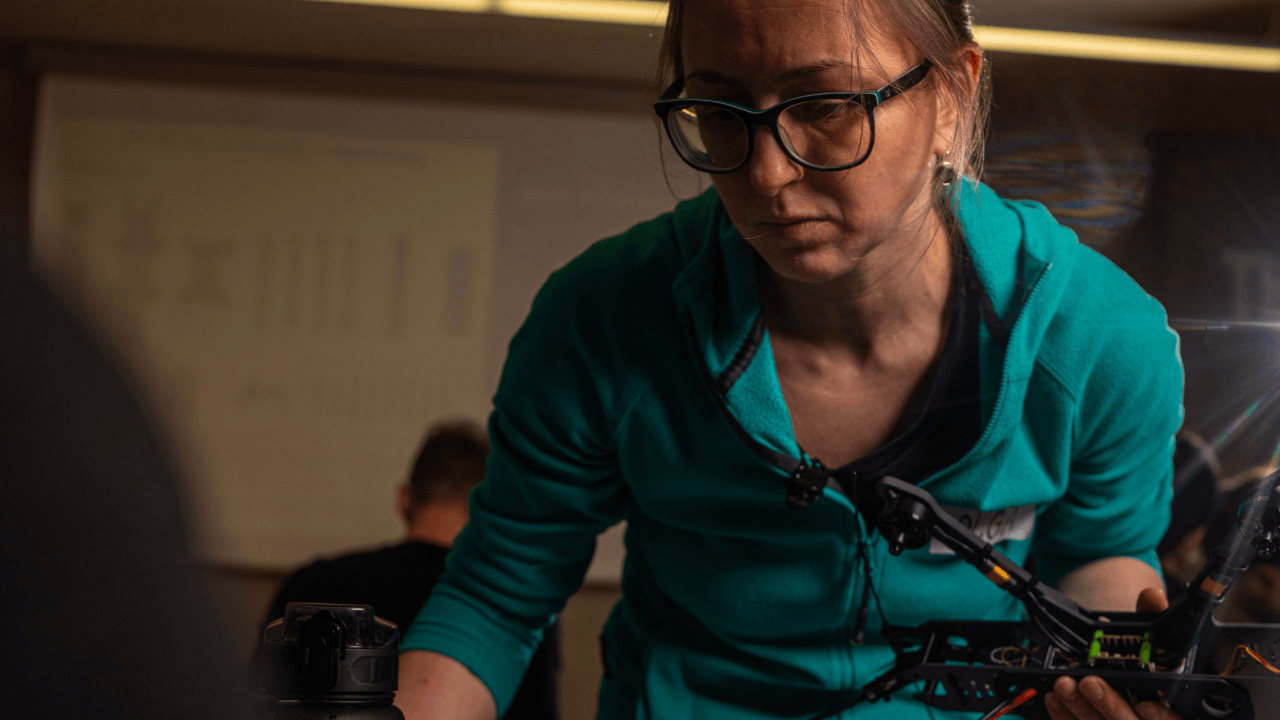
Participants register individually — even if they intend to compete as a team — to facilitate security screening, which is a necessity for a defence-focused event. The weekend begins with hands-on technical workshops rather than traditional conference talks, covering topics such as machine learning for defence, data fusion, FPV drone building, battlefield medicine, demining, and electronics.
Armed (excuse the pun) with new skills, participants form teams of two to six and spend the next 48 hours designing and building prototypes with few formal interruptions.
At the hackathons, there’s huge momentum around drones, autonomy, navigation, target recognition, mesh networking, software-defined radios, and counter-drone technologies, as well as manufacturing automation, logistics, battlefield medicine, and many dual-use technologies. The common theme is solving real operational problems.
Organisers provide equipment including 3D printers, soldering stations and electronic components, while many attendees bring their own tools. By Sunday afternoon, teams present working prototypes rather than slide decks, ranging from software applications to drones, sensors, communications systems and other hardware.
“That's something I really love about these events. People are incredibly hands-on,” shared Wolba.
Investors regularly attend our hackathons as mentors and judges to see promising companies at a very early stage. For founders, it's an opportunity to receive feedback long before they're raising a funding round.
The prototypes are then judged by military experts, defence companies and investors.
“We always make sure there's Ukrainian representation on the judging panel because operational feedback is incredibly valuable.
Afterwards, we send every team detailed written feedback so they can continue improving their projects.
For us, Sunday isn't the end of the hackathon. It's the beginning of what comes next.”
From weekend projects to venture-backed startups
While EDTH is not a venture studio, it aims to help founders succeed by connecting teams with investors, testing opportunities, suppliers and defence organisations.
“It's intentionally decentralised. Unlike a structured accelerator, founders choose their own path while we help the strongest teams make the right connections.”
Unlike traditional events, numerous participants regularly attend several hackathons across Europe and Ukraine as they refine ideas, meet new collaborators and eventually launch companies. Wolba admits this was unexpected.
“We thought Munich would be a one-off. Then people asked us to come to Paris, Copenhagen, Warsaw and beyond. The community created the series itself.”
Around half of the companies that have emerged have already completed some form of operational testing in Ukraine. Zero Industries is perhaps the best-known success story to emerge from EDTH:
“The founders met through our hackathons, worked closely with Ukrainian operators, raised funding and built a real company,” recounts Wolba.
The startup develops AI-powered navigation technology that enables autonomous drones to operate reliably in GPS-denied environments. Its proprietary Visual Positioning System (VPS) combines computer vision, advanced mapping, and onboard AI inference to maintain precise positioning even when GPS signals are jammed, spoofed or unavailable.
But it is far from the only one, as more companies are being created through the hackathon community, with roughly half of those already completing some form of operational testing in Ukraine.
Europe’s capability gap: learning from Ukraine
According to Wolba, Europe underestimates the extent to which warfare has changed.
“Take Germany as an example. The overwhelming majority of defence spending is still going towards legacy systems. Those systems absolutely have a role, but if you look at where the battlefield is evolving, it's clear we also need to invest much more heavily in entirely new capabilities.
We need systems that can defend against drone swarms. We need autonomous systems. We need new approaches to air defence.
There are still many things we're getting wrong. It's not just about buying new technology — it's also about understanding how to use it.”
Much of that understanding comes directly from Ukraine, where EDTH has now organised three hackathons. The latest became part of Defence Tech Valley and was hosted inside the National Aviation University hangar.
Wolba describes Kyiv as the “Champions League” of European defence tech.
“Founders build locally, then come to Kyiv to demonstrate their progress and receive direct feedback from operators with frontline experience.”
One of the biggest lessons from Ukraine is that tactics evolve incredibly quickly. For example, Ukrainian operators understand exactly how Shahed drones behave. They know the flight profiles, how they approach targets and how to position defensive systems accordingly.
“A Shahed drone can fly very low to avoid radar detection or very high to stay out of range of machine guns. Understanding those tactics is just as important as understanding the technology itself.
That's why working closely with Ukraine matters so much. They're generating operational knowledge that every European military should be learning from."
A movement anyone can join
Wolba encourages everyone to get involved:
“Come along. Attend a meetup. Join one of our webinars. Come to a hackathon. One of the most important messages we're trying to communicate is that everyone can contribute. You don't have to be an engineer building drones.
You might organise events. You might introduce founders to customers or investors. You might write software. You might contribute operational expertise. There are countless ways to help strengthen Europe's defence innovation ecosystem.
Our movement has always been built from the bottom up. We haven't waited for governments or relied on government grants. People have simply started building, collaborating and helping one another. That's something everyone can do.”
"Europe needs a thousand defence technology startups."
In terms of Europe’s capability gaps, Wolba cites air defence as one of the biggest, especially as warfare has shifted from a small number of costly assets to huge numbers of inexpensive autonomous systems.
“Europe needs affordable, intelligent systems with better communications, onboard computing and coordination across air, land and sea."
Wolba believes that Europe can't afford to wait:
“If we're relying entirely on governments or the large defence primes, progress will simply be too slow. What Europe needs is thousands of founders tackling thousands of different problems.
We need a thousand defence technology startups. That's how we'll build the capabilities Europe needs for the future.”
This week, EDTH is hosting a hackathon in Rome. Next week, EDTH hosts Berlin Defense Tech Week, bringing together founders, engineers, investors, policymakers and military operators for a packed programme of events, including the Berlin Defense Tech Forum, a defence hackathon, meetups, legal and counter-drone forums, and networking sessions across the city.


Would you like to write the first comment?
Login to post comments