


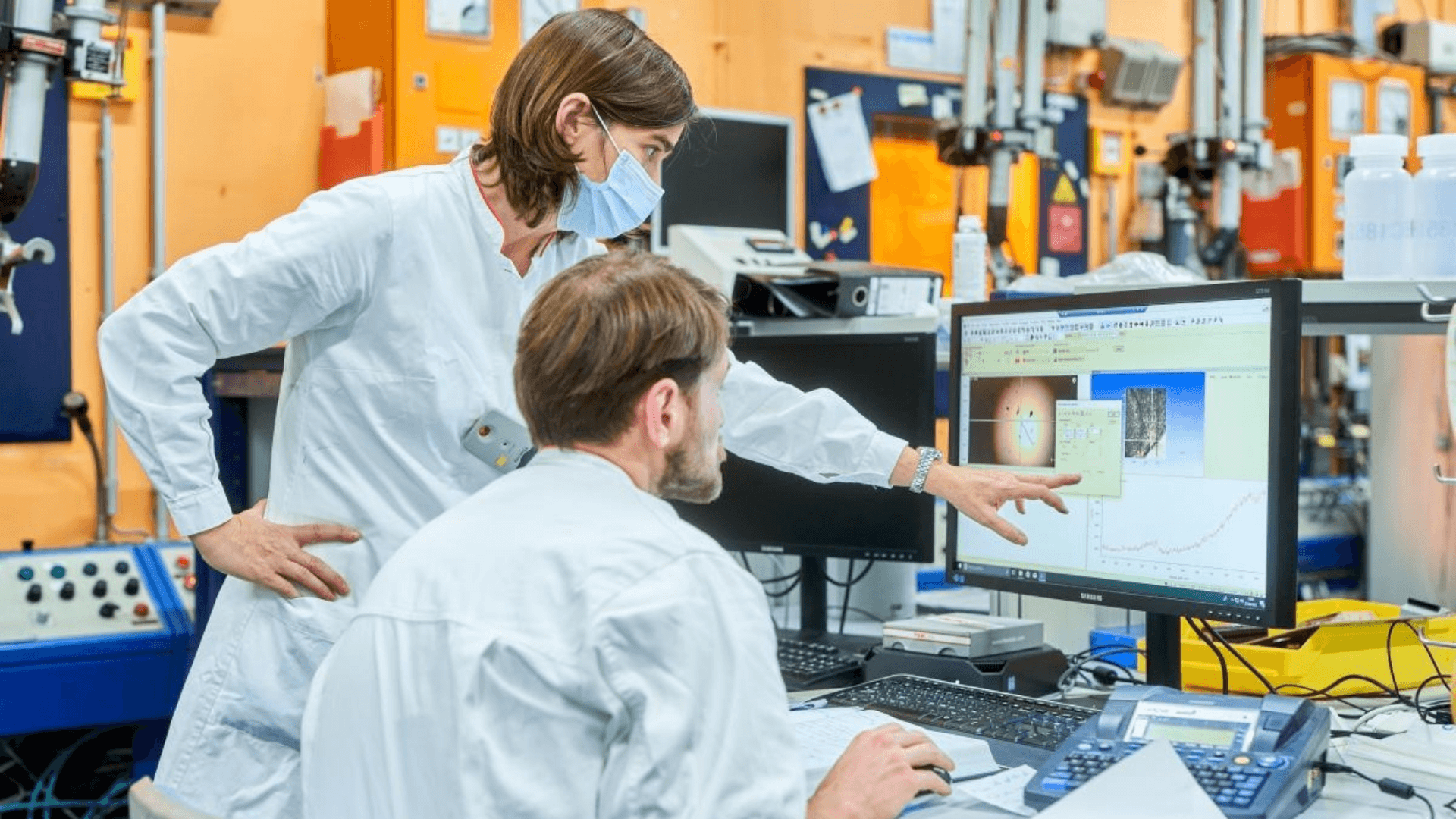
Companies that receive funding from the EU’s Marie Skłodowska-Curie Actions (MSCA) can take part in initiatives that have a major impact on innovation – in some instances securing nearly one patent per funded project.
Over the past 30 years, the MSCA has funded over 150,000 researchers to pursue their ideas as part of doctoral training networks, postdoctoral fellowships and staff exchange programmes.
Collaboration between universities and private sector companies has been a fundamental part of this since the MSCA’s inception in 1996, and the involvement of industrial partners has expanded steadily over the past three decades, allowing SMEs to tap into growing international innovation networks.
So far under Horizon Europe, the EU’s research funding programme running from the start of 2021 to the end of 2027, more than 4,300 businesses, including over 2,200 SMEs, have participated in MSCA projects. The non-academic sector now represents almost half of all participating organisations.
The MSCA has produced a business hub page to help companies get the most out of the doctoral networks, postdoctoral fellowships and staff exchanges it funds. SMEs can work with universities and research institutes in any MSCA action, building the skills of their team and getting access to specialised expertise and advanced technologies.
MSCA Doctoral Networks bring together universities, research organisations and businesses to train doctoral researchers while tackling real-world innovation challenges. Doctoral Networks recruit and train doctoral candidates through joint research projects.
A recent study of selected industry-focused MSCA Doctoral Networks found that some highly innovative projects generated almost one patent each, illustrating the programme's contribution to knowledge transfer and commercialisation. The findings highlight the value of long-term collaboration between academia and businesses.
MSCA Staff Exchanges allow researchers and research support staff to work across sectors and countries, helping organisations exchange expertise and build lasting research partnerships., while the In addition, COFUND enables research-performing organisations to recruit and train researchers through co-funded doctoral and postdoctoral programmes, reducing the costs associated with running these schemes.
For example, in the MSCA-funded EMPOWER COFUND project, three universities and 14 companies and public authorities are working together to train doctoral candidates in a business-oriented programme, enabling them to develop sustainable water management solutions.
The recent Choose Europe for Science pilot further expands opportunities for organisations to recruit outstanding researchers through longer-term positions. The action supports projects where both academic and non-academic organisations recruit postdoctoral researchers with a view to offering longer-term employment beyond the project period.
The idea is also to widen adoption of MSCA’s best practice in research, promoting high standards and excellent working conditions.
Together, these actions enable SMEs to participate in collaborative research projects, access specialised expertise and contribute to the development of new technologies and innovative solutions.
Cross-sector collaboration is at the heart of the MSCA, enabling researchers and businesses to exchange knowledge, build long-term partnerships and develop skills that can support innovation.
International mobility is another defining feature of the MSCA. By bringing together organisations and researchers from different countries, it gives participating businesses access to wider talent pools, international expertise and long-term research networks.
Many researchers remain in Europe after completing their fellowship. For businesses, this helps grow the number of internationally experienced researchers available for recruitment and collaboration.
From research collaboration to entrepreneurship
The programme's emphasis on cross-sector collaboration has also helped researchers build successful innovation-driven companies.
For example, in 2019, Michela Puddu became the first MSCA alumna to win the European Prize for Women Innovators, which recognises the most talented women entrepreneurs across the EU and Horizon Europe associated countries.
As co-founder and CEO of Haelixa, an ETH Zurich spin-off, Puddu was awarded the ‘rising innovator’ prize for her company’s intelligent DNA-based tracing solutions, which ensure ethical and transparent industry practices for sustainable products such as organic cotton.
Since then, two more MSCA alumni have also been awarded the prize. Maria Fátima Lucas, co-founder and CEO of Barcelona-based biotechnology firm Zymvol, was honoured in 2020 for her work using modelling to design industrial molecules.
In 2024, Rana Sanyal won the award for her work on smart nanomedicines for targeted chemotherapy at RS Research, the biotechnology company she co-founded. She had received MSCA support through a Marie Curie International Reintegration Grant project at Boğaziçi University in Turkey and she has described the MSCA support as an important step in building the confidence and international experience that later supported her entrepreneurial journey.
By strengthening collaboration between academia and businesses, the MSCA helps translate research into innovation, while giving companies access to international talent and long-term research partnerships. As the programme marks its 30th anniversary, this role is expected to become increasingly important for Europe's innovation ecosystem.


Would you like to write the first comment?
Login to post comments