

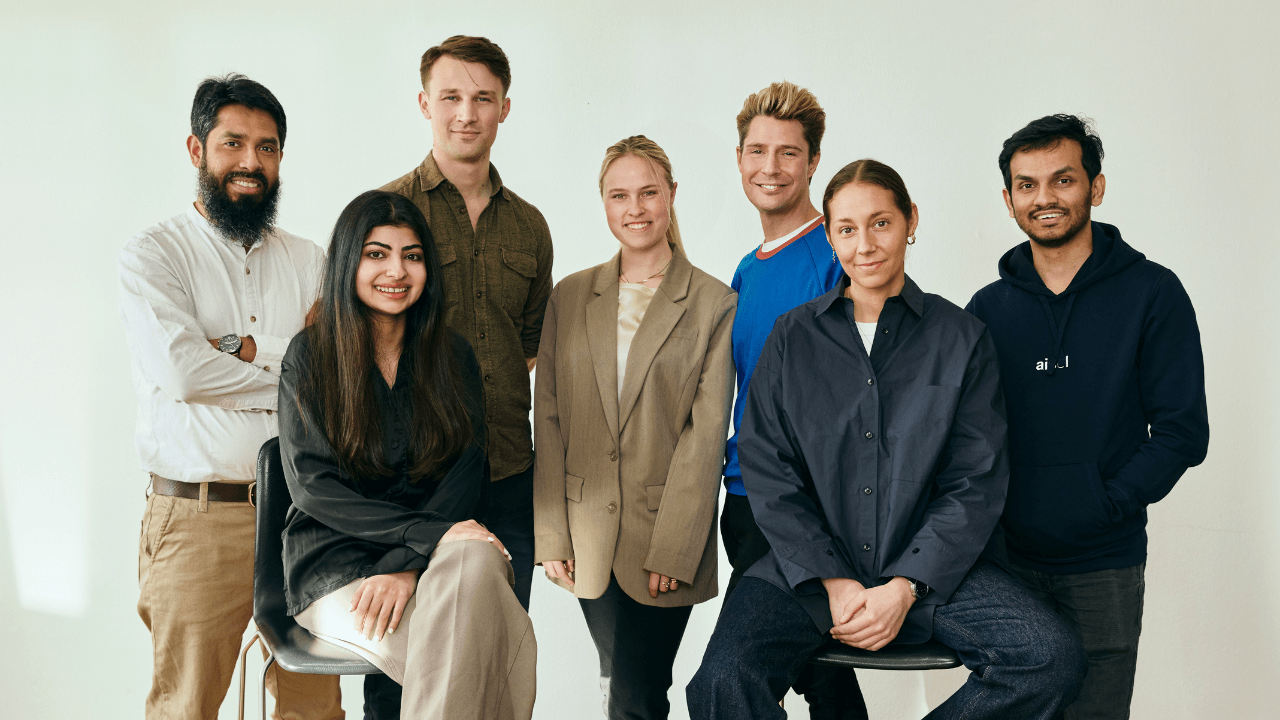
Aisel Health, the Danish HealthTech company building an Operating System (OS) purpose-built for psychiatry and mental health, today announced it has closed a €1.7 million pre-seed round.
The round was led by Caesar Ventures, joined by Nordic Web Ventures, LifeX, and Angel Invest, alongside existing investors Rockstart and EIFO.)
For decades, mental healthcare has been underfunded, stigmatised, and passed over by innovation, while demand for psychiatric care is growing faster than health systems can absorb it: patients routinely wait weeks, months, or longer to see a clinician.
According to Christian Houen, Aisel co-founder and Chief Product Officer, “We’re on the brink of something catastrophic with waiting lists. To radically change that, we need shorter, more efficient cycles with patients, fuelled by the understanding clinicians accumulate across consultations over time.”
Check out our earlier interview with Aisel.
AI scribes solve documentation — but not understanding
There’s no shortage of AI-powered medical scribes designed to make documentation easier — I see multiple vendors at virtually every tech conference I attend these days.
But faster documentation doesn’t necessarily translate into a better understanding of the patient. In fact, making documentation cheaper and easier can simply produce more of it. That may help with compliance, but not necessarily with treatment.
When the patient returns, the clinician can still face the same problem: too much documentation to review, too little time to read it, and a patient forced to repeat information they have already provided. In that process, important details can still be missed.
"AI scribes work - they write notes faster, and that's great for immediate burnout," said Houen.
"But that's not what's keeping waiting lists long. Make notes cheaper to produce, and you just make that information harder for a clinician to find when they need it.
We still have yet to overcome the human limitation of understanding everything that was ever written about every patient ever treated - that's the problem we built Aisel to solve: giving clinicians exactly what they need, when, and how they need it. "
By surfacing concise, organised information shortly before a consultation, Aisel aims to help clinicians arrive prepared without adding more prep time, while reducing both consultation and post-appointment documentation time.
Aisel's latest research, "The Documentation Minute", found that psychiatrists spend far more time on evidence gathering than on writing the note itself — pulling together a patient's history from referrals, prior notes, and multiple systems before they can even begin to assess and treat.
According to the research, clinicians spend only around 40 per cent of their time with patients. The rest is spent on documentation, reading, gathering information, and writing.
Aisel’s platform aims to reduce that burden by turning interview recordings, existing documents, and patients’ own accounts into structured, contextual insights. Rather than simply generating more text, it surfaces the clinical history and context a psychiatrist needs at a particular moment, before, during, and after a consultation.
By presenting concise, organised information shortly before an appointment, Aisel aims to help clinicians arrive prepared without adding more prep time, while reducing both consultation and post-appointment documentation time.
Helping clinicians maintain continuity of care
According to Houen, Aisel has built what it calls a “sphere of understanding” around each patient, which develops over time as more information is gathered. Using psychiatric protocols, its fact-deduction system, and AI scribing to capture context, the platform surfaces the information most relevant to the clinician at a particular point in a patient’s treatment.
Rather than searching through multiple documents to work out what matters, clinicians are presented with the relevant information directly, along with its sources and citations. That information can then feed into the documentation they need, helping maintain continuity across repeated consultations.
This could be particularly useful when patients move between providers and would otherwise have to repeatedly retell their story. Even the same clinician may struggle to remember the details of a consultation a few weeks later after seeing 100 patients in between.
But according to Houen, it's particularly important when someone moves from a GP to a psychiatrist or psychologist.
“These questions are formative to treatment, so they need to be asked. If clinicians don't have access to that information upfront, or it's buried somewhere in the documents, they'll simply ask again because then they know they're compliant and have the information.”
Bringing information from outside the consultation
Aisel has expanded its intake technology beyond the work it did last year. In the case of the ADHD diagnostic process, for example, Aisel can send AI interviews to a patient's relatives, as well as to schools and other relevant parties, so they're all contributing to the same shared understanding of the patient.
“We're currently piloting this with a clinic focused on children. It's particularly relevant there because you can't rely solely on the child. You need information from parents, teachers, and other people around them.
Previously, someone might have had to call all these people individually, find the right person, deal with people who didn't answer or didn't have time, and so on. It sounds basic, but it takes a tremendous amount of time. It's also one reason waiting times in child and youth psychiatry can be so long.”
To validate the technology, Aisel initially ran its system alongside clinics’ existing processes, comparing the information each produced and asking clinicians to assess the resulting reports, including through blind comparisons.
As the product has matured, Houen says Aisel has increasingly focused on response rates and clinician satisfaction, while also tracking patient satisfaction. Those scores are shared with clinicians, giving them insight into activities that patients found difficult or ineffective and allowing them to adjust accordingly.
From patient understanding to clinic operations
Aisel is also committed to smoothing the entire operational process within clinics. Understanding the patient and gathering information is the first step, but many activities are happening around the patient — rebooking appointments, managing medications, ordering prescriptions, and other administrative tasks.
“A lot of these tasks can be deduced from conversations and the context we already have, then surfaced to the relevant people in the clinic " explained Houen.
“Rebooking is a simple example. The doctor and patient might agree on another appointment, but then it ends there because booking it is the secretary's job.
The secretary isn't told, the patient doesn't realise they need to arrange it, and several weeks later they call and discover the next appointment isn't available for another six weeks.
We want to own more of that collaboration between clinicians working around the same patient.”
That broader ambition — to become an operating layer for psychiatric care rather than simply another AI documentation tool — is also where the new funding comes in.
"Few problems in healthcare are as large or as overlooked as psychiatry's, and few founders are as passionate about solving it the way Augusta and Christian are. We're proud to lead this round, and look forward to supporting them to deliver the next generation of technology for psychiatry,” shared Carolin Gabor, Managing Partner and GP at Caesar Ventures.
Aisel will use the funding to grow its clinical and engineering team and fund its UK market entry, converting an active commercial pipeline of private psychiatry, ahead of a planned seed round.
The goal: give clinicians everything that matters about a patient, exactly when they need it - something no human memory, however well-trained, can do alone - and in doing so, help shorten the waiting lists that have defined psychiatric care for too long.


Would you like to write the first comment?
Login to post comments