

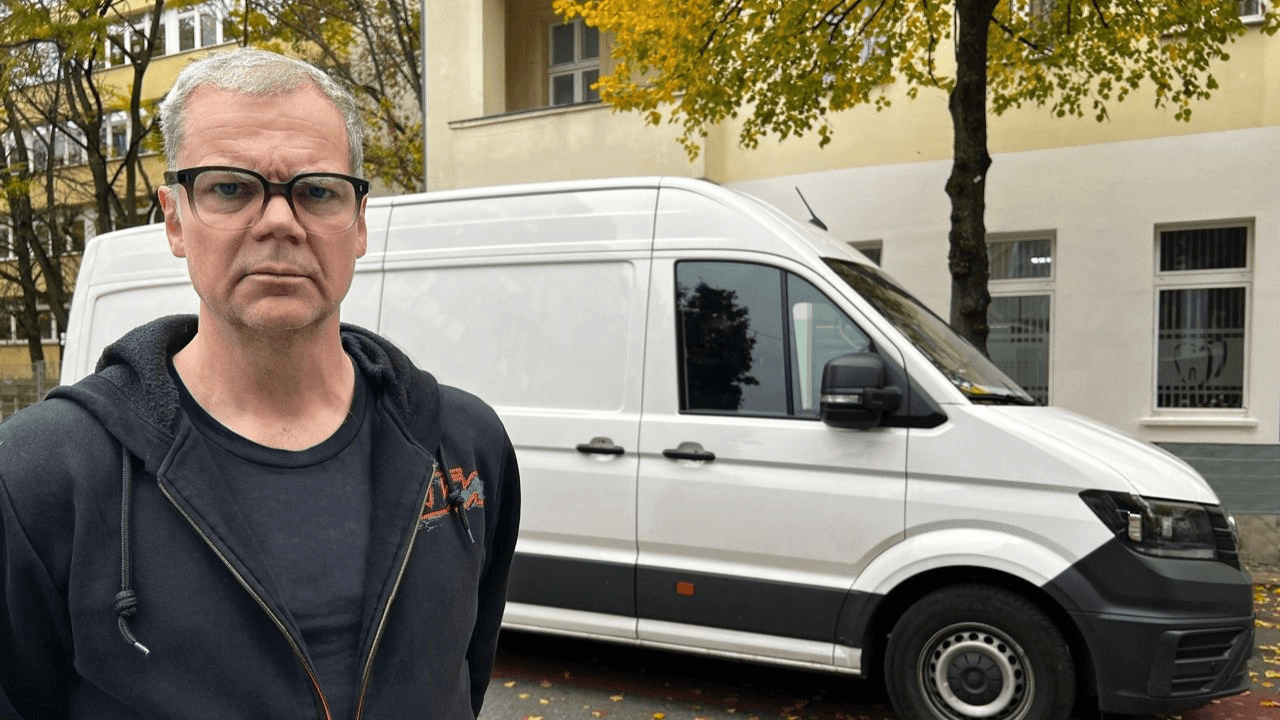
You’ve no doubt seen fundraisers online to donate funds to send emergency service vehicles to Ukraine.
But there’s just one problem.
Most donated ambulances are poorly suited to Ukrainian roads and conditions, with mechanical failures leaving vehicles out of service when medics need them most.
Now, a group of European and US medtech and defence technology companies is developing a rugged medical evacuation vehicle for Ukraine, combining battlefield medical equipment, protective technologies and digital triage systems.
Spearheaded by startup entrepreneur and volunteer medic Howard Hunt, Battle Truck aims to address two challenges: the shortage of reliable evacuation vehicles that can handle Ukrainian roads and frontline conditions, and the difficulty early-stage medical technology companies face in testing and demonstrating their innovations in real-world environments.
Check out our earlier interview with Howard Hunt, co-founder of volunteer evacuation team, The AO.
According to Hunt, donating vehicles without considering Ukrainian road conditions and frontline requirements can leave medics with equipment that is difficult to maintain and unreliable when casualties need evacuating.
Another factor is ensuring medics and their patients are safe.
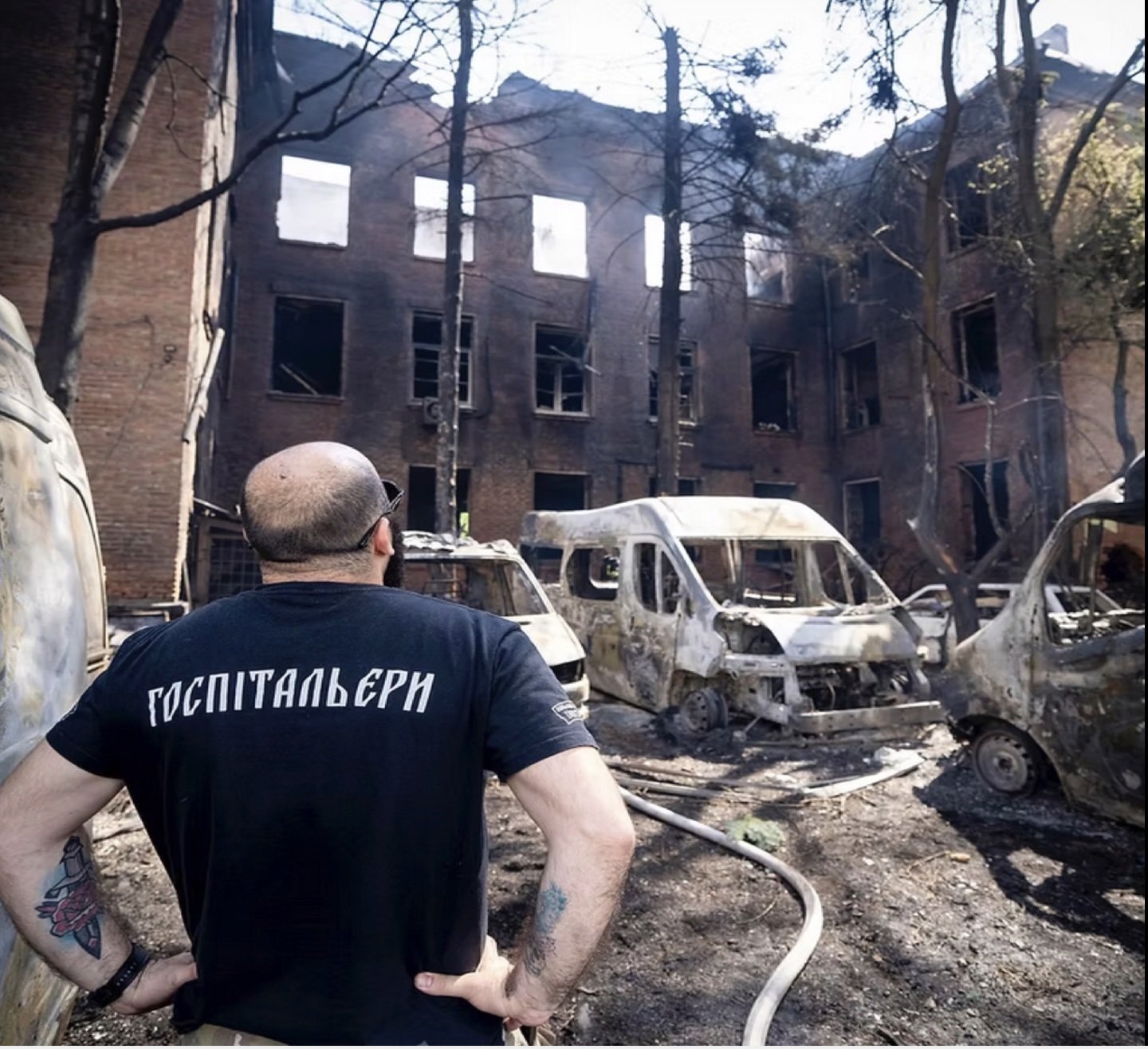
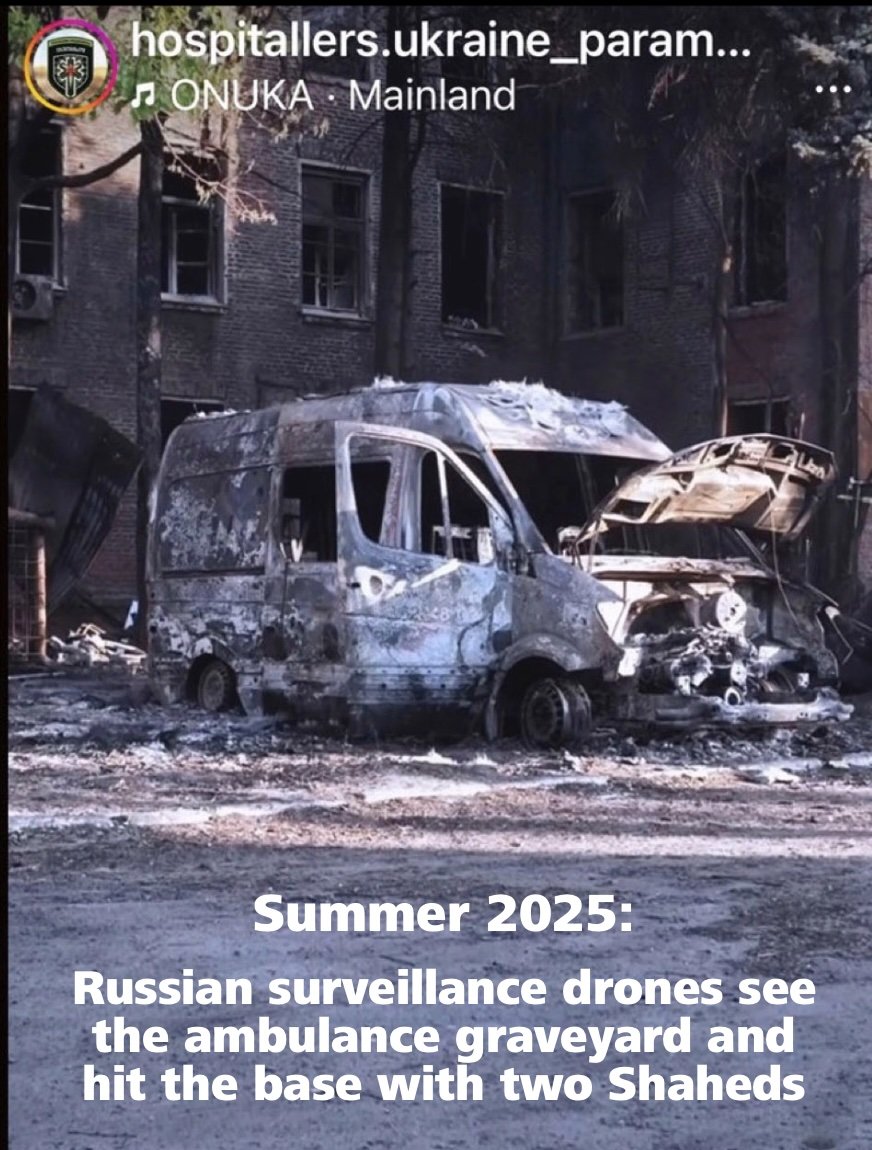
Hospitals and ambulances in Ukraine are increasingly coming under Russian drone and missile attack, despite the Geneva Conventions (the international rules of war) requiring all parties to protect them.
At least 515 healthcare workers have been killed in Ukraine since Russia’s full-scale invasion on 24 February 2022, according to the latest tally displayed by the Attacks on Health Care in Ukraine monitoring project. There is no official data on the number of medics killed or injured during the war.
Building an ambulance that can survive Ukraine's front lines
The Battle Truck project is seeking a donated van, ideally a Fiat Ducato or similar heavy transit vehicle, to convert into a durable evacuation platform with upgraded suspension, tyres and protective equipment. Rather than developing another conventional ambulance, the team wants to create a shared testing platform for technologies that could improve casualty survival and protect frontline medical personnel.
“The vehicle is basically a trojan horse of products. We drive it into Ukraine and prove it works,” Hunt explained.
The proposed vehicle would combine technologies from several companies across Europe and the US, allowing Ukrainian medics to assess them under realistic conditions.:
NIXXEN (Netherlands) would contribute vehicle engineering and modular evacuation capabilities, including adaptations to the van's suspension, chassis and other components to help it withstand damaged roads, potholes and uneven terrain. The aim is to improve stability, durability and mobility when transporting casualties.
Molecular Products (UK) is contributing its Rugged Oxygen Generator (ROG), designed to provide oxygen without relying on conventional compressed gas cylinders or an external power supply.
Velico (US) is developing FrontlineODP, a spray-dried plasma technology designed to bring potentially lifesaving blood products closer to casualties suffering severe bleeding.
AO-Med (Estonia) would provide digital triage management and Tactical Combat Casualty Care (TCCC) reporting technology, enabling medics to record and communicate casualty information during evacuation.
Phoenix Denmark, a manufacturer of tactical and protective equipment for military and security personnel, has been identified as a potential supplier of a specialised protective covering for the Battle Truck.
Protecting medics from incendiary weapons and drone detection
Beyond making the vehicle more durable, Battle Truck's partners are exploring technologies to protect medics and patients from some of the deadliest threats on Ukraine's front lines.
The proposed blanket would cover the vehicle and is intended to provide protection against explosive fragments and burning white phosphorus particles, while also reducing its thermal signature.
The dangers facing frontline medical teams in Ukraine extend beyond conventional shelling and drone strikes. Incendiary weapons can ignite vehicles, destroy medical equipment and cause devastating burns, while white phosphorus presents particular risks because its burning particles can adhere to surfaces and reignite when exposed to oxygen.
Human Rights Watch has documented incendiary attacks in Ukraine, including a November 2024 drone attack that set fire to two ambulances at the Kherson Regional Oncology Centre, although the weapons used in that incident were not identified. By reducing the vehicle's infrared visibility, the covering could potentially make it harder to detect and target during casualty evacuation.
Velico: Bringing lifesaving plasma closer to the front line
Conventional plasma typically requires frozen storage and thawing before transfusion, making it difficult to transport and administer in frontline environments.
Velico's technology converts donated plasma into a dry product that can be stored in lightweight packaging and rehydrated with sterile water in under three minutes, potentially enabling earlier treatment during medical evacuation.
The company is also developing decentralised manufacturing systems that would allow regional blood centres to produce their own dried plasma. Its technology is undergoing evaluation by France's Armed Forces Blood Transfusion Centre, while a 2026 clinical trial involving 24 healthy volunteers reported encouraging initial safety results.
For Battle Truck, the potential benefit is access to plasma during casualty evacuation without the conventional frozen-plasma supply chain.
Molecular Products: Oxygen without cylinders or electricity
I spoke to Hitesh Raval, Defence Business Development Manager at Molecular Products, about the company's involvement. Raval explained that conventional compressed oxygen cylinders can present additional hazards in environments exposed to gunfire and explosions.
Damage to pressurised cylinders can endanger medics and patients. Molecular Products' ROG is designed to provide a non-compressed, power-independent oxygen supply for frontline medical use.
According to Raval, the system can provide approximately 15 minutes of oxygen, potentially helping medics treat casualties before they can be transferred to more comprehensive care.
The company has been discussing the technology with Ukrainian medics and military medical personnel. Raval says the response has been encouraging, but obtaining equipment remains a significant challenge.
The medtech procurement problem: When saving lives takes a back seat
For early-stage defence and medtech companies, gaining traction in Ukraine can be essential to securing investment and procurement opportunities. However, demonstrating new technologies under operational conditions is expensive and logistically challenging, especially when military procurement priorities focus on drones and other battlefield equipment.
For Raval, Battle Truck builds on his experience with Ukrainian medical personnel and his desire to improve casualty evacuation from the front line.
“Through my work, I've met Ukrainian medics, doctors and brigade commanders. Hearing directly from people dealing with those conditions makes you ask what you can do to help.
At Molecular Products, we've been developing a battlefield oxygen generator for frontline medics based on 40-year-old technology in submarines, and I immediately recognised its potential for frontline medical care. When I met Howard and heard about the Battle Truck project, the appeal was almost instantaneous.
I felt I had enough experience and industry connections to help bring together the equipment and partners needed to make it happen.”
While medics introduced to the Rugged Oxygen Generator have received it enthusiastically, one of the biggest problems is procurement.
Raval recounts:
“I had a meeting with medical personnel connected to the Azov Brigade — a Ukrainian military unit that began as a volunteer battalion in 2014 before joining the National Guard — including a staff sergeant, a medical trainer and a combat medic.
They were very interested in the product, but the question was how they could obtain it. Even when frontline medics identify equipment that could help them, there isn't necessarily a straightforward route to purchasing and deploying it.”
Competing priorities also matter, especially when military resources are needed for drones and other equipment. The team has had encouraging discussions with vehicle manufacturers. However, a vehicle deployed in a war zone may not return intact.
“Potential partners need to understand that from the outset,” said Raval.
“My approach is to be direct about what we're trying to achieve and what we need. The priority is getting suitable equipment to the people who need it, rather than creating a marketing exercise.”
Crucially, the Battle Truck team wants frontline medics involved in evaluating the vehicle and its equipment rather than assuming that technologies developed elsewhere will automatically be suitable.
Raval has also been exploring links with stabilisation points and medical evacuation networks in Ukraine, potentially allowing the vehicle to operate as part of a wider casualty evacuation system.
From prototype to the front line: Proving Battle Truck works
Potential testing routes include Dark Star bootcamps and Brave Tech programmes, alongside Ukrainian military testing facilities in Rivne and Lutsk.
The team has identified the Rivne Interregional Medical Cluster as a potential route to accessing those facilities. If successful, the team hopes to secure a formal requirement or procurement request from Ukrainian military medical authorities, including brigade commanders or the Ukrainian Ministry of Defence's medical structures.
That request could potentially support procurement discussions with German or Dutch authorities.
“We've been exploring this fast-track procurement opportunity for the past four months, and believe it might be possible if we are able to prove viability in battlefield conditions,” said Hunt.
The proposed collaboration is non-exclusive, with participating companies expected to cover the costs of their own prototype technologies. If the project eventually secures a purchase order, the partners would negotiate how to distribute proceeds. A memorandum of understanding is among the proposed next steps.
The €500,000 challenge: Turning Battle Truck into reality
The immediate priority is securing a suitable van and the funding needed to integrate the technologies. Raval estimates that approximately €500,000 could potentially support three or four vehicles, depending on the final configuration and contributions from partners.
The team is exploring support from NGOs and humanitarian organisations, alongside potential contributions from vehicle manufacturers and technology companies.
Raval has suggested assembling the initial vehicle in Germany to simplify coordination between European suppliers, although Poland is also under consideration.
The timetable remains dependent on securing funding, equipment and a suitable vehicle. Once assembled, the prototype would be taken to Ukraine for testing. If successfully validated, the project's presentation identifies the 92nd Brigade in Lyman as its intended recipient.
The longer-term ambition is to establish a repeatable model for supplying similarly equipped evacuation vehicles, combining practical medical support with opportunities for participating startups to demonstrate their technologies.
Edwin Milotte of Dutch vehicle engineering company NIXXEN believes the project addresses an imbalance in defence innovation, where investment in offensive capabilities often overshadows technologies designed to keep wounded soldiers alive.
“While everyone is focused on offensive capabilities, we're focused on saving lives. Getting injured soldiers medical attention quickly is critical, but so is ensuring they receive the right treatment.
That's why we've turned our attention to medical technology. By bringing these technologies together in one vehicle, we hope to give more of the brave men and women on the front line a better chance of survival.
If the first Battle Truck proves successful, our ambition is to help deliver another 500 vehicles and more medical equipment, not only to the front lines but also to cities further from the fighting, where civilian casualties are increasing.”
Raval stresses:
“Ultimately, the people operating these vehicles are putting themselves at considerable risk to evacuate casualties. Anything that can improve their protection deserves serious consideration.
But the immediate motivation is much simpler. We want to give combat casualties a better chance of survival and help protect the medics who are trying to evacuate them.”
Can you help get Battle Truck on the road?
Battle Truck is seeking a suitable van, funding and industry partners to help turn the concept into a working medical evacuation vehicle for Ukraine.
Whether you're a vehicle manufacturer, medtech company, humanitarian organisation or potential donor, the team is keen to hear from those who can contribute equipment, expertise or financial support.
Get in touch with the Battle Truck team [email protected]
Or visit the Battle Truck page on the AO website.


Would you like to write the first comment?
Login to post comments