

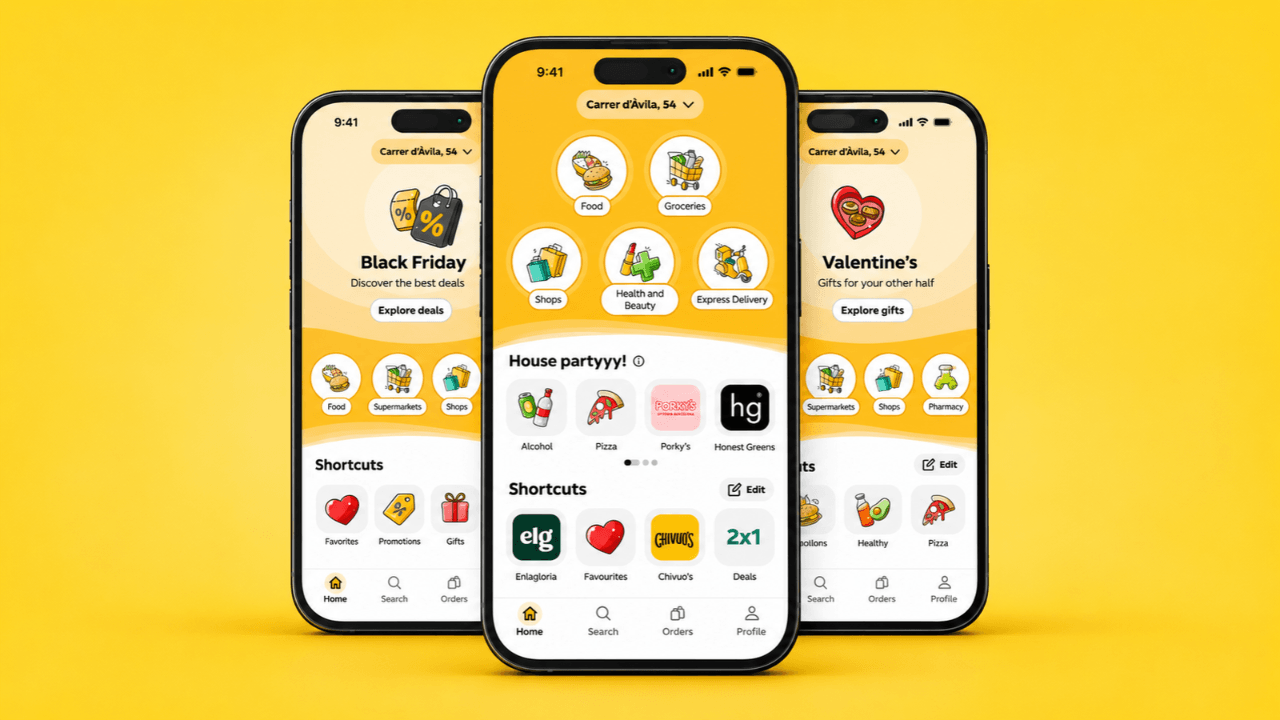
The days of racing to deliver groceries in 15 minutes — I once clocked a 7-minute delivery from the non-defunct Gorillas here in Berlin — may be over, but quick commerce is constantly evolving. What began as a race to get food to customers faster is developing into a broader retail model, spanning everything from pet food and pharmacy products to fashion and electronics.
During a recent visit to Glovo's Yellow Park headquarters in Barcelona for its Startup Campus, I spoke with Connie Kwok, VP of Q-Commerce at Glovo, about how the sector is changing, where the next opportunities lie and the practical challenges of making almost anything available on demand.
Having spent eight years at Amazon before joining Glovo, Kwok believes quick commerce will fundamentally change how people shop. But as delivery platforms expand beyond their original focus on restaurants and groceries, they face new challenges, from managing fashion returns and fragmented retail inventory to determining where autonomous delivery robots make commercial sense.
With quick commerce now accounting for around 22 per cent of Glovo's business, the question is no longer simply how fast a product can reach someone's door, but how delivery platforms can become a viable part of everyday retail.
Glovo began in Barcelona in 2015 as an on-demand service that lets customers order almost anything from local businesses or send packages across the city. It later evolved into a marketplace connecting customers with restaurants and retailers, then expanded into groceries, pharmacies, fashion, pets, and other retail categories.
Glovo operates across 21 countries in Europe, Ukraine, Central Asia and Africa, connecting customers with restaurants, supermarkets and retailers through its on-demand delivery platform.
From pharmacies to pet food: Building new shopping habits
According to Kwok, pharmacy is typically the next category customers adopt after groceries. However, it is a particularly complex market because regulations vary significantly between countries. In Spain, for example, Glovo can offer over-the-counter medicines, but the user experience is complicated by the need to connect customers to individual pharmacy websites.
"That allows us to work with independent pharmacies, which is important, but it adds complexity. We operate in 21 countries, each with different regulations, and we have to respect those local requirements."
Another category Kwok is particularly excited about is pet products.
"I'm a dog owner myself, and it's easy to understand the appeal of having a 15-kilogram bag of dog food delivered to your door within 30 minutes.
What's especially interesting is the repeat purchase rate. Once customers discover they can order pet food through the platform, they tend to come back.
People generally feed their pets the same food consistently, so once that purchasing habit is established, it opens opportunities for accessories, clothing and other pet products."
Petcare is already proving to be a promising category for Glovo. In 2024, the company reported 51 per cent growth in petcare across its markets, alongside an expanded partnership with Mars covering food, snacking and pet products.
"Our app was built to sell pizzas. It wasn't built to sell shoes"
Glovo has also started delivering fashion products, launching Adidas and Birkenstock in Morocco. According to Kwok, retailers have largely driven the expansion by approaching Glovo rather than the other way around. Morocco is an interesting market because its retail infrastructure differs from that of many European countries.
"There aren't shopping malls everywhere, so having products delivered offers customers another way to access brands.
But fashion is a much more considered purchase than groceries.
We often say that our app was built to sell pizzas. It wasn't built to sell shoes.
There are a lot of improvements I'd like to make to the user experience before we can fully support these categories."
Returns are among the biggest challenges in online fashion retail.
"Technically, we can send a courier to collect a product, but what happens when it arrives back at the retailer? Someone needs to inspect it, determine its condition and establish who is responsible for any associated costs.
We still need to work through that entire process."
Kwok spent considerable time in China, where she observed delivery models that allow customers to try on clothes while the courier waits before committing to a purchase.
"Customers can order several sizes, try everything on and return what they don't want immediately.
Logistics costs are considerably lower in China, which makes that kind of service easier to offer. I'd love for us to reach that point. It would be an amazing customer experience."
The inventory challenge: From live APIs to WhatsApp updates
One of Glovo's biggest operational challenges is inventory accuracy, particularly given the different levels of digital maturity among retailers across its markets.
Kwok explained:
"Take supermarkets as an example. Even when a partner provides live stock updates, there are still customers physically shopping in the store.
If there are three apples left on the shelf, should we show three apples available in the app, or only two, anticipating that someone in the store might buy one?"
In Spain, many supermarket partners are integrated with Glovo through APIs, providing live inventory data. However, the same supermarket chain may operate very differently in an African market, where stock updates are sometimes sent once a week through WhatsApp.
"That's the reality of operating across 21 countries with very different levels of technological development. In some markets, we can solve problems relatively quickly with technology. In others, we still need people," explained Kwok.
Where stock updates are infrequent, Glovo deploys people into stores to conduct random inventory checks. Those checks provide additional data that machine learning models can use to improve stock predictions. "It's also about helping retailers understand where they should invest in technology. That's something I'm quite proud of, because we're helping improve the capabilities of the wider retail industry."
Ukraine provides another example of how Glovo has adapted its technology to local conditions. In a previous interview with Tech.eu, Maryna Pavliuk, GM of Glovo Ukraine, explained how the company developed integrations with city services providing real-time blackout information to help maintain operations during power outages caused by Russian attacks on energy infrastructure and also deploying walking delivery employees for short deliveries when other modes of transport were unsafe due to snow.
Despite the challenges of operating during wartime, Ukraine has become one of Glovo's five largest markets globally, with quick commerce growing from 17 to 28 per cent of its business in just over two years. The platform operates across 40 Ukrainian cities and works with more than 12,000 partners, over 85 per cent of which are SMEs.
Beyond delivery: Helping retailers digitise and access financing
Glovo's expansion into retail also presents opportunities for smaller businesses that lack sophisticated ecommerce infrastructure. Through its Glovo Local programme, the company had supported more than 11,000 SMEs by November 2025, reporting an average 20 per cent increase in online sales among participating businesses. The programme provides digital tools, training and support to help local retailers reach customers online.
In May 2025, Glovo partnered with Berlin-based fintech finmid to provide small businesses with access to financing directly through its platform. Launched in Spain, Portugal and Poland, the service allows eligible merchants to receive funding within 24 hours, using transaction and business performance data to assess eligibility. Businesses can use the capital for equipment, renovations, marketing or cash flow, with the companies reporting sales increases of up to 20 per cent among merchants accessing financing.
This support extends also to couriers. Glovo's G-Learning programme offers couriers online courses, language learning through Busuu and entrepreneurship training delivered with Impact Hub. The Start Programme has operated in countries including Spain, Georgia, Ghana and Italy with over 7000 graduates.
Why delivery robots won't replace human couriers completely
Glovo began with its founders delivering food orders by bicycle. Since then, last-mile logistics have evolved considerably, and autonomous delivery technology has emerged as a potential alternative to human couriers. Glovo's sister brand in South Korea has been testing a delivery robot called Dilly.
However, Kwok believes autonomous delivery is best suited to extremely densely populated cities such as Seoul.
"Even Barcelona struggles to achieve that level of density."
There are also practical challenges. Robots need to navigate public spaces, use elevators and manage the final handoff to customers. Collecting orders from restaurants and supermarkets presents another obstacle. Robots require designated places to park and receive orders because they cannot simply enter shops.
"Robots could certainly help reduce delivery costs, but I don't believe there will ever be a time when they're the only solution.
I think the future will involve a hybrid model combining autonomous technology and human couriers."
Beyond the basket: The expanding role of delivery platforms
Glovo is not alone in exploring how existing delivery infrastructure can support a wider range of services.
Wolt expanded into peer-to-peer secondhand delivery through a partnership with Finnish resale marketplace Bought. Launched in June 2025, the service enables consumers in Finland to purchase secondhand clothing and other items from sellers within a 7.5-kilometre radius and have them delivered in as little as an hour. Once a buyer and seller agree on a collection time, a Wolt courier picks up the item directly from the seller and delivers it to the buyer.
For Glovo, the bigger opportunity may lie in becoming an essential partner to the businesses it once simply delivered for. Whether that means helping a small shop secure financing, giving a supermarket better visibility of its stock or connecting brands with customers in underserved markets, its ambitions increasingly extend beyond the doorstep.
As Kwok sees it, the future isn't necessarily about getting things to people faster, but changing what they can access in the first place.


Would you like to write the first comment?
Login to post comments