

Earlier this week, an image went viral in Ukraine. It features a dark and apocalyptic image of Kyiv, with a burning shopping and entertainment centre near Lukianivska metro station in Kyiv engulfed in flames, with thick black smoke billowing into the sky — the result of Russia’s massive missile strike on Kyiv on May 24.
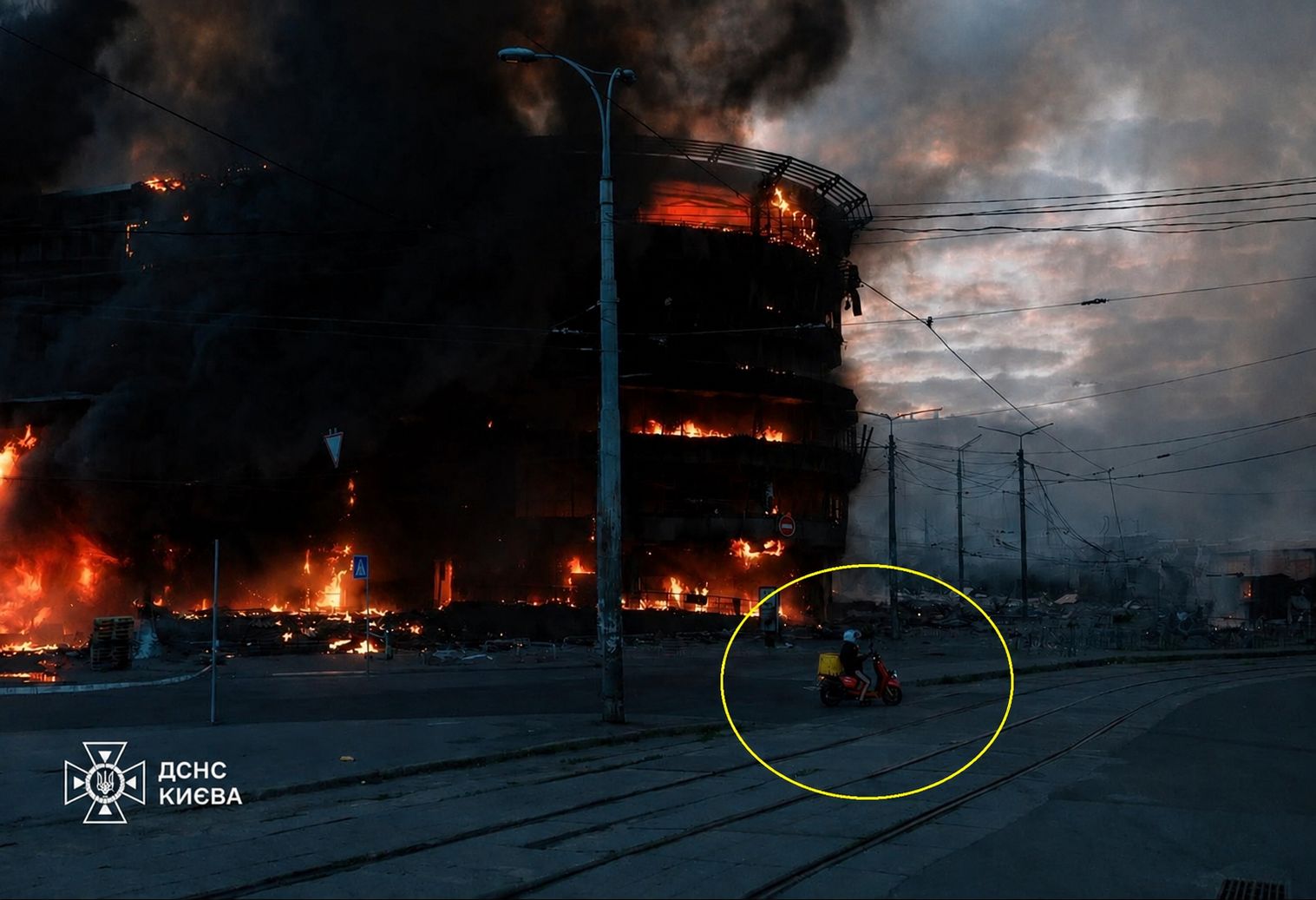
At the forefront of the image is a rider on an electric scooter, wearing the distinctive yellow Glovo food-delivery backpack. Rest assured, the delivery rider, Vladyslav, wasn’t working at the time – he was, in fact, going to meet a friend at the train station — but it offers a stark snapshot of the reality of running a delivery service business during wartime.
In Kyiv, like the rest of Ukraine, life goes on. Shops, cafes, and restaurants are open, and meals, groceries, pharma, and flowers are ordered and delivered at a rapid pace.
And critical to that success is Glovo, with Ukraine becoming one of the company’s top five global markets in just a few years as business as usual persists despite the challenges of Russia’s full-scale invasion of Ukraine.
I sat down with Maryna Pavliuk, GM of Glovo Ukraine, on a recent trip to Kyiv to learn more.
Ukraine became one of Glovo’s fastest-growing markets
Pavliuk describes Ukraine as a “phenomenal” market for Glovo because, prior to 2018, food delivery in Ukraine was largely phone-based, and services like Glovo began to scale rapidly. At the same time, credit card adoption and digital payments accelerated, transforming consumer behaviour almost overnight. In just three to five years, usage reached around 11 orders per person annually in Ukraine, compared to roughly 12 or 13 in Spain.
According to Pavliuk:
“It was just the right point because people were super ready. And it came really naturally when we showed them that this is possible.”
Glovo Ukraine is now a standalone entity that operates across 40 Ukrainian cities, with continued expansion despite ongoing wartime challenges. Its ecosystem includes more than 12,000 partners, over 85 per cent of which are small and medium-sized businesses, reflecting Glovo’s strong integration into the local economy and SME sector.
Since 2018, more than 80,000 couriers have completed at least one order through the platform. Pavliuk explained that, before Russia’s full-scale invasion of Ukraine, the Ukrainian team played a much broader regional role across Central Asia and the Caucasus.
“Ukraine was the first country we launched in the region, and from there the team went on to launch Kazakhstan, Kyrgyzstan, Georgia, and Armenia. For around four years, Ukraine served as a major talent hub and operational centre for those markets.”
However, the war significantly changed how the regional structure operated.
“After the war started, it became much harder to travel and maintain the same level of exchange between teams,” she said.
Ukraine still remained an important regional centre, but the model evolved and started working differently.
More than an on-demand delivery company
Glovo describes itself as a tech company first and foremost because of the technology behind its three apps.
“You have the app for customers, the app for riders, and a separate app for partners. Then you combine it all together, and it’s all powered by engines that in real time define who is driving to which restaurant and delivering to which customer.
That’s all happening in real time,” explained Pavliuk.
“We count every minute because every minute costs money, so we need to be incredibly efficient and fast. That’s why there’s so much technology behind the platform, including AI. We have a huge global engineering team constantly working on the product."
At the moment, around 70 per cent of the business comes from food partners — from major restaurant chains to smaller local restaurants.
Quick commerce is also growing fast. In Ukraine, for example, it increased from around 17 per cent of the business to 28 per cent in just over two years.
According to Pavliuk, deliveries have increased over the four years since Russia’s full-scale invasion began. Factors such as nightly curfews, air raid alerts, and harsh weather conditions have all influenced consumers’ willingness to go out for meals or shopping. But she also attributes this to the company’s efforts building trust with customers:
“Customers are more attached, they fully use the app, they discover new categories, and that’s why they are making more orders.”
Blackouts forced Glovo to reinvent operations
During the winter of 2025–2026, power outages in Ukraine became both widespread and frequent, particularly following large-scale Russian attacks on energy infrastructure.
In some regions, residents experienced rolling blackouts daily, while more severe strikes triggered outages lasting several days. In Kyiv and other major cities, electricity was often available for only a few hours at a time during peak periods of the crisis. Businesses and households increasingly relied on generators and backup batteries to cope with repeated disruptions.
The situation intensified during extreme cold spells in January and February 2026, when temperatures dropped below -20°C and electricity demand surged. Russian strikes on substations, thermal plants, and transmission lines further destabilised the grid, forcing emergency outages across most regions of the country.
According to Reuters, around 80 per cent of Ukrainian businesses reported being affected by electricity outages during the winter period, with restaurants, cafés, salons, and retailers among the hardest hit due to heating costs and generator expenses.
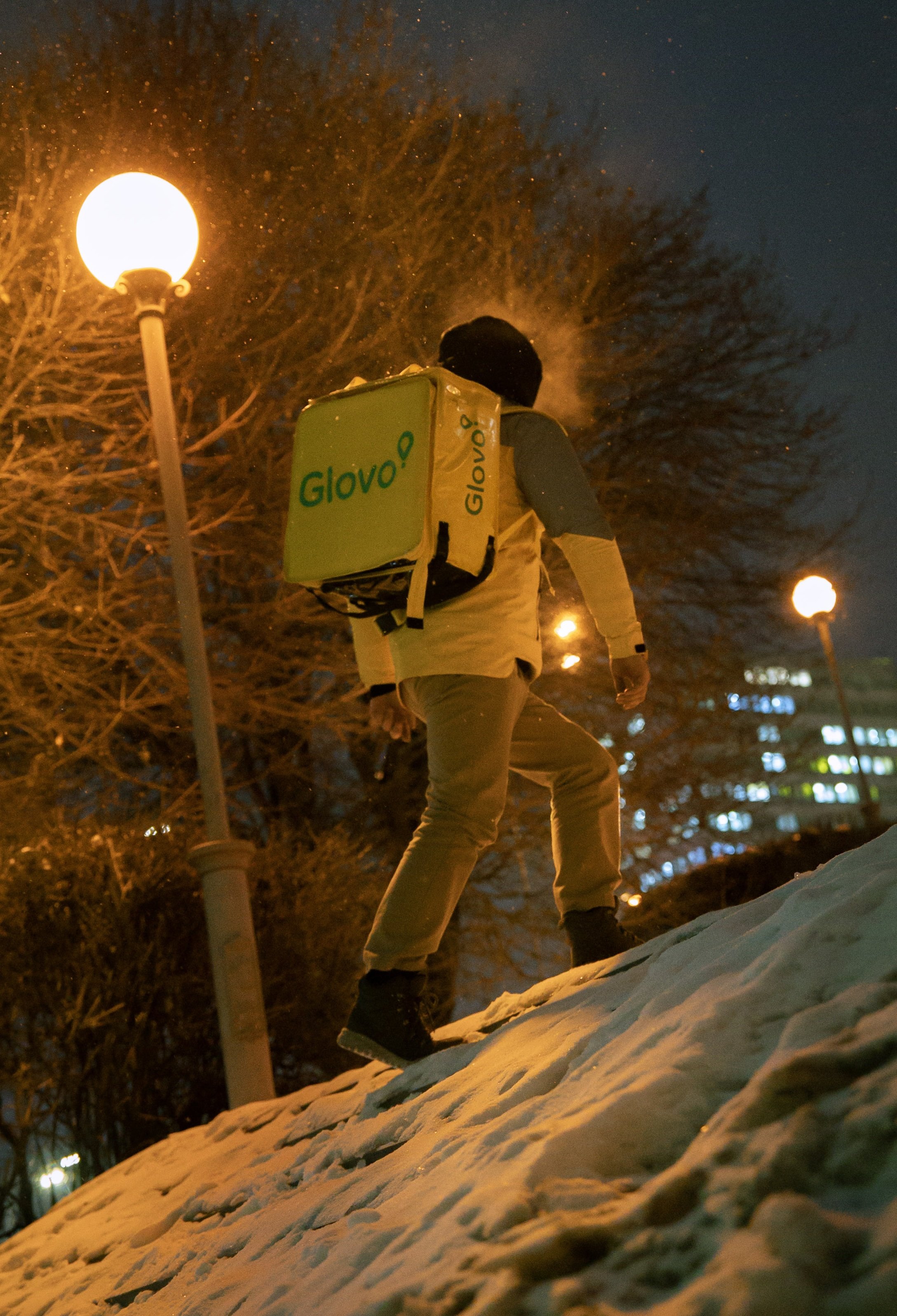
For Pavliuk, blackouts remain the biggest challenge facing the company — and they are no longer limited to Ukraine’s notoriously harsh winters. Any period of extreme weather that increases electricity demand can trigger outages. As blackouts intensify, they are reshaping how many businesses operate, forcing companies to adapt to rising energy costs and ongoing power instability.
She explained:
“For us as a tech company in 2022, when the first blackouts appeared, the biggest issue was that we are super dependent on cell connection and the internet. If there is no electricity, nothing is there.
And the infrastructure was not prepared at that time. There were no batteries available to power the cell stations. No UPS systems for Wi-Fi. Only small batteries that could support the internet for a short time.”
She admits the situation created enormous challenges for the company’s operations.
“For us as a tech company, it was super hard because our entire operating model and the way the engine works were never designed for blackouts,” she said.
“It’ was not built for situations where a partner can suddenly disappear from the system. We keep receiving orders, but the partner may not be able to receive them or prepare the food.
And even for restaurants, there’s huge uncertainty around planning shifts and ordering supplies.”
But the country quickly went through an energy transformation. People started storing power at home, and businesses started rebuilding infrastructure to ensure they had cell service, Wi-Fi, generators, and batteries. However, this represents a major investment for restaurants in Ukraine.
As Pavliuk explained, “It’s very hard to take out €50,000 to €150,000 for generators and backup systems.”
And then you need fuel for the generator, someone to manage it, and to deal with the inconvenience of its noise and smell.
Pavliuk admits the local team had to become creative, realising that, as part of a large global company, no one would rebuild infrastructure or develop technology solutions solely for the local team’s needs.
“My team is super creative, and we did a lot of ad hoc developments and integrations with city services that provide real-time blackout information on each street. It wasn’t easy, but I think we succeeded.”
At the same time, the local team was dealing with the personal impact of the blackout. Glovo supplied each team member with a three-kilowatt EcoFlow battery – which provides enough charge to power their fridge, hair dryer, internet, and a lamp at home for 10 hours.
“It's just a small example of how we adapt.”
While Ukraine’s brutal winter is thankfully over, Pavliuk admits that the summer won’t be easy, with many predicting rolling blackouts.
Building a wartime operating playbook
Glovo Ukraine’s experience has become a reference point for operating under extreme disruption.
Pavliuk shared that the CEO in the Middle East recently reached out asking whether the company had developed a manual for running operations during wartime because, according to her, “People simply couldn’t realise that war is there and that there are basic safety rules. You need a safety backpack, you need cash, you need water and food, and you need a plan because everything can be disrupted.”
Delivering through air raids
Back to delivery riders like Vladyslav, it's a job not without risk. Air raids in Ukraine can occur at any time, day or night, and often last for unpredictable periods. Fortunately, Ukraine has become super advanced in early detection and understanding exactly what is flying and where.
Pavliuk explained:
“We monitor everything closely in real time and manually close cities where we see a real threat of attack. Some partners automatically close operations depending on the level of threat or as soon as an air raid alarm sounds.
Our ultimate position is that we don’t want couriers on the streets when there is a real threat. We also have local insurance for couriers — health insurance, third-party responsibility, and support.”
That said, life in Ukraine does continue, even during air raids. During my trips to Ukraine, I rarely go to air-raid shelters during alerts because local apps let me assess the risk level in real time. In most cases, people remain on the streets or in the office, businesses stay open, and daily life carries on despite the constant backdrop of war.
Why companies should enter Ukraine now — not later
Pavliuk shares the sentiment I hear consistently about international companies scaling into Ukraine.
“It is better to enter Ukraine now, start building the business, understand the market, and establish relationships, rather than staying on the sidelines and arriving too late.”
She admits that the challenges of operating in a country at war are real and numerous.
“But at the same time, if you look at us and at many other businesses operating here, companies are not just surviving — they are growing and thriving.
I believe that once there is a ceasefire, or hopefully the war ends, the cost of entering the Ukrainian market will rise significantly.”
‘It doesn’t feel heroic — it’s simply our reality’
Pavliuk admits that at times exhaustion is unavoidable.
“But if you look at the average Ukrainian, people are still living their lives,” she says.
“New businesses are starting. Just yesterday we had a startup competition. We still have a lot of good talent.
And another thing that is very unique for Ukraine is that many people don’t want to leave.”
Pavliuk and her team get offers and promotions to lead businesses in other countries. They reject them.
“For a long time I was offered different countries and opportunities, but I really don’t want to leave until the war is over.”
She reflects on how this period will eventually be remembered.
“I’m curious what will be written in history books 10 or 20 years from now about this time — and about the phenomenon of Ukraine and its people.
I think there will be many stories of heroism. But for us, it doesn’t feel heroic. It’s simply our reality and the way we live.”
Glovo’s long-term bet on Ukraine: Glovo has invested a total of €120 million in Ukraine, including €55 million committed before the full-scale invasion.
The company has also been officially recognised as a “critical company to the economy in wartime” for three consecutive years. Early backing from the Ukrainian venture capital firm GR Capital https://gr.capital/ helped support its growth in the market.
Beyond its commercial operations, Glovo has contributed more than €1 million in donations and humanitarian support initiatives across Ukraine.
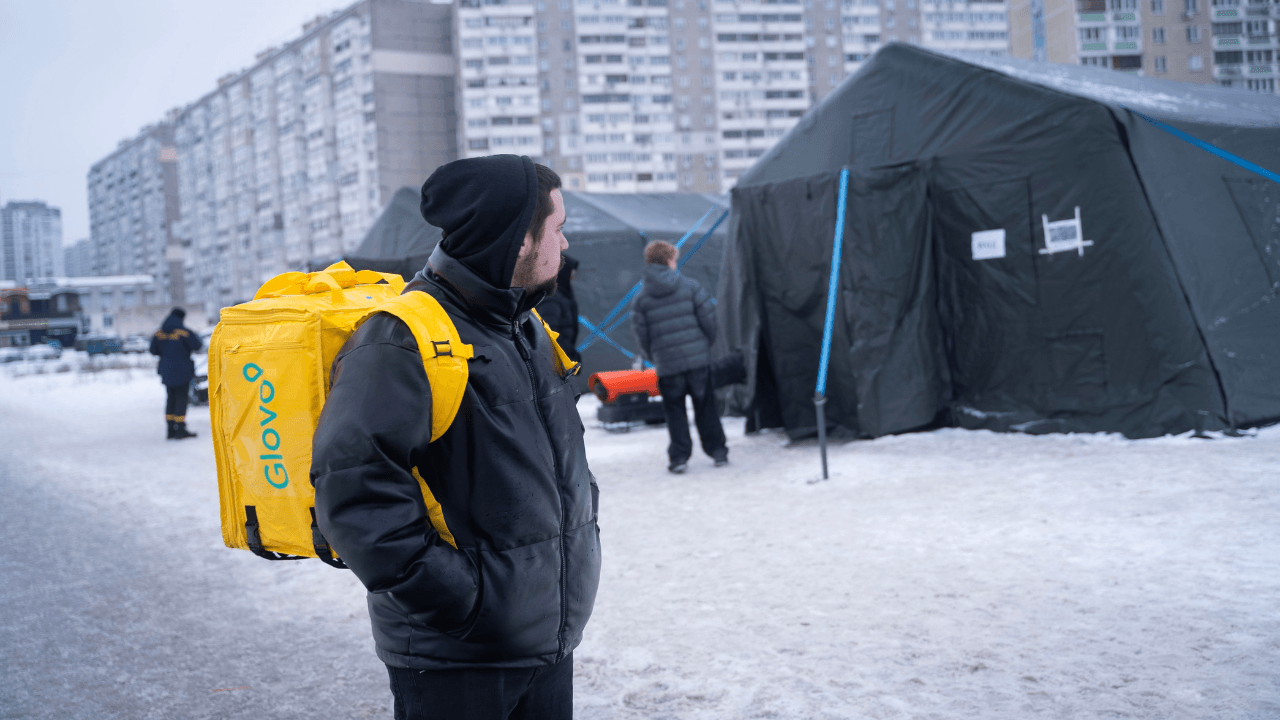
Lead image: Rider delivering to a warm-up tent during winter 2026 during a blackout.


Would you like to write the first comment?
Login to post comments