

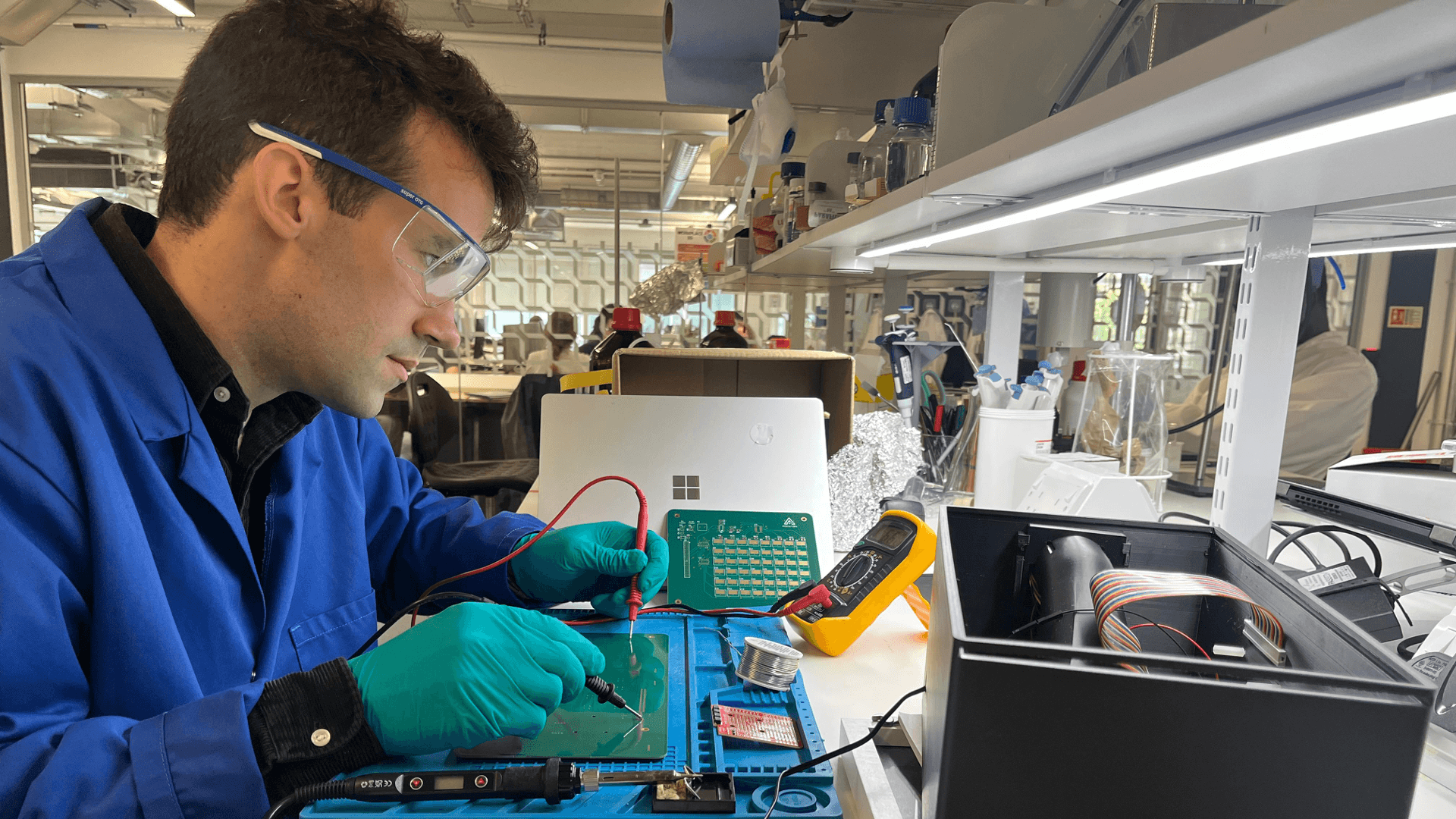
London-based deeptech startup Anemo Labs has raised £700,000 in pre-seed funding to develop its technology for detecting disease-related compounds through smell. The round was led by Zinc and SFC Capital, with additional support from Innovate UK.
Founded in 2025 by Koye Sodipo, Anemo Labs is developing an electronic nose, or e-nose, that combines sensor hardware with AI models to detect and classify volatile organic compounds (VOCs), the molecules responsible for smell.
The company is initially applying the technology to healthcare, where changes in the chemical compounds emitted by the body can provide information associated with certain diseases. Anemo is developing its system to analyse VOCs from urine, with the aim of enabling non-invasive screening and potentially identifying signs of disease before symptoms appear.
Its longer-term plans include developing diagnostic applications for conditions where changes in smell can provide a clinical signal, including urinary tract infections and certain cancers.
Olfaction provides a non-invasive, passive and continuous medium to screen for a number of diseases. Our mission is to enable clinicians and individuals catch disease even before symptoms appear,
said Koye Sodipo, founder of Anemo Labs.
Anemo's technology combines sensor chemistry and electronics with machine-learning models trained to distinguish between different smells. The company's scientific team includes researchers with PhDs in sensor chemistry and electronics, while clinical advisors are supporting its early diagnostic validation work.
Central to the company's approach is an in-house sampling platform designed to collect and label up to 5,000 smells per day, providing training data for its models. In early testing using the Sniffin' Sticks olfactory testing protocol, Anemo says its models correctly classified scent categories 84.15 per cent of the time across 12 categories.
The funding will be used to further develop Anemo's sensor chemistry, expand its smell data collection and labelling capabilities, and continue validating its olfactory diagnostics platform with clinical partners.


Would you like to write the first comment?
Login to post comments