

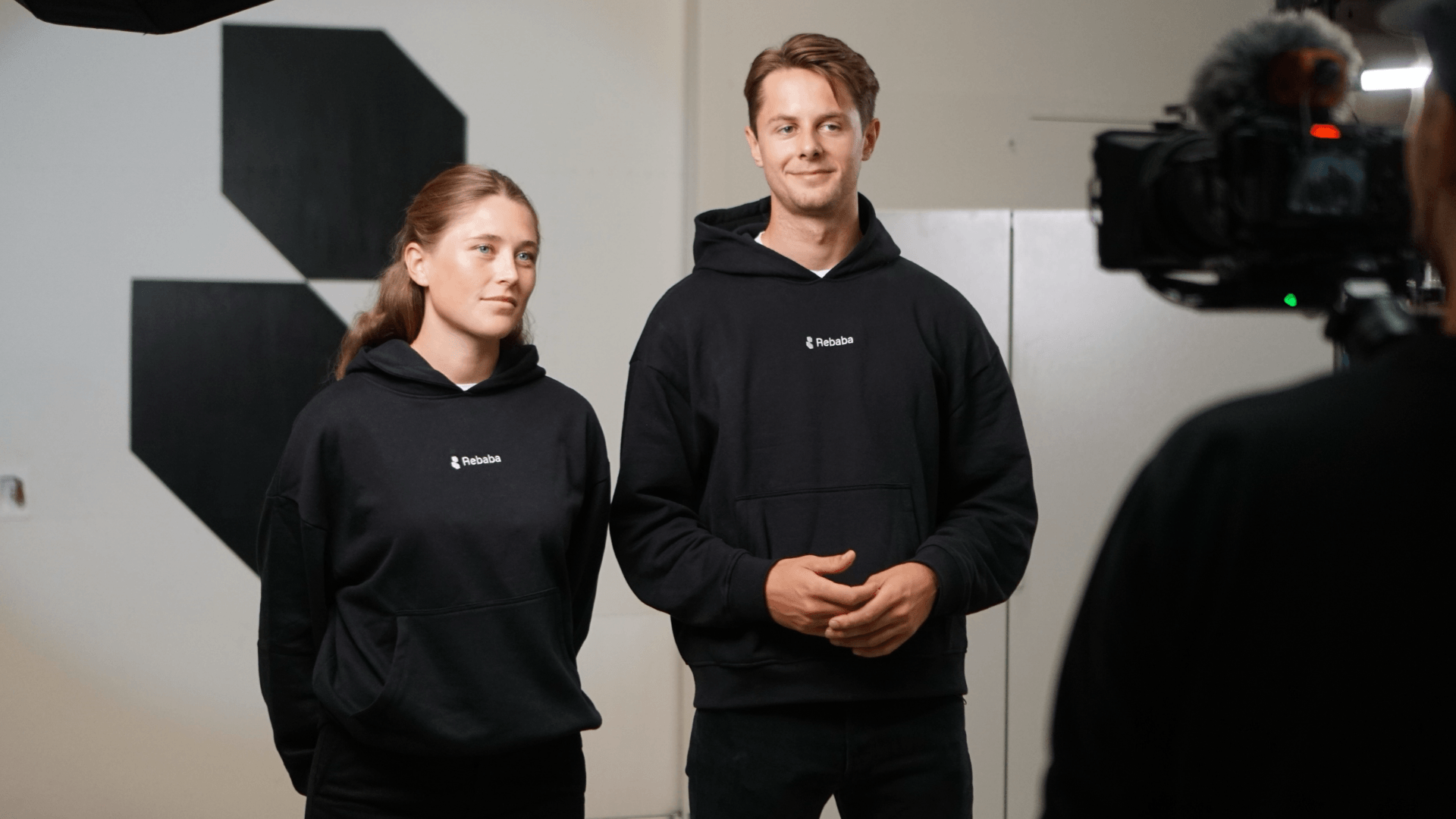
Swedish energy technology company Rebaba has raised $4.6 million (SEK 44.1 million) in an oversubscribed seed round to expand its battery energy storage systems using repurposed electric vehicle batteries. The round was led by Sistafund alongside EIT Urban Mobility, with participation from existing shareholders and new European investors.
Founded by Paula Runsten and Felix Kruse, Rebaba develops energy storage systems that give used electric vehicle batteries a second life. The company combines used EV batteries with its own technology to provide stationary energy storage for residential, commercial and industrial applications.
Electric vehicle batteries are typically retired from vehicles before reaching the end of their usable life, creating an opportunity to repurpose them for applications where weight and size are less important. Rebaba says EV batteries can retain around 70 to 80 per cent of their useful life when they leave vehicles.
Paula Runsten, co-founder and CEO of Rebaba, said rising electricity demand, electrification and renewable energy deployment are increasing the need for energy storage. She said repurposing existing EV batteries could help meet this demand while reducing reliance on batteries manufactured specifically for stationary storage.
The company's systems are designed to help customers store locally generated energy, shift electricity consumption to different times of day, reduce peak demand and participate in grid-balancing services.
Rebaba currently offers two energy storage products. Companion is a compact, cabinet-based system with 40 kWh of capacity aimed at residential and smaller commercial applications, while Containerised is designed for larger commercial and industrial installations.
Felix Kruse, co-founder and CTO of Rebaba, said the company's platform has been designed to work with different types of electric vehicle batteries while using standard components for other parts of the storage system.
By keeping the complexity within our core technology, we can assemble the rest of the Rebaba system from standard, locally available components. In practice, this means that essentially any technician, anywhere in the world, can build a Rebaba system,
Kruse said.
Rebaba plans to use the funding to expand its CircularHub production facility in Stockholm to an annual capacity of 40 MWh and hire across several roles. It is also preparing to establish additional CircularHubs outside Sweden as it expands into other European markets.


Would you like to write the first comment?
Login to post comments