

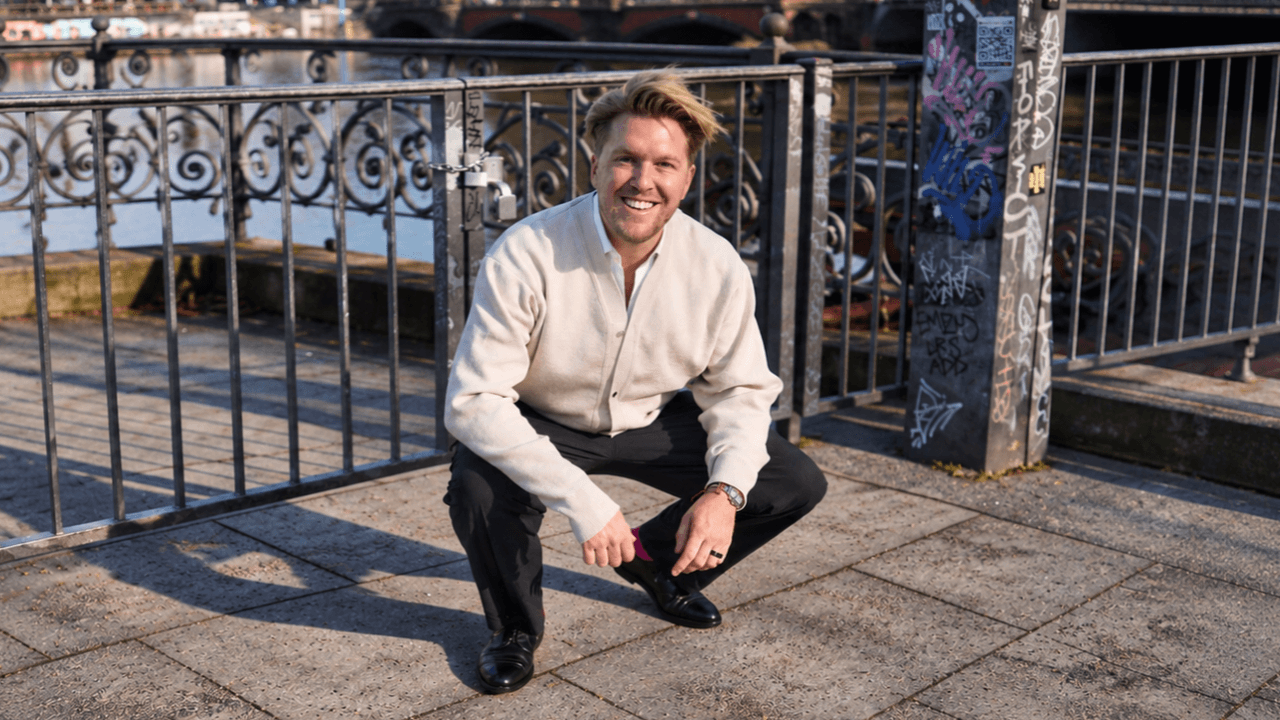
Before I even spoke to Robin Haak, more than one person warned me he was “a lot”. And they're not entirely wrong. He's outspoken, intense and hardly your typical VC. But spend any time talking to him, and one thing becomes clear: he genuinely gives a damn about founders — and not only when they're making him rich.
His Berlin-based venture capital firm, Robin Capital, has now raised a second €15 million fund, following its first €15 million fund. Fund I backed companies including ARX Robotics, Almetra and Uvionix, while Fund II's portfolio includes Ground A, Marble Imaging and Helicity Space.
I spoke to Haak about why he believes venture capital needs to do more for founders and why he's happy to challenge the industry's unwritten rules.
From founder to fund manager: building VC on his own terms
Haak's career has taken him from digital ventures and M&A at Axel Springer, where he co-founded the Axel Springer Plug and Play Accelerator and led its first investment in N26, to founding the AI-powered recruitment platform Jobspotting.
Following Jobspotting's merger with SmartRecruiters, Haak moved to San Francisco, becoming Global COO and Managing Director and helping scale the company to more than 550 employees, over $100 million in annual recurring revenue and a $1.5 billion valuation. SAP acquired SmartRecruiters in 2025.
He later returned to Europe as a founding general partner at growth equity firm Revaia, helping raise its first €250 million fund and make 15 investments. In 2023, he launched Robin Capital, a solo GP venture capital firm backing European startups at pre-seed and seed stage.
“When I was an investor, I loved being around founders, but I felt something was missing. If you see everyone starting companies, eventually you want to do it yourself,” he recalled.
After returning to investing, however, Haak wanted to build something around his own approach.
“I have great respect for anyone who has tried to build a company, whether they succeeded or failed. But spending years as a founder, raising capital, building teams and carrying the responsibility for hundreds of people changes you.
When I was a founder, I wish I'd had more investors who truly understood that weight. Not just from the outside, but from having lived it.
That's the investor I try to be. And I wish there were more of us.”
His ambition was to create something entrepreneurial again, working closely with founders rather than simply managing investments.
Robin Capital typically invests between €100,000 and €600,000, focusing on European companies, particularly those in Germany, Austria and Switzerland. The firm's strategy spans enterprise AI, proprietary data, robotics, space and other defensible technologies.
“I'm in the trenches”: why founder experience matters
Haak believes too many investors underestimate what it means to build a company, particularly when things go wrong.
“And I don't mean someone who started a company for two years, gave up and then became a VC,” he explained.
“I mean someone who has built companies, experienced success or failure, raised money and dealt with the consequences.”
For Haak, the pressures of entrepreneurship extend well beyond the workplace, affecting relationships, family and personal life.
“It takes everything from you.”
He knows what it feels like to be close to running out of money.
“When I was raising our Series D in San Francisco, I spent months speaking with investors across the US and Europe. We were running out of cash.
Eventually, we received three term sheets. But I still remember the fear and the weight of being responsible for everyone who believed in us.”
By contrast, a later, much larger fundraising round attracted several term sheets within a couple of weeks.
“The difference between those experiences was enormous.”
That experience informs how he works with founders today, particularly when fundraising becomes difficult
.“I'm in the trenches. I'm with the founder.”
Haak says he spends a significant amount of his time helping portfolio companies solve problems, make introductions and raise funding.
“For me, that's where I can make the biggest difference. I didn't become a VC to be important. I became one to be useful.”
Why founders need more than another cheque
Haak argues that operating as a solo GP allows him to offer founders something different from a traditional venture capital firm, starting with speed and flexibility.
“First, I can make decisions very quickly. I'm flexible about how I invest, and I don't necessarily need to lead a round. If a founder has a lead investor and needs another $300,000 to complete a round, I can come in and fill that gap.”
He also places considerable emphasis on relationships.
“I'm also collaborative. My job is to build relationships with founders, other investors and operators. I travel constantly, meet people and develop those connections.”
Robin Capital has three venture partners and a network of around 100 operators who provide founders with advice, connections and practical support.
The firm brings its community together each year for Robin Escape, its annual general meeting, gathering around 100 founders and investors in different European countries, including Austria, Germany and Italy.
It is also launching a more intimate three-day retreat in the mountains, where eight founders will work with experienced coaches on leadership, personal growth and the challenges of building a company.
For Haak, this is particularly valuable for founders who already have experienced investors on their cap tables but need additional operational support.
“I think it's a very senior product. You're getting someone who has been a founder, an operator and an investor, rather than just another name on your cap table.”
Beyond the AI hype: investing in what's hard to replicate
Robin Capital began warehousing investments in January 2023, ahead of Fund I's first close in June. At the time, AI agents were still an emerging category.
One of its earliest investments was Beam, well before companies like Wonderful, Duvo and Conduct brought wider attention to the space. Fund I focused on enterprise AI, particularly go-to-market automation and agentic workflows. Beyond technology, Haak backed experience: 54 per cent of the founders were serial entrepreneurs.
“I don't believe in moats in terms of being successful. We need to be the fastest and have the best execution.”
Nevertheless, Haak distinguishes between a company's ability to execute and the advantages it brings to the market from the outset. He is increasingly interested in startups with proprietary data, infrastructure or specialised technology that competitors cannot easily replicate.
This has led Robin Capital towards the intersection of AI and deeptech, including robotics and space technology.
Rather than backing another company offering a similar AI product in an increasingly crowded market, Haak is looking for technologies that provide a meaningful competitive advantage. High conviction over consensus Haak believes some of the best opportunities in venture capital are found where conviction matters more than consensus.
Around 65 per cent of Fund I's investments were non-consensus bets, often at pre-seed, without prominent lead investors or the validation of established VC firms. The remaining 35 per cent were companies where his conviction was shared by others.
“There's nothing wrong with consensus. Sometimes great companies are obvious to everyone. But venture capital often relies on pattern recognition and signals from other investors.
I prefer to build my own conviction. Sometimes that means backing a founder before anyone else believes.
Sometimes others see what I see. What matters is the company, not who's already on the cap table.”
Haak sees enormous potential in Europe's universities, where world-class research is increasingly becoming world-class companies. From TUM in Munich and ETH Zurich to EPFL Lausanne, Oxford, Cambridge, Imperial College London, École Polytechnique in Paris and TU Delft, he believes Europe has the talent and science to build the next generation of global technology leaders.
Europe's deeptech opportunity
For Haak, Europe's growing deeptech ecosystem also represents the need for Europe to develop technologies that are strategically important and reduce its dependence on other countries. He points to Germany's reliance on American satellite intelligence following Russia's annexation of Crimea.
One company in Robin Capital's portfolio addressing this challenge is Bremen-based Marble Imaging, which is developing a constellation of high-resolution Earth observation satellites alongside AI-powered analytics for defence, environmental monitoring and infrastructure.
For Haak, its appeal lies not only in the satellite technology but also in the proprietary data it can generate. Robin Capital has also backed German defence robotics startup ARX Robotics, which develops autonomous unmanned ground vehicles for military applications, and Ground A, which is developing software and laser-based counter-drone systems.
Haak says his growing involvement in defence and dual-use technologies has been driven partly by the relationships he has built within the sector.
“Once you invest in a sector and develop relationships with founders and operators, people start introducing you to other opportunities.”
Those connections have helped him understand the technology, potential customers and commercial opportunities, while also leading to follow-on investments and special purpose vehicles.
The opportunity isn't just in conventional defence technology. There are overlaps with satellite imagery, robotics, sensing and other dual-use technologies.
“I'm interested in technologies that have genuine commercial and strategic applications.”
Breaking the unwritten rules of venture capital
Haak's approach to building relationships is not always conventional, and he makes little secret of the fact that it has occasionally irritated other investors. In a recent LinkedIn post, he wrote:
“Some VCs don't like me. That's fine.”
The post went on to describe the intensity of his working life, from long days and late nights to the personal sacrifices involved in building his firm:
“I’m a Solo GP. No girlfriend. Not even a plant. My bed is five meters from my desk. I wake up, walk over, and start fucking working.
Sometimes I forget to shower. I barely see my friends. Weekends are workdays. Some nights end at 3 a.m. It’s a grind. And I love it."
But beyond the provocative language, Haak's approach reflects a deliberate decision to spend less time cultivating traditional VC networks and more time working directly with founders. As his LinkedIn post asserts:
“I’ve been a founder. I know what it means to run out of money. To lie awake wondering how to pay salaries. To carry the weight of people who believed in you.
The fear, the loneliness, the responsibility. It’s fucking hard. And sometimes one person standing beside you can make all the difference.
That’s the investor I want to be.
When things get tough, I roll up my sleeves. Sometimes it’s a bridge, an extension, a customer, or a new investor. Sometimes it’s simply listening. And when I believe there’s a way forward, I’ll fight like hell for it”
He argues that venture capital has historically relied on relationships built through a relatively small circle of investors, often centred on major financial hubs and industry events.
Rather than spending much of his time attending investor dinners, Haak wanted to devote around 70 per cent of his working hours to portfolio founders. That meant finding another way to develop deal flow.
“Across our social channels, we reach around three million impressions a month, and our newsletter has over 10,000 readers. We also work closely with hundreds of angels and VCs. I value those relationships enormously. But founders find us in many ways, and we find them too.
Through introductions, social media, cold outreach or simply by chance. There's no silver bullet. We try to stay independent, open-minded and collaborative with everyone.”
Sometimes, he says, this means investing in a startup before its lead investor even realises he's involved.
“Sometimes we build relationships with founders long before a round comes together, so other investors might discover we're already on the cap table.
Other times, we're the ones joining a round they've built. Both are equally valuable. In the end, it's about working together to help great founders succeed.”
Haak insists that gaining acceptance from other investors is not his priority.
“I'm not trying to build a career around being accepted by a particular group of VCs. I'm trying to build something that works for founders.”
Berlin's startup advantage goes beyond its VC firms
Haak and I are both based in Berlin, a city with no shortage of investors, entrepreneurs or opinions about which European startup hub is winning.
“Berlin has 203 listed VC firms versus Munich’s 134. That’s 51 per cent more,“ explained Haak.
The city is home to major VC firms including Cherry Ventures, Point Nine, Project A, Earlybird,, b2venture and Target Global, alongside specialist investors such as BlueYard Capital, Lunar Ventures, AENU and Extantia Capital.
But Haak believes Berlin's strength goes beyond the number of venture capital firms headquartered here.
He sees it as one of Europe's three most important startup cities, alongside London and Paris, largely because of the concentration of founders, investors and people passing through the ecosystem.
“That matters because of the concentration of founders, investors and people travelling through the ecosystem. If you're based in one of those cities, opportunities come to you.”
Berlin also has a particular intensity, something perhaps best appreciated as you grind through its rather miserable winters.
“Building a company here requires resilience. There are opportunities, but it's also extremely competitive.
I think the people who come here to build ambitious companies have to work incredibly hard. I love the pain. I embrace the pain.”
While Munich has built a particularly strong reputation in deeptech and Hamburg has strengths in logistics technology, Berlin's international population remains one of its defining advantages.
The city's startup scene continues to attract founders from around the world, including migrant entrepreneurs building businesses such as LAP Coffee, mika, Co-Tasker, INSRD and Drift. Initiatives such as Earlybird's Vision Lab, which supports founders with migration backgrounds, and the EWOR fellowship also contribute to Berlin's entrepreneurial ecosystem.
Despite the competition and pressure, the combination of international talent, capital, and entrepreneurial ambition continues to make Berlin distinctive.
Building more than a fund
Looking ahead, Haak wants Robin Capital to become more than a conventional early-stage investment firm. Robin Capital's LP community brings together self-made billionaires, unicorn founders, entrepreneurial families and GPs from leading investment firms. It includes people behind Ferrari, Moratti, Adyen and FTMO, alongside individuals associated with Permira, Macquarie and FJ Labs.
“Our LPs bring much more than capital. They've built companies, led teams and navigated the same challenges our founders face. Bringing these people together is one of the most valuable things we can do for our founders.”
Over time, he aims to develop a broader investment platform, potentially adding growth-stage capital to support promising portfolio companies as they scale.
And not content with building a VC firm, Robin Capital's free merch shop offers everything from “It's all about cash-mere” scarves and “Agentic is the new sexy” T-shirts to branded pyjamas, bathrobes and Hawaiian shirts. It puts a lot of conference swag to shame.


Would you like to write the first comment?
Login to post comments