

As cars become increasingly software-defined, owning a vehicle no longer necessarily means having full access to the technology that makes it function. Proprietary diagnostic protocols, software restrictions and increasingly complex electronics have made it harder for everyday drivers to understand, customise and repair their vehicles independently.
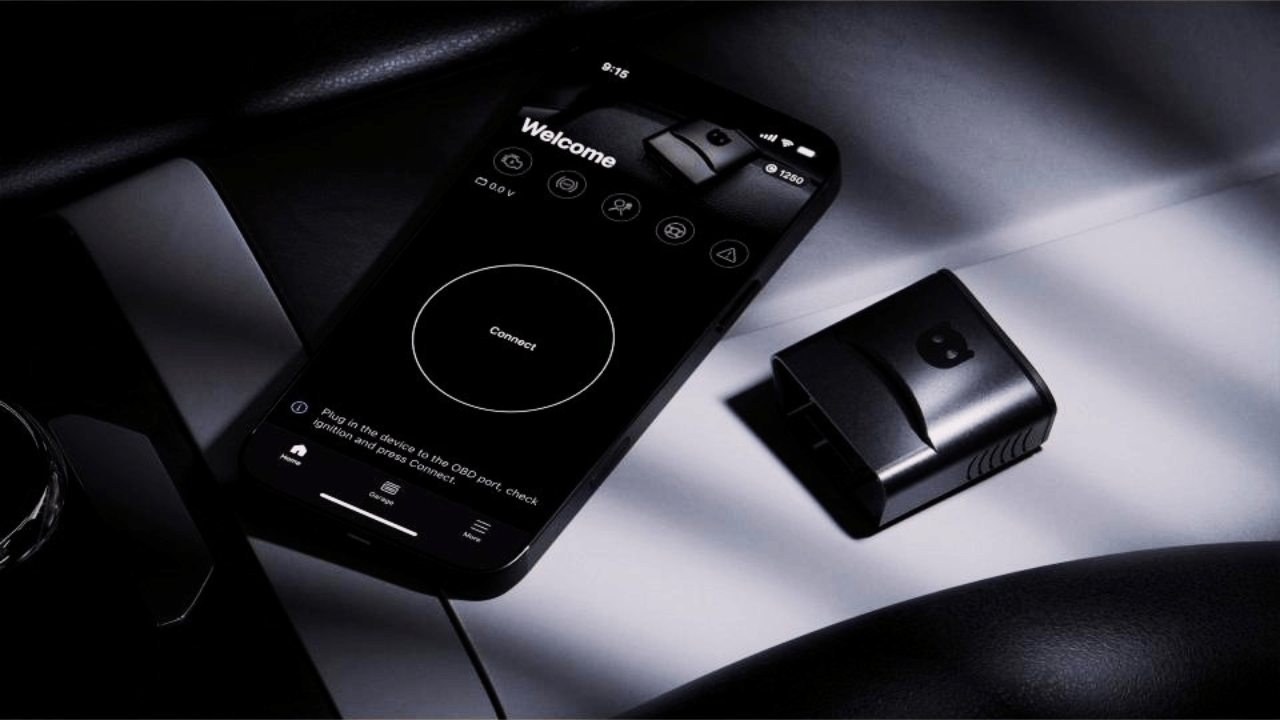
Lithuanian automotive technology company OBDeleven is building a business around changing that. Founded in 2014 and headquartered in Kaunas, its technology combines a compact Bluetooth-enabled device that plugs into a vehicle's OBD-II port with a smartphone app, enabling drivers to identify faults, monitor vehicle health, access real-time performance data and customise vehicle features without specialist equipment.
Originally established as Voltas IT, the bootstrapped company has expanded beyond automotive enthusiasts to target everyday drivers, positioning itself as a comprehensive digital car ownership platform. OBDeleven has connected more than 6 million vehicles across over 60 countries. In 2025, the company generated €19.2 million in revenue, representing 25 per cent year-on-year growth, and recorded a net profit of €3.17 million. It has established partnerships with major automotive manufacturers, including Volkswagen Group, BMW Group, Toyota Group, Ford US and Mercedes-Benz.
I spoke to Juozapas “Joe” Preikša, CMO of OBDeleven, during a trip to Vilnius earlier this year to learn more.
How increasingly complex vehicles challenge the right to repair
Over the years, I've written about how the car-hacking community helps drive the right-to-repair movement, raising a key question: what happens when you own a car but not the software that makes it function?
Many car owners have fond memories of buying an older car in early adulthood and spending hours happily tinkering under the bonnet, exploring and learning by taking things apart and putting them back together. Today, you're increasingly likely to use code rather than a spanner. As vehicles become more software-defined, mechanical tinkering has given way to navigating electronic control units, diagnostic codes and software configurations. Much of this functionality has historically required expensive, manufacturer-specific diagnostic equipment or specialist technical knowledge.
However, a love of cars has resulted in an underground movement of sorts in garages, car parks and maker spaces, where car hackers seek to understand what their vehicles can do and what they could do through modifications to their hardware or software. Examples include OpenGarages, a network of automotive enthusiasts, hobbyists and security researchers, and the Car Hacking Village, which brings together automotive cybersecurity enthusiasts at industry events like CES and Defcon.
Preikša points to the growing complexity of modern vehicles as another barrier to independent repairs.
“Nowadays, you open up the bonnet and see a big piece of plastic. You have thousands of sensors, and you have no idea where any of them are. If you want to change some of them, it's an engine-out job.”
Identifying a faulty sensor increasingly requires diagnostic tools rather than physical inspection. However, accessing this information requires knowledge of the specific electronic addresses associated with individual sensors — information that is typically proprietary to the vehicle manufacturer. While reverse engineering is possible, Preikša explains that mapping the thousands of sensors within a modern vehicle is a complex and time-consuming process.
Even when a fault has been identified, manufacturers can impose additional restrictions on what users can do.
“Then, when you try to do something about it, they say, ‘Hold on, you will need to get an authentication code.’”
OBDeleven represents the commercial evolution of some of these grassroots efforts, making vehicle diagnostics, coding and customisation accessible to everyday motorists through their smartphones. However, it does so by cooperating with automotive manufacturers rather than positioning itself as a way to circumvent them.
Why making vehicle diagnostics accessible is no easy task
Despite the existence of a standardised vehicle diagnostics protocol, OBD-II, automotive manufacturers continue to rely heavily on proprietary systems. This creates significant barriers for independent diagnostic providers seeking to offer comprehensive functionality across multiple vehicle brands.
“Every single automotive manufacturer changes the protocols. They're proprietary, and there's always the big question of how much they will open up,” explained Preikša.
While OBD-II standardises aspects of the physical diagnostic connection and how diagnostic devices communicate with vehicles, manufacturers typically limit standardised access to emissions-related information, such as oxygen sensor faults and engine misfires.
“Manufacturers, I don't know why, do the bare minimum on that protocol.”
Preikša contends that manufacturers could make a much broader range of vehicle systems accessible through a common protocol, including airbags and other electronic components, reducing the need for brand-specific diagnostic solutions.
“Essentially, all of the brands could put everything under one open protocol, and it would work 90 per cent of the time.
Then you would have to add that 10 per cent of proprietary stuff. They're doing the opposite.”
The economics of keeping drivers dependent on dealerships
While OBDeleven offers a range of vehicle customisation and monitoring capabilities, diagnostics remains its most popular application.
“Diagnostics is our bread and butter. Our price point, our size and our capabilities allow an everyday driver to understand what a warning light is about.”
Despite the increasing sophistication of in-car displays, manufacturers often provide little information about the underlying cause of a fault, instead directing drivers to authorised repair centres.
Preikša explained:
“It's easier to say, ‘Go visit the workshop right now,’ and give you five options for BMW workshops around you. It keeps them in business.”
He points to discussions at a recent automotive industry conference in the UK, where he heard that dealerships typically make just £300 to £500 from the sale of a vehicle, even for relatively expensive models. With such narrow margins, financing, maintenance and servicing become increasingly important sources of revenue.
“That's why they try to include financing and push service subscriptions. You see how they're trying to pull the driver back to the official dealer to maintain the car there, so the dealer network has its revenue.”
For independent diagnostic providers like OBDeleven, this creates a commercial opportunity: giving drivers greater visibility into their vehicle's health and enabling them to make more informed decisions about where and when to seek repairs.
Bootstrapping a Lithuanian automotive scaleup
OBDeleven's growth is particularly noteworthy given that the company has been entirely bootstrapped. Founded by two brothers and a cousin, its origins lie in Lithuania's automotive repair industry. The brothers were highly skilled automotive electronics mechanics working at a Volkswagen workshop before leaving to establish their own business, specialising in coding, reverse engineering and complex electrical engineering. The inspiration for OBDeleven came from observing how cumbersome conventional vehicle diagnostic equipment was.
“Every single day, somebody would come to their shop and bring this huge laptop with a dongle to the car,” recalled Preikša.
“One of the guys said, ‘I already have the phone. You could work on the phone. It doesn't need that much processing power.’”
The founders bought a Chinese dongle and reverse-engineered some of its functionality, pooling their personal savings of approximately €10,000 to purchase an initial batch of devices. Demand quickly validated their approach.
“It was around €50,000 in revenue the first year, then €150,000, then €300,000, then €800,000, then a million. That's how it grew ever since, with a 25 to 30 per cent revenue growth rate.”
Today, the US is OBDeleven's biggest market, followed by the UK, Germany and the Netherlands.
From portable diagnostics to unlocking hidden vehicle features
OBDeleven initially gained traction among automotive enthusiasts by making vehicle diagnostics more accessible and portable. Replacing the laptop with a smartphone meant drivers could run diagnostics independently, wherever they were.
“With the mobility of the device, you could just keep it in your glovebox and do your diagnostics at home,” recalled Preikša.
However, the ability to customise vehicles and unlock hidden features proved equally important in attracting early adopters. OBDeleven initially focused on Volkswagen Group, which had begun integrating powerful electronic control units (ECUs) across its vehicle range. Different models often shared the same hardware, but software configurations determined which features drivers could access.
“You could have the same ECU in a Polo, a Golf, a Passat and a Phaeton. For some features, it was agnostic. You could actually activate features that were meant for a Passat or a Phaeton in the cheapest model. This got the attention, and this is how enthusiasts started using OBDeleven.”
Interestingly, OBDeleven originally marketed its device on eBay by advertising individual features that users could unlock. Preikša recalled:
“We had thousands of listings for individual features. It was just trying to get that feature into somebody's head because no one else had done that before.
Afterwards, we started to get traction in the Volkswagen Group community.”
To make vehicle customisation accessible to users without specialist coding knowledge, OBDeleven introduced One-Click Apps, automating the process of modifying vehicle software configurations.
“These are essentially applications where you just click, and the configuration in the settings changes in the background and activates something that's not normally on the car.”
OBDeleven offers more than 10,000 One-Click Apps, ranging from modifying exterior lighting, dashboard displays and multimedia startup animations to unlocking hidden manufacturer features and performing maintenance functions such as service resets. Available for selected Volkswagen Group, BMW, Toyota, Ford and Mercedes-Benz vehicles, the apps can be accessed using in-app credits or through OBDeleven's Ultimate subscription.
OBDeleven helped broaden its appeal beyond experienced automotive enthusiasts to drivers looking to personalise their vehicles. One of Preikša's favourite examples is changing regional lighting configurations.
“In modern cars, you have these beautiful taillight signatures, but during the daytime, they're off. I like to activate those. It's not meant for the Lithuanian market; it's meant for the Scandinavian markets, but we can activate it here. This is one of the more popular features you can enable for your car.
That's essentially what we do a lot of the time — change the regional configuration.”
Building relationships with automotive manufacturers
I was curious about how OBDeleven approached relationships with automotive manufacturers, particularly when it came to accessing proprietary data. According to Preikša, the company took an unconventional approach: it went directly to the manufacturers and offered to pay for access to their technical documentation.
“We were the first to approach Volkswagen and say, ‘Could you really give us the documentation? We'd like to pay you money.’ “They were like, ‘What?’”
At the time, manufacturers typically directed third-party diagnostic providers towards their own proprietary diagnostic tools.Other diagnostic providers used ODIS and reverse-engineered most of it.
“We went the other route. We went the official route, and this is the motive behind how we operate. “We try to operate in a sensible, friendly, conscious and ethical way.”
Putting professional diagnostics in the hands of everyday drivers
OBDeleven's ability to offer professional-grade diagnostics at consumer-friendly prices comes down to economies of scale. According to Preikša, getting a car diagnosed in the US typically costs between $100 and $200, while an OBDeleven device costs around $100.
Basic diagnostics are available without an ongoing subscription, while users can pay for additional functionality. The company's business model combines hardware sales, software subscriptions and in-app credits.
“A professional diagnostic equipment provider might sell 10,000 tablets that are ten times more expensive and have these limitations. We sell 200,000 dongles, plus subscriptions and additional features,” explained Preikša.
OBDeleven's extensive user base allows the company to spread the cost of licensing manufacturer documentation across a much larger customer base, making advanced diagnostic capabilities more affordable and accessible. Unlike some professional diagnostic tools, OBDeleven does not impose limits on the number of vehicles users can connect.
“This is now our power play. We can have professional features in the hands of an everyday driver.”
Beyond diagnostics: building a car ownership platform
OBDeleven's ambitions extend beyond vehicle diagnostics and customisation to simplifying the broader experience of car ownership. The company is expanding its offering to include trip and expense tracking, helping motorists better understand the true cost of owning and running a vehicle. Drivers can access information such as trip length, average speed and fuel consumption.
However, continuously monitoring vehicle data also creates opportunities to identify faults that might otherwise go unnoticed.
“Let's say you have a bad turbo in your car. Every time you press the accelerator to a certain extent, you get a fault that doesn't show on the dashboard. But we can see it with our device.”
By providing additional context about when a fault occurs, OBDeleven aims to give drivers a better understanding of what might be causing it.
In the future, the company could also automate some of the diagnostic processes traditionally undertaken by mechanics, drawing on the technical instruction manuals supplied to dealerships and workshops. Preikša explained:
“They have step-by-step checks of what the problem might be .Because we have so much granular information from the car, we can do that in the background and give you the real fault reading and additional context. That's what we're working on right now.”
The company has also introduced a car-buying report designed to help prospective buyers make more informed decisions when purchasing second-hand vehicles.
“When you plug into the car, we check through all of the systems. We check whether the mileage has been tampered with, whether all of the modules work correctly and, in some models, whether things have been removed from the car compared to how it came out of the factory.”
Preikša notes that this is particularly valuable for BMW buyers, given the prevalence of aftermarket retrofits and the removal of original features. OBDeleven is also exploring how to bridge the gap between identifying a vehicle fault and getting it repaired. In Lithuania, the company is working with a provider of tools for automotive workshops and mechanics to make diagnostic information more actionable for everyday drivers.
“With their help, we translate the fault code into an issue and help you find the nearest workshop that can fix that exact problem. It's still working a little clunkily, but we're getting there.”
The geopolitical challenges of automotive diagnostics
Despite the growing presence of Chinese automotive brands in Europe, OBDeleven does not currently offer manufacturer-specific support for them. According to Preikša, this comes down to a combination of regulatory, geopolitical and commercial challenges.
OBDeleven's licensing agreement with Volkswagen covers the world except China, where differing data privacy regulations present operational challenges. Establishing a local presence would require the company to disclose information about how its application works, something it considers a security risk.
“Because we don't want to set up shop, we're not getting the data from Chinese manufacturers.”
Lithuania's diplomatic relationship with Taiwan further complicates matters, alongside what Preikša sees as a lack of readiness among Chinese automotive manufacturers to share diagnostic information with third-party providers. However, he expects evolving European legislation governing access to vehicle data to help change the situation.
“If they're not legally required to provide you with information, they will not provide it.”
OBDeleven regularly approaches major Chinese automotive manufacturers, including BYD and XPeng, requesting access to technical documentation.
“Right now, none of them are responding to us, but we already have information that BYD has started to respond to some of our competitors.”
Why OBDeleven manufactures its hardware in Lithuania
Geopolitical considerations have also shaped OBDeleven's hardware manufacturing strategy.
“We are next to Russia, so we're very geopolitically aware of what might happen at any point in time,” said Preikša. While OBDeleven previously carried out some manufacturing of its second-generation device in China to accelerate production, it now manufactures all its hardware in Lithuania in partnership with IoT technology company Teltonika.
Domestic manufacturing has also proven more cost-effective, thanks to Teltonika's economies of scale.
“When we approach manufacturers in China and say we would like to make 50,000 devices, they cannot necessarily offer the same price.
It's actually cheaper for us right now to manufacture in Lithuania.”
Intellectual property protection and hardware integrity are additional considerations. Preikša voiced concerns about the potential copying or modification of technical documentation, the integrity of electronic components and unauthorised additions to firmware. These concerns have previously necessitated extensive verification of prototypes supplied by Chinese manufacturing partners.
“When they send us prototypes, our embedded systems engineer is rechecking all the circuitry, every single part and the chips inside to make sure everything is as it should be.
We have a geopolitical situation that we need to be conscious of.”
AI and the future of automotive literacy
As AI-powered applications expand across the automotive aftermarket, Preikša cautions that consumers need to be increasingly discerning about the technology they use, particularly when it comes to vehicle diagnostics and maintenance.
“Through the power of AI, you could have the impression that you're getting something like a helper to repair your car, but it might tell you that you need the wrong tool for a particular job.
AI does not understand most things about the car industry. You can ask it for things, but it will not go to the detail you need.”
Instead, he encourages consumers to look beyond product promises and consider a company's track record, technical capabilities, reputation and return policies before investing in automotive technology.
Understanding how a vehicle functions isn't simply about becoming an automotive enthusiast; it's about consumer empowerment, saving money and freedom of choice.
“If you don't have that literacy, which is pretty easy to acquire, you will be leveraged by the manufacturer, the service centre, the dealer or somebody in between. You're going to get locked into something.
You need to have that freedom.”
He welcomes the growing availability of educational resources, including YouTube tutorials, that enable motorists to develop their automotive knowledge independently.
Ultimately, he sees value in consumers becoming
on technology providers — including OBDeleven itself.
“If you start doing things with your car and build yourself up as an enthusiast, you might not even need a tool like OBDeleven.”


Would you like to write the first comment?
Login to post comments