
As renewable generation expands and conventional baseload plants retire, electricity supply has become more volatile — amplifying price swings and increasing pressure on grid stability. Battery energy storage systems (BESS) address this imbalance by absorbing excess power when generation is high and discharging it when demand peaks.
In doing so, they stabilise the grid, reduce renewable curtailment, and smooth electricity prices for both consumers and businesses. As a result, battery storage is now a bankable infrastructure asset.
Today, Tier-one suppliers, primarily from China, offer containerised systems with performance warranties extending up to 20 years. Those guarantees underpin project-finance structures that can support up to 70 per cent debt financing — something that would have been unthinkable when the technology was still regarded as experimental.
I spoke to Nikolas Samios, Managing Director, PT1, to understand the promise and opportunity of this rapidly evolving asset class.
PT1’s thesis: Upgrading the physical world
PT1 is an early-stage venture capital fund launched in 2018, focused on upgrading the physical world. Software and AI now underpin almost everything, but there is still a vast physical layer beneath that — energy systems, infrastructure, the built environment, robotics — that needs to evolve alongside it, and that’s where the Firm steps in.
PT1 has made around 27 investments in Europe across two funds, and is headquartered in Berlin with a second office in London. It's now planning a third fund vintage for 2026. PT1 focuses on three core areas:
- Electrification of everything, including energy, transport, and industrial systems.
- AI and robotics applied to the physical world, especially where labour shortages exist, and automation hasn’t yet penetrated — for example, construction.
- Infrastructure resilience, including climate resilience and the protection of critical assets such as grids and pipelines.
The Firm doesn’t invest in defence per se, but Samois acknowledged that surveillance, maintenance, and monitoring of critical infrastructure is becoming increasingly important.
Batteries inflection point
Batteries often outperform gas-powered plants by responding faster, emitting nothing, and avoiding many of the siting and permitting constraints that plague thermal assets.
“Batteries themselves are decentralised, modular, and quick to deploy. At scale, they also dampen peak pricing, lowering average electricity costs system-wide.
That broader economic benefit helps explain the growing enthusiasm from both policymakers and investors.”
Why PT1 followed the data, not the impact narrative
Samios admits that PT1 were never impact-first investors. “Instead, we started by looking at the data.” Germany’s nuclear exit, coal phase-outs across Europe, and the acceleration triggered by Russia’s invasion of Ukraine have all amplified this shift toward battery storage.
According to Samios, the second major driver was cost:
“Battery prices fell much faster than even optimistic forecasts from consultancies like McKinsey or BNEF. Chinese industrial policy created massive manufacturing capacity, pushing prices down week by week.
When you combine grid volatility with falling battery costs — and layer in AI-driven optimisation — you reach a point where battery storage becomes commercially viable without subsidies.
That was the key insight: this could become a new, standalone asset class. One that large institutional investors would eventually allocate to, once risk and bankability were proven.”
He admits that traditional renewable infrastructure has largely been commoditised. But, it’s increasingly hard for infrastructure funds to achieve double-digit internal rate of returns (IRRs) in solar or wind without taking emerging-market risk:
“Battery storage changes that. It benefits from volatility rather than being harmed by it. And as volatility is structural, not temporary, the opportunity persists for decades.
Our role as an early-stage VC is to identify these asset classes early, take the initial technology and execution risk, and help companies mature to the point where they can absorb large pools of institutional capital.”
For Samios, where innovation really happens now is in system control and trading:
“Early battery projects followed a simple arbitrage model — charging during periods of excess solar and discharging at night.
Today, AI-driven trading systems analyse vast volumes of real-time data across multiple European electricity markets, optimising decisions in 15-minute intervals.
Machines now outperform even the best human traders in this context, because they can process weather patterns, grid constraints, outages, and market signals simultaneously.
That intelligence directly translates into higher returns on the same physical asset.”
The Texas oilman test
Battery storage plays a different role in energy trading because it does not rely on subsidies in most markets.
According to Samios:
“That insulation from political swings is critical. At PT1, we focus on climate technologies that have reached a commercial tipping point — where they make economic sense even to conservative investors.
A simple test we use is whether a Texas oilman, advised by Goldman Sachs and McKinsey, would invest purely on financial grounds. If the answer is yes, scale follows — and with scale comes impact.
Battery storage passed that test.”
Early conviction, institutional scale
In just one week this September, two portfolio companies from PT1, Terra One and Voltfang, secured €1 billion to finance large-scale battery projects in Germany. PT1 was one of the first institutional investor in both companies back since 2022, spotting the need for grid-scale storage before it became mainstream.
Terra One raised €150 million mezzanine financing, triggering an additional €500–600 million in project debt from banks, unlocking €750 million for ~3 GWh of new capacity
“This is enough to power 20 per cent of German households for one hour,” shared Samios.
German battery specialist Voltfang launched a long-term partnership with infrastructure investor Palladio Partners to develop, finance and operate large-scale battery storage systems across Germany, targeting around €250 million in investments by 2029. This scales Europe’s largest second-life battery factory into repeatable grid projects.
Flexibility is critical for risk mitigation
PT1’s investment in Voltfang reflects the firm’s view that flexibility is a core form of risk mitigation in energy storage. From a venture perspective, Samios argues that the appeal lies in business models that are not locked into a single supply pathway.
“What we like about companies such as Voltfang is flexibility,” he says.
“They’re not solely dependent on second-life batteries; they’ve built systems that can integrate batteries from multiple sources — unused first-life inventory, surplus stock, and second-life EV batteries that still retain 80 to 85 per cent of their original capacity.”
For stationary storage applications, energy density is far less critical than it is in vehicles, making second-life batteries particularly compelling. This multi-source strategy improves supply resilience, lowers the carbon footprint of storage systems, and strengthens the overall investment case — especially for customers with explicit sustainability targets.
Samois believes that in more liberalised markets in Germany, Australia, and parts of the US, private capital is clearly leading. Renewable energy created a globally investable infrastructure class, and battery storage now fits naturally into that same capital pipeline.
“Battery projects can be structured very similarly to solar or wind assets, but with higher returns. That’s why large investors—pension funds, insurers, multi-asset managers—are moving quickly once bankability is demonstrated.”
In contrast, gas peaker plants (power plants that generally run only when there is a high demand) require state guarantees to be investable, because they sit idle most of the time. Batteries operate autonomously, generate revenue continuously, and stabilise the grid without public subsidies.
A broader European momentum builds behind storage
Beyond the investments of PT1, over the past year, a wave of funding rounds and acquisitions has underscored growing investor confidence.
In 2024, Swiss startup Libattion, which builds stationary energy storage systems using upcycled electric vehicle batteries, secured €14 million in funding, reflecting rising interest in circular and second-life battery solutions.
Momentum has only increased in 2025. In January, large-scale battery storage developer green flexibility raised over €400 million to deploy utility-scale battery storage systems across Europe, marking one of the sector’s largest infrastructure-backed investments to date.
Young company Scale Energy, developing decentralised industrial battery storage systems, raised a €2 million Seed round in February this year.
There’s also momentum with companies like Delta Green which aims to turn ordinary European homes into a virtual power battery, enabling households to shift consumption, discharge batteries, and export rooftop solar at times of peak demand.
However, this is a sector requiring deep domain expertise. You need founders who understand complex systems—regulation, infrastructure, financing, and often have decades of industry experience. According to Samios, the strongest teams combine that expertise with entrepreneurial ambition.
“Our role is not to build companies from scratch, but to support excellent teams with market access, strategic insight, and connections to later-stage capital.
That’s where PT1 adds value: helping companies become bankable, scalable, and relevant to the largest capital pools in Europe.”
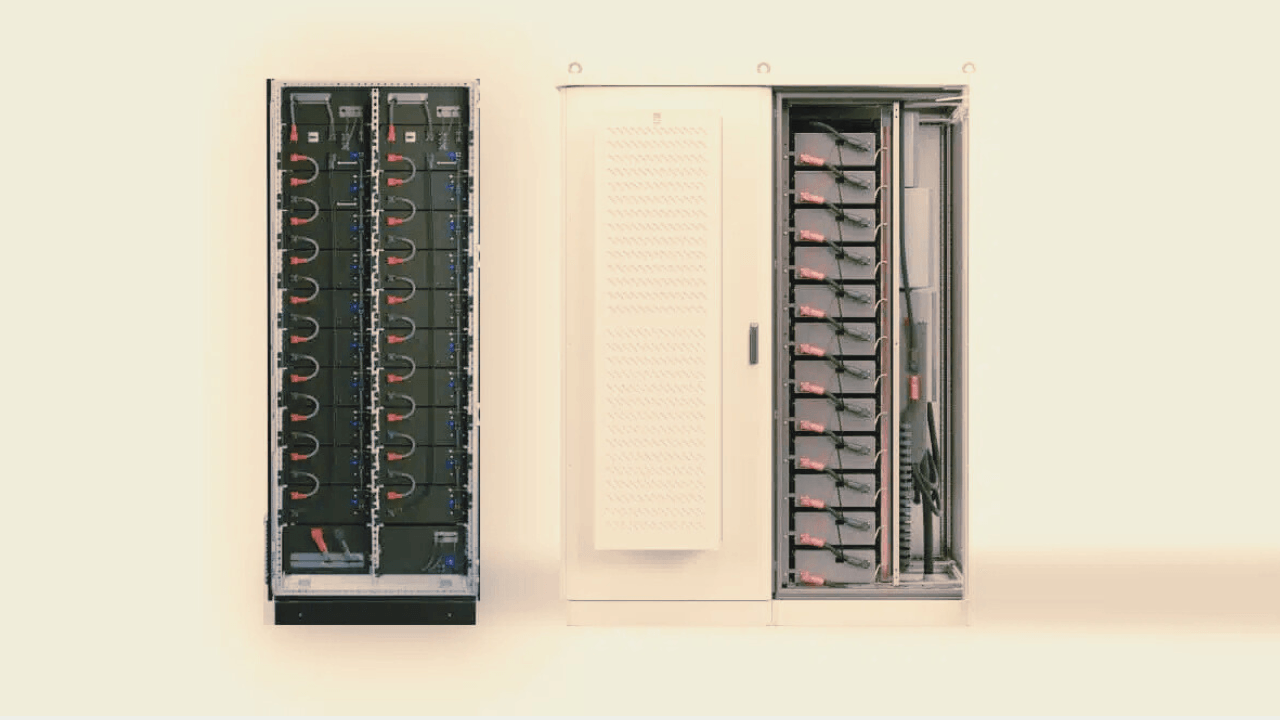
Lead image: An edited Voltang battery storage photo.


Would you like to write the first comment?
Login to post comments