

There are around 350,000 people diagnosed with primary brain cancer every year, and 250,000 people die from it. Despite decades of progress in medicine, the tools primarily used to access, diagnose, and treat the brain remain limited — until now.
Robeauté is a Paris-based MedTech startup developing a new class of therapeutic microrobots designed to diagnose, treat, and monitor the brain with unprecedented flexibility. Operating at the intersection of robotics, physics, materials science, chemistry, biology, and medicine, the company has developed a modular medical device built around a universal robotic core with interchangeable micro-extensions.
I spoke to co-founder and COO Joana Cartocci to learn all about it.
From targeted drug delivery to live data collection
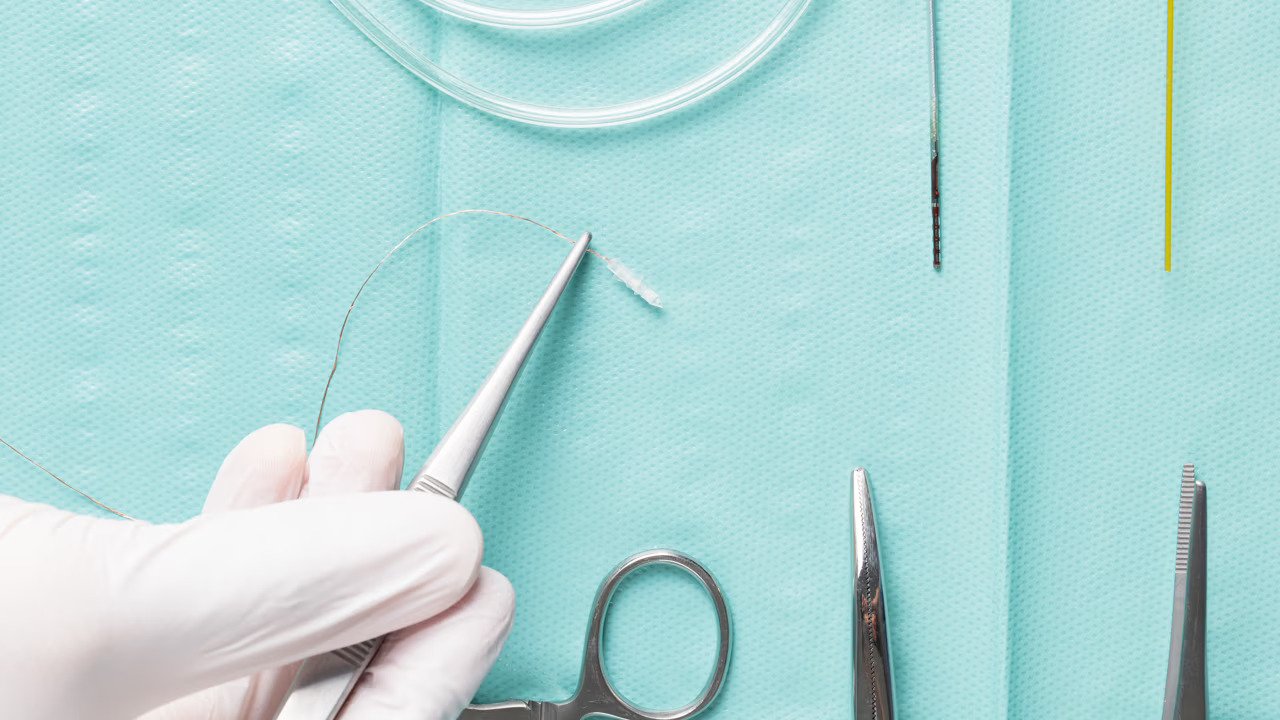
Roughly the size of a grain of rice, Robeauté’s microrobots can navigate curved, non-linear paths through the brain’s extracellular matrix, safely reaching multiple sites of interest.
Depending on the pathology, each device can be equipped for a specific mission — delivering therapeutic molecules, implanting electrodes, or collecting cellular and live data via embedded sensors.
This modular architecture allows a single platform to be adapted across a wide range of clinical applications, from tissue sampling and targeted drug delivery to electrode implantation and real-time data collection from deep within the brain — opening new possibilities for both treatment and understanding of complex neuropathologies.
From extreme environments to the human brain
Robeauté’s founder, Bertrand Duplat, spent more than 30 years working in robotics, including at McGill University and the European Space Agency, specialising in robots designed for extreme environments. Earlier in his career, he also founded 3D software company Virtools, which Dassault Systèmes later acquired.
After decades working on undersea, nuclear, space, and archaeological robotics, Duplat decided to apply his expertise to medicine — a decision catalysed by his mother’s diagnosis with glioblastoma. He went on to found Robeauté with co-founder Joana Cartocci, an operations specialist.
“He had been doing robotics for 30 years in extreme environments and decided to put that experience to good use,” Cartocci said.
“That’s around the time we met. He asked me to join and lead operations — everything that’s not scientific — and we’ve been at it since 2017.”
The value of an interdisciplinary approach
Crucially, Cartocci comes from an operational background. She notes that a lot of founders spin out of labs and struggle with the transition to entrepreneurship. But scaling a company through various stages takes a diverse mindset and perspective.
"The ability to build an interdisciplinary team of experts that can stand the test of time starts with the founders," she shared.
"It can make or break a company. I’m particularly proud of the team that we have brought together with Bertrand, which in turn will help us scale and bring the technology to patients as fast as possible.”
Designing for control, not magnets
According to Cartocci, in most academic labs today, microrobots remain largely passive tools — probes or magnetic particles set in motion by very large external electromagnetic coils. “It’s extremely hard to scale,” Cartocci explained, “and it doesn’t give surgeons much confidence when it comes to control.”
Robeauté takes a fundamentally different approach. Its system is built around a tiny, active device composed of two parts: a carrier and an extension. It has over 50 patents.
“The carrier contains our core technology,” Cartocci said.
“It’s what allows the robot to move non-linearly through the brain, while being continuously tracked with ultrasound, so we always know exactly where it is.”
The extension, meanwhile, is what defines the medical task itself. “That’s where you specify the pathology or the intervention,” she explained.
“It could be a biopsy tool, an electrode, a drug-delivery mechanism — whatever needs to be delivered locally.
It’s about the ability to reach multiple sites through non-linear routes and to do so with the right level of accuracy. That fundamentally changes how neurosurgery is performed today.”
Innovation benefits
There will be many first movers in microrobotics. But being first is not, on its own, a marker of success. “We’ve intentionally taken a very different approach, focused on delivering outsized, lasting impact on patient outcomes,” shared Cartocci.
“In many ways, it’s been a longer and harder path, because we’re building an entirely new device and, at the same time, a new clinical category.”
That deliberate restraint has been shaped by close collaboration with the medical community from the outset.
“We’re confident in what we chose not to pursue, because those routes weren’t the right solutions to scale in the reality of operating rooms.”
While most startups in the microrobotics space are addressing different pathologies or anatomical barriers, and many focus on vascular environments rather than directly navigating brain tissue, none have reached the same level of maturity as Robeauté — particularly when it comes to regulatory engagement and deep, long-standing relationships with surgeons.
Why incremental innovation isn’t enough
Cartocci speaks of the urgency of the kind of medtech her company is developing against companies which add incremental value which are hard to mobilise real change around.
"Being less disruptive means adding even less value. At Robeauté, we’re clearly in the transformational category. People are dying.
The unmet need is enormous.
A billion people are affected by brain disease. The drug market alone is around $72 billion. Electrodes are now valued in the trillions if you include healthy patients.
The biopsy market is $4 billion. Brain–computer interfaces are now in the multiple billions. There’s so much that requires precision — having one tool that opens all doors — that unlocks a completely different way of performing brain surgery. We see tremendous excitement from the medical profession.”
Finding the right investors by letting go
In January 2025, Robeauté raised $28 million in funding. Cartocci describes the fundraising experience as “traumatic.”She admits.
“It’s brutal. But at some point, you reach a kind of surrender. You know your company, your value, your pitch — and the more you try to control things, the more frustrating it becomes.
"When you let go and surf the waves, you find the right people. I spoke to another founder recently who described it as “conjuring destiny.” That resonated. You prepare, you show up, you’re relentless. You don’t take rejection personally.
When you let go and surf the waves, you find the right people.
Following funding, Robeauté doubled its team, which, according to Cartocci, felt incredible: “Before, it felt like we were constantly being held back. Now there’s space for iteration, greater experimentation, error, and proper building.
Europe’s regulatory fragmentation problem
The company opened its US subsidiary, which is critical for go-to-market and clinical trials. The US will be its first market, which Cartocci attributes primarily to regulations:
“In the US, you co-create your regulatory strategy with the FDA. In Europe, you complete everything, submit the file, and wait a year with no feedback.
For a platform technology like ours — moving from one indication to another — the US model makes a huge difference. Once you have FDA data, it becomes a blueprint for Europe.”
“In the US, we have been in dialogue with the FDA for quite some time to co-create the regulatory strategy."
She believes that Europe could benefit from a similarly formal way to share and receive active feedback so that founders can continue to iterate and build. Especially in primary frontline sectors like healthcare where innovation can supercharge competitiveness.
"For a platform technology like ours — moving through major clinical milestones in 2026 — any kind of formal data makes a huge difference. Once we have FDA data, it becomes a blueprint for Europe, and vice-versa.”
That said, Robeauté is European, and as Cartocci shared, “regardless of which market we access first, we care deeply about having the technology available in Europe and globally."
"Healthcare challenges that we tackle are universal and transcend borders. It’s important that we build our technology for all systems and models, not only the American one. Serving only one market would be a failure."
For Cartocci, commercial brain microrobots are closer than they’ve ever been.
“We need collective effort — investors, developers, regulators — to make sure these solutions reach the market. We’re also hiring: scientific and technical roles, quality and regulatory roles, US go-to-market roles, and engineering roles. It’s a great time to watch — or join — the company.”
The company's next goal is first-in-human studies by the end of 2026.
Lead image: Robeauté. Photo: uncredited.


Would you like to write the first comment?
Login to post comments